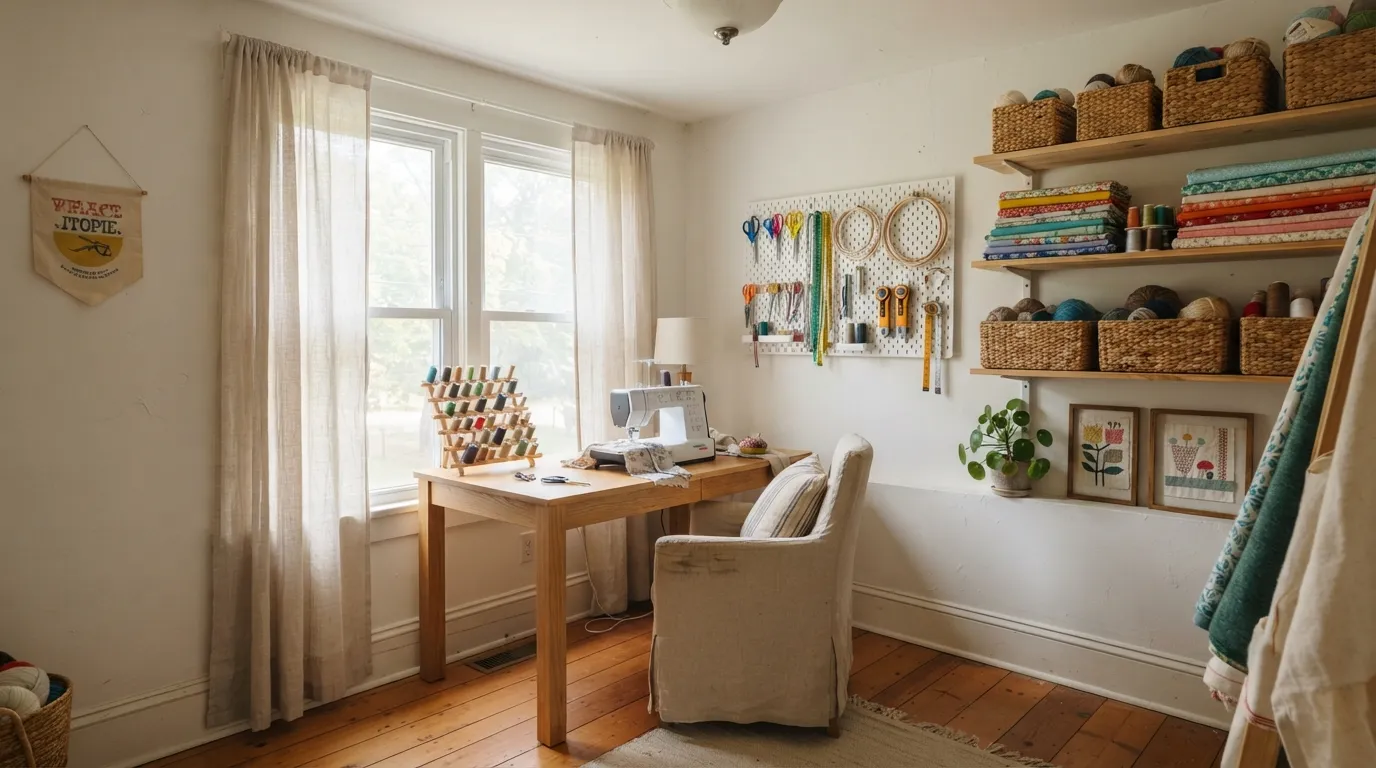
Small Sewing Room Ideas: 10 Smart Ways to Save Space
Small Sewing Room Ideas can help you create a comfortable creative space even when you don’t have an entire room available.
You Might Also Like
Many people struggle with fabric piles, crowded desks, and sewing supplies taking over their homes. The problem is usually not the size of the room but the way the space is arranged and stored.
Most people try adding more shelves or buying more organizers without planning the layout first. A better approach is creating a sewing area where every tool, fabric piece, and machine has a useful place.
These Small Sewing Room Ideas are perfect for anyone trying to build a creative corner without needing a large dedicated room.
1. Create a sewing nook in an unused corner
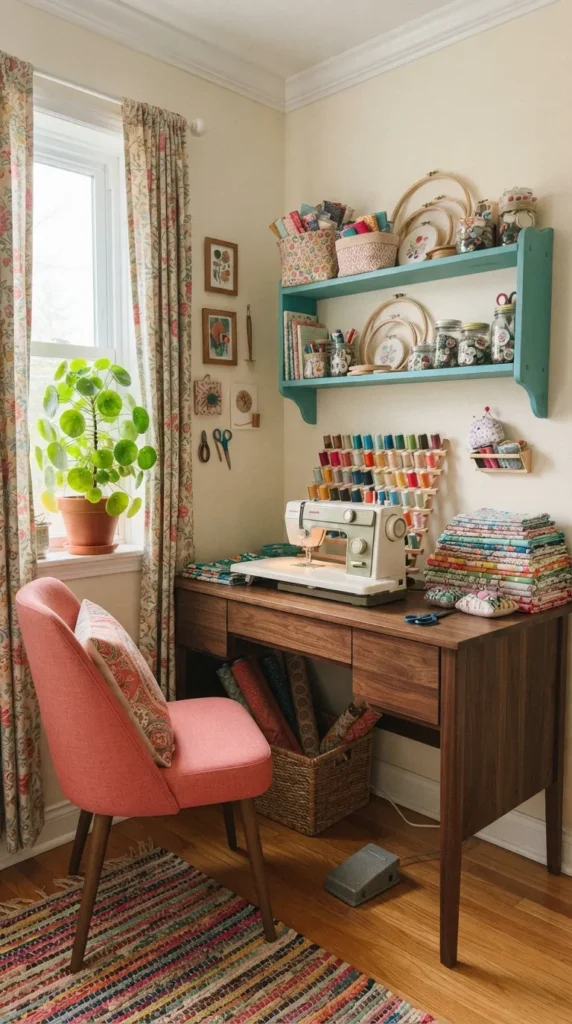
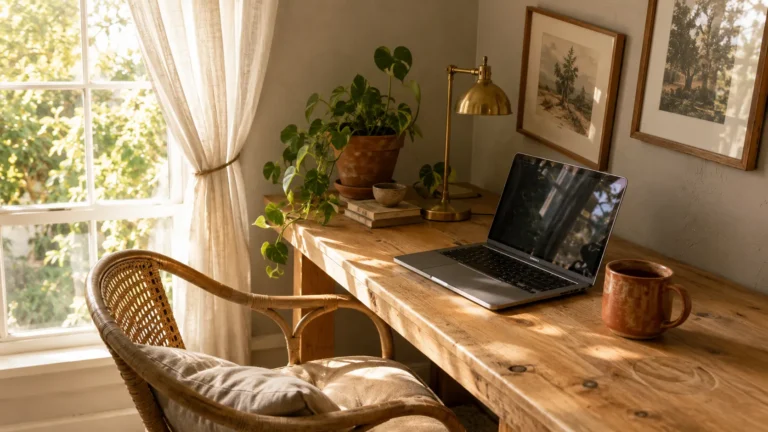
One of the easiest Small Sewing Room Ideas is turning an empty corner into a dedicated sewing nook. You don’t need a large setup because a compact desk, comfortable chair, and smart storage can create a practical workspace.
Choose a corner near a window whenever possible because natural daylight makes cutting fabric and matching colors much easier. Add floating shelves above the desk for thread, patterns, and small sewing tools that you use often.
2. Plan a functional sewing studio layout
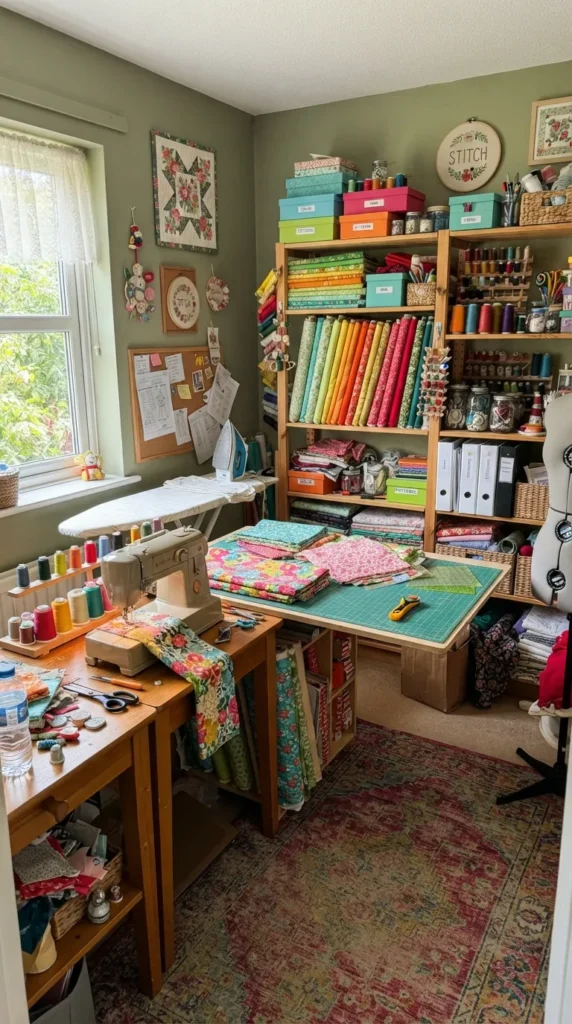
A good sewing studio layout helps your creative process feel smoother. Your sewing machine, cutting area, ironing station, and storage should be placed close enough that you don’t waste time walking back and forth.
Keep the center of the room open if possible because extra floor space makes handling larger fabrics much easier. Even a tiny room can feel bigger when furniture stays against the walls.
Think about your daily sewing habits before arranging furniture. If you cut fabric often, keep your cutting surface nearby, and if you mostly work with small projects, focus more on accessible storage.
Good Small Sewing Room Ideas focus on making every step of your sewing routine easier, from cutting fabric to storing finished pieces.
3. Use wall storage to save floor space
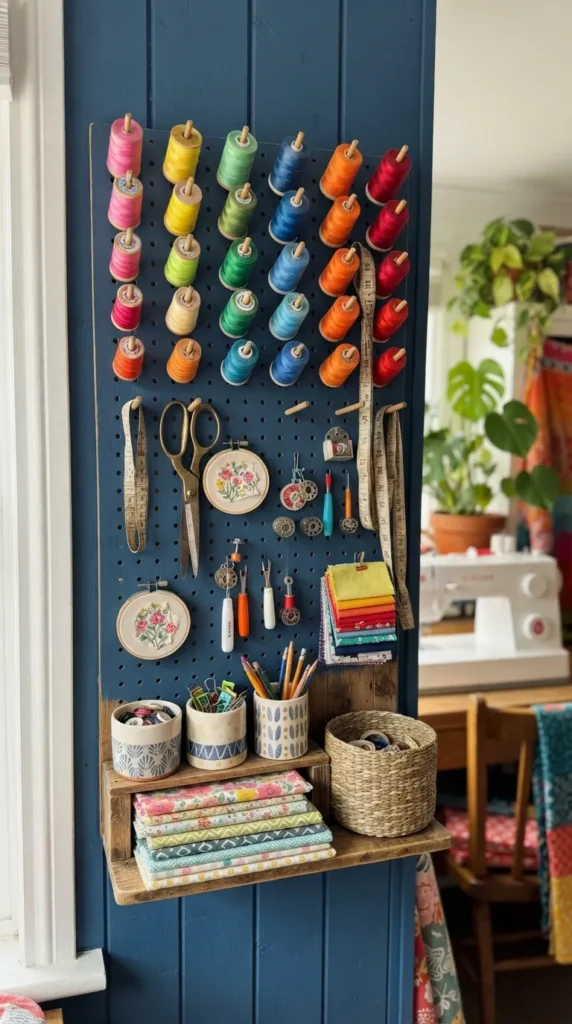
When your room is small, your walls become valuable storage areas. Pegboards, floating shelves, hanging baskets, and wall organizers help keep supplies visible while freeing your desk for actual sewing work.
Store thread by color, hang scissors on hooks, and keep measuring tapes where you can grab them quickly.
One of the smartest Small Sewing Room Ideas is using vertical space from floor to ceiling. Higher shelves are perfect for seasonal fabrics or supplies you don’t need every day.
4. Add furniture that does more than one job
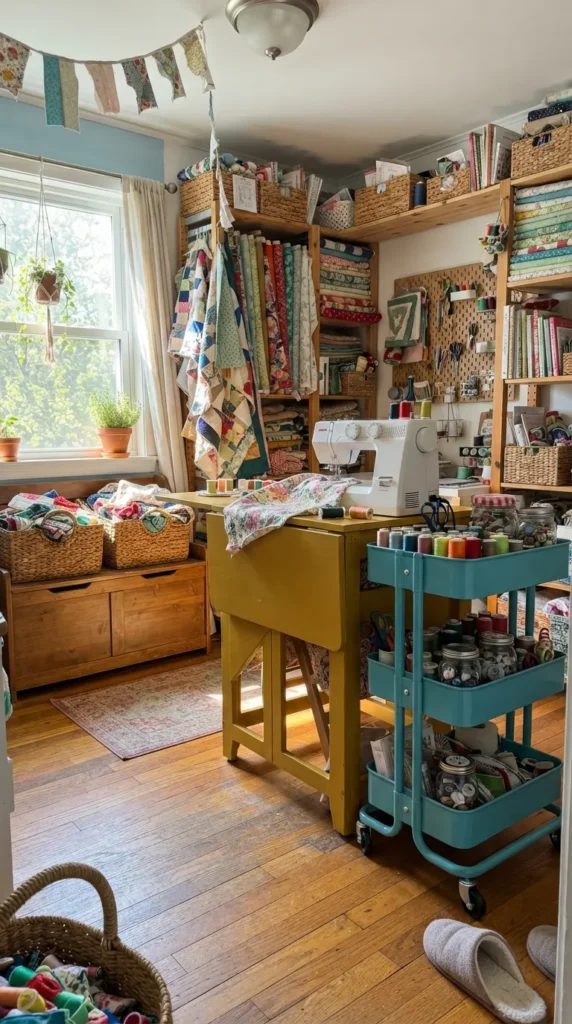
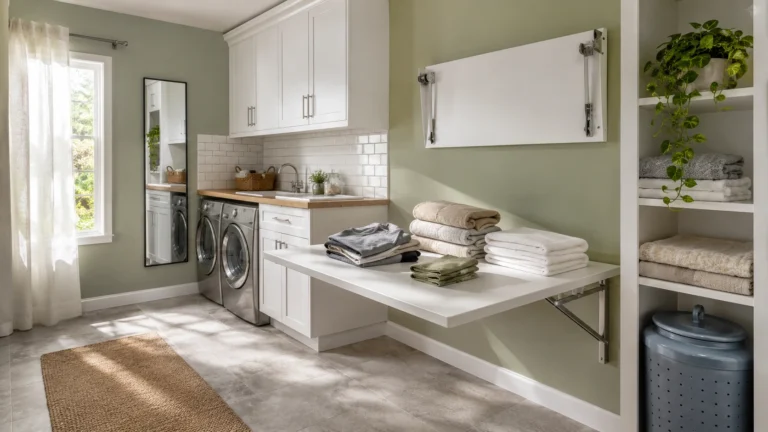
Small rooms work better when furniture has multiple purposes. A sewing desk with drawers, a folding cutting table, or a storage bench can give you extra function without filling the entire room.
A rolling cart is another useful option because you can move supplies wherever your project takes you. When you’re finished, simply roll it away and keep your workspace looking clean.
Foldable furniture works especially well for people who sew occasionally. You get a full workspace when you need it but still have room for other activities when sewing is finished.
5. Create an organized home sewing studio
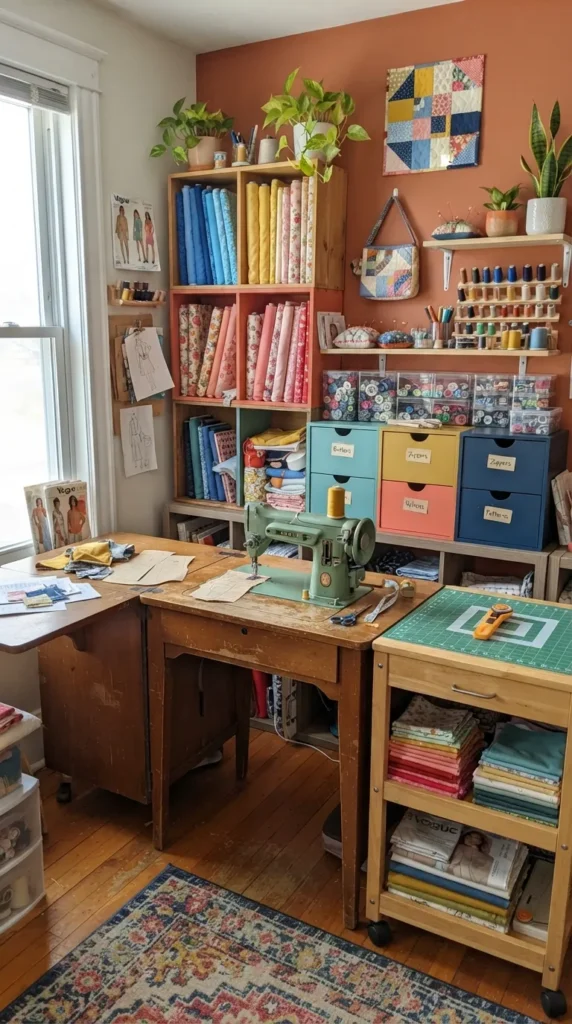
A home sewing studio does not need expensive furniture to feel professional. Simple storage systems, labeled boxes, and smart placement can turn even a small area into a comfortable creative zone.
IKEA shelves, drawer units, and modular organizers are popular choices because they can be adjusted as your sewing collection grows. Combine open shelves for pretty fabrics with closed storage for items that create visual clutter.
More Ideas to Love
Keep your most-used supplies within easy reach and store rarely used items higher up. This approach makes Small Sewing Room Ideas more practical because the room works around your habits instead of forcing you to constantly reorganize.
6. Decorate your sewing room with personality
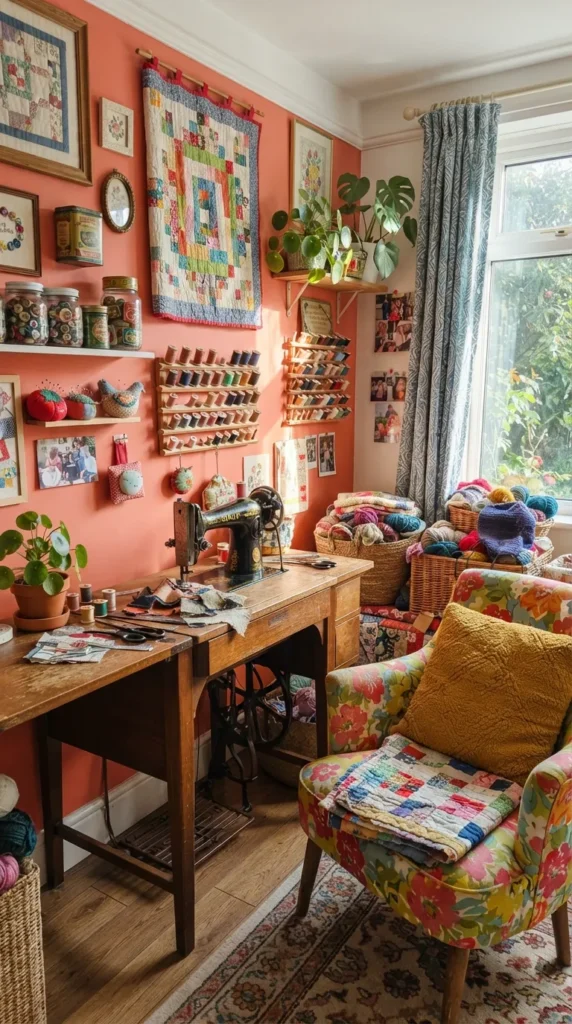
A sewing room should feel like a place where creativity happens, not just a storage area filled with supplies. Add small details like framed fabric samples, handmade artwork, colorful pin cushions, and a few favorite sewing tools displayed on shelves.
Choose decorations that also help you work better, such as pretty jars for buttons or woven baskets for fabric scraps. These pieces keep the room useful while adding warmth and making the space feel more personal.
7. Turn a bedroom corner into a sewing workspace
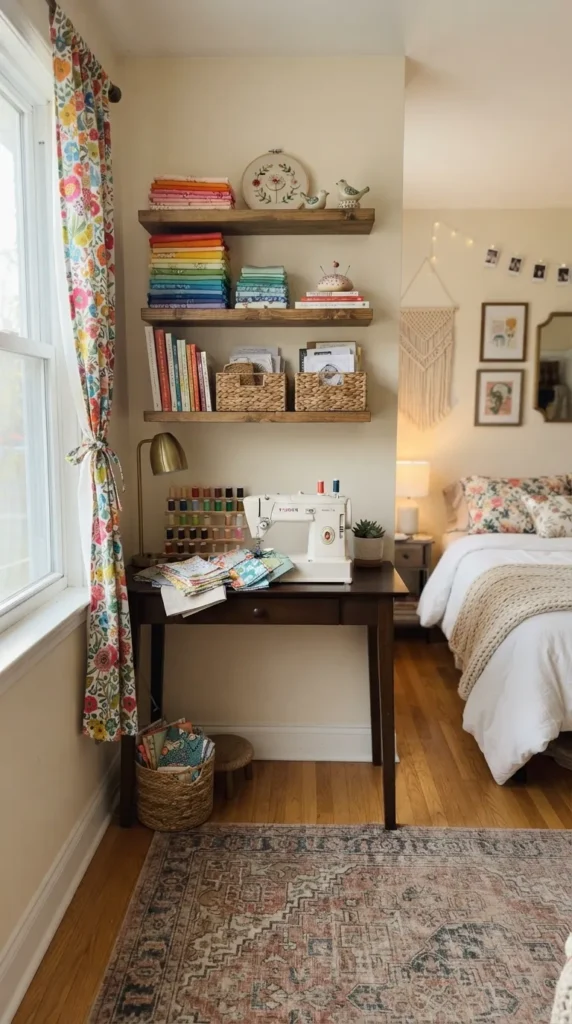
You don’t need a separate craft room to enjoy sewing at home. An unused bedroom corner can become a practical sewing workspace with a slim desk, compact storage, and a comfortable chair.
Place the desk near natural light if possible and use shelves above it to keep supplies organized without taking up floor space. Storage boxes under the desk can hide fabrics and tools while keeping everything easy to access.
A curtain, bookshelf, or small divider can separate your sewing area from the rest of the bedroom. This simple trick creates a dedicated zone without needing a major room makeover.
8. Organize fabric by color and project
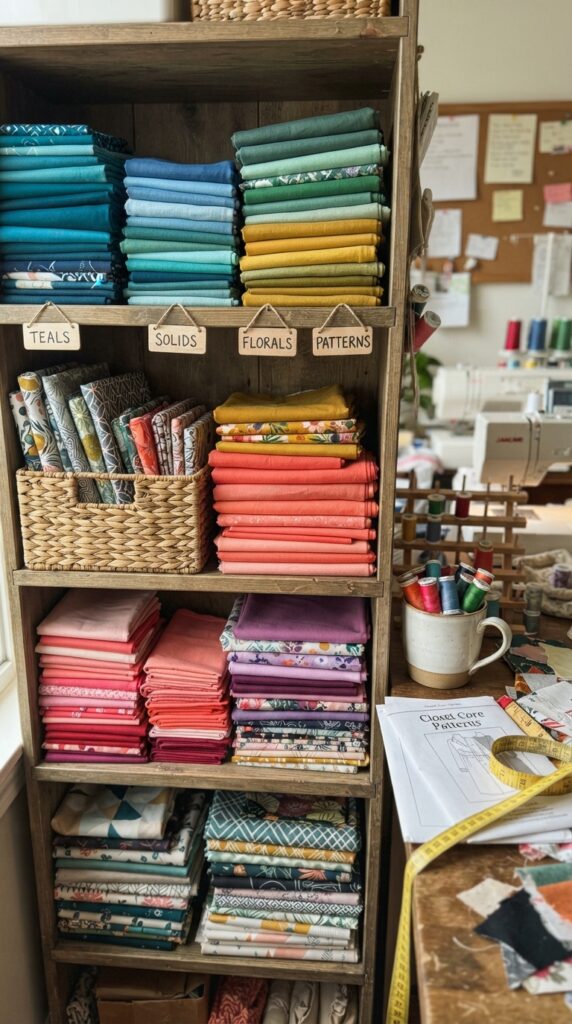
Fabric storage can quickly become messy if everything is stacked randomly. Folding fabrics neatly and sorting them by color, material, or project type makes your sewing routine much easier.
Clear bins allow you to see what you already own without opening every container. Labels are also helpful because they save time when you’re searching for a specific pattern or fabric piece.
Keep your favorite fabrics and current projects in easy-to-reach places while storing seasonal materials higher up. Good organization is one of the most helpful Small Sewing Room Ideas because it keeps creativity flowing instead of making you spend time searching.
9. Improve lighting for your sewing workspace
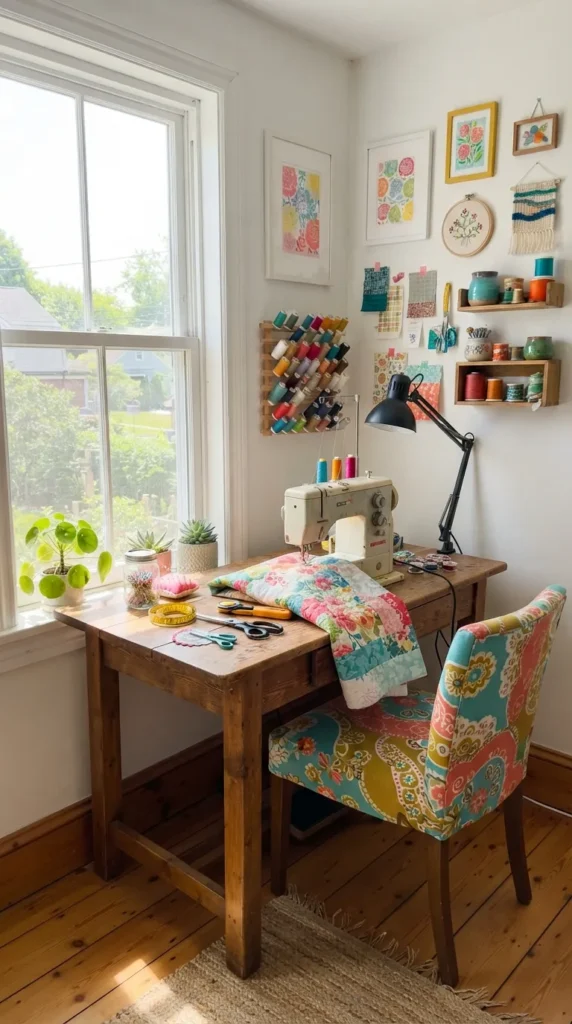
Proper lighting can make a huge difference when working with detailed stitching, patterns, and small fabric pieces. Place your sewing table near a window to take advantage of natural daylight during the day.
Keep Reading
Add an adjustable desk lamp for evenings or cloudy days when extra brightness is needed. A focused light source helps you see small details clearly while making your workspace feel more comfortable.
Light walls, mirrors, and open shelving can also make a tiny sewing room feel larger. A bright workspace feels more inviting and helps you stay focused during longer sewing sessions.
10. Keep your sewing room simple and easy to maintain
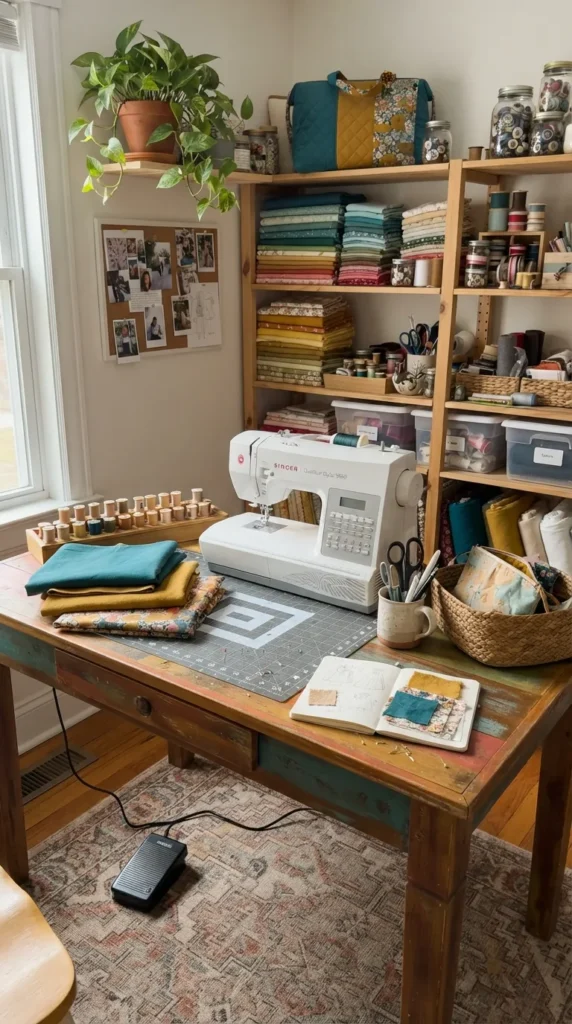
The best sewing spaces are the ones that stay organized after every project. Create a simple habit of returning tools, folding leftover fabric, and clearing your table when you’re finished.
Keep a small basket nearby for unfinished projects so pieces stay together instead of spreading around the house. Regular small cleanups prevent clutter from building and make starting your next project much easier.
Small Sewing Room Ideas prove that a creative workspace doesn’t require a huge room or expensive furniture. With smart storage, a useful layout, and personal touches, even the smallest corner can become a place where you enjoy sewing every day.
Whether you create a sewing nook, a bedroom workspace, or a complete home sewing studio, the most important thing is making the space work for you. A well-planned room helps you spend less time organizing and more time creating projects you love. Small Sewing Room Ideas are all about using your available space wisely while building a comfortable area that feels inspiring and practical.
I am Eleanor Foy, the mom of two behind DaisyHacks. I am a lover of clean, calm homes and a person who will happily spend 45 minutes researching a 5 minute cleaning hack. No regrets.