Curtain Decor Ideas That Make Rooms Feel Different
Curtains are one of those things people live with for years without really thinking about them.
You Might Also Like
They came with the apartment, or they were a quick fix when moving in, and somehow they just stayed.
The thing is, curtains do a lot of heavy lifting in a room, way more than most people give them credit for.
A bad curtain choice can make ceilings feel low, windows feel small, and rooms feel kind of unfinished without anyone being able to put their finger on why.
These curtain decor ideas are not about redecorating from scratch, they are about small shifts that change how a room actually feels to be in.
1- Hang the Rod Higher Than the Window
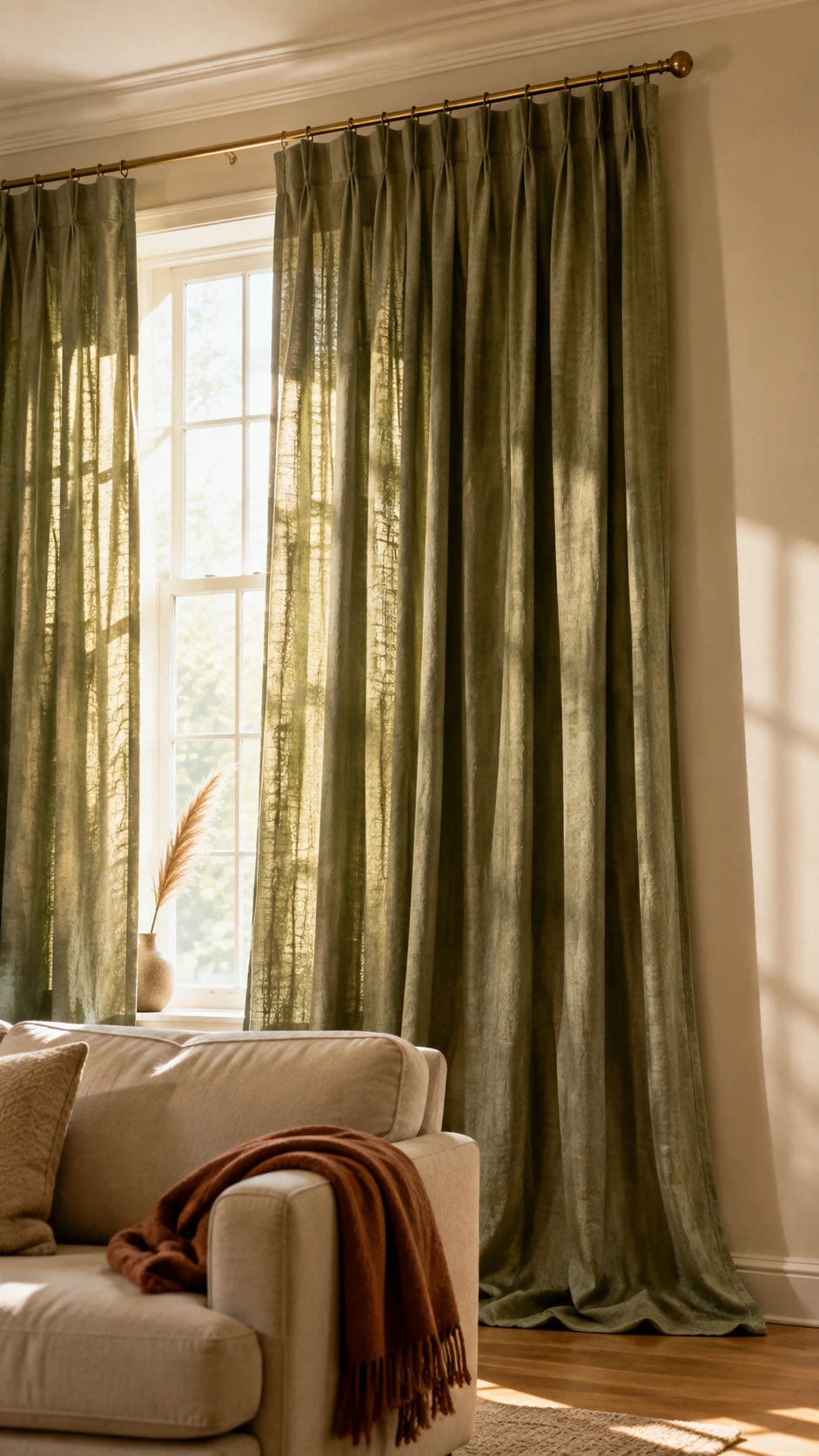
Most people hang the curtain rod right at the top of the window frame, which is technically logical but visually wrong.
Hanging it closer to the ceiling, even just 6 to 8 inches above the frame, makes the whole window look taller.
The room reads as bigger because the eye follows the fabric up instead of stopping at the window trim.
This works in pretty much any room but makes the biggest difference in spaces with standard 8-foot ceilings that feel a little boxy.
It costs nothing extra and is probably the single easiest curtain fix there is.
2- Let the Curtains Touch the Floor
Curtains that stop short of the floor look a little awkward, like pants that are slightly too short.
Floor-length panels give a room a finished, pulled-together feeling without any other changes needed.
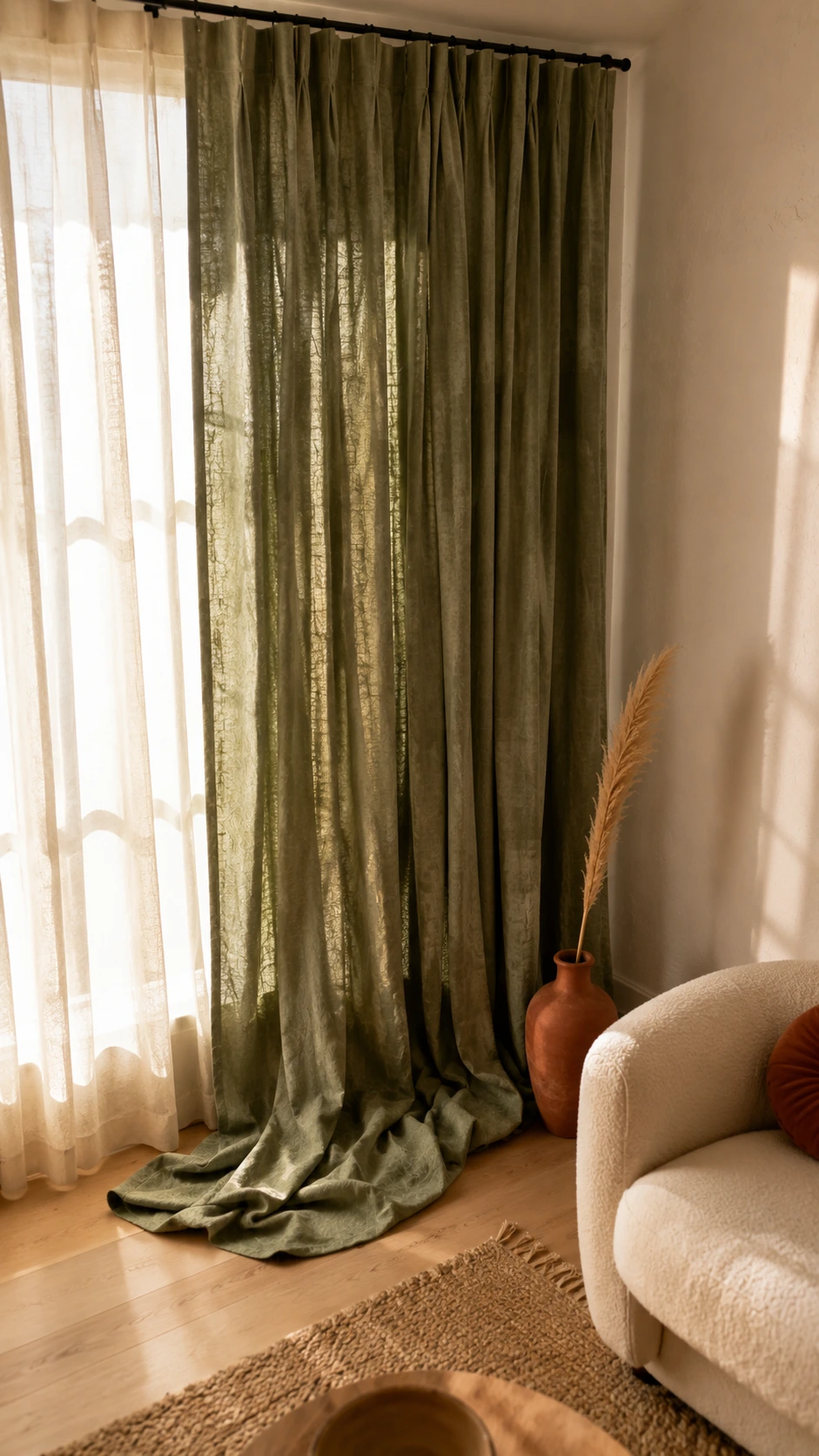
For a relaxed look, people let them just graze the floor. For something that feels a little more intentional, a slight puddle of fabric works really well.
The puddle thing sounds fancy but it just means buying panels a few inches longer than the drop and letting them pool slightly.
I think it reads as effortless in most rooms once someone actually tries it.
3- Use Sheer Panels for Layering
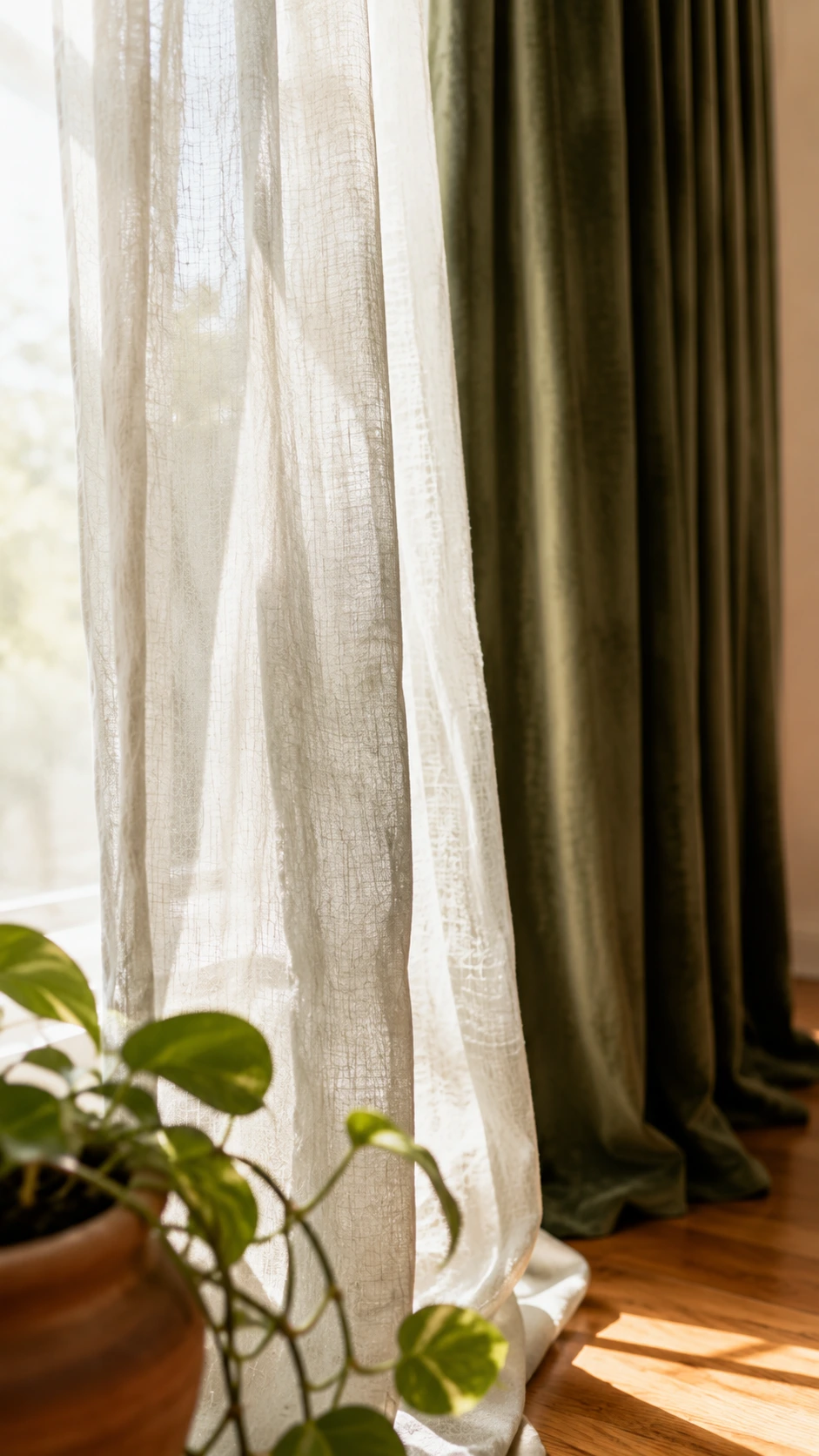
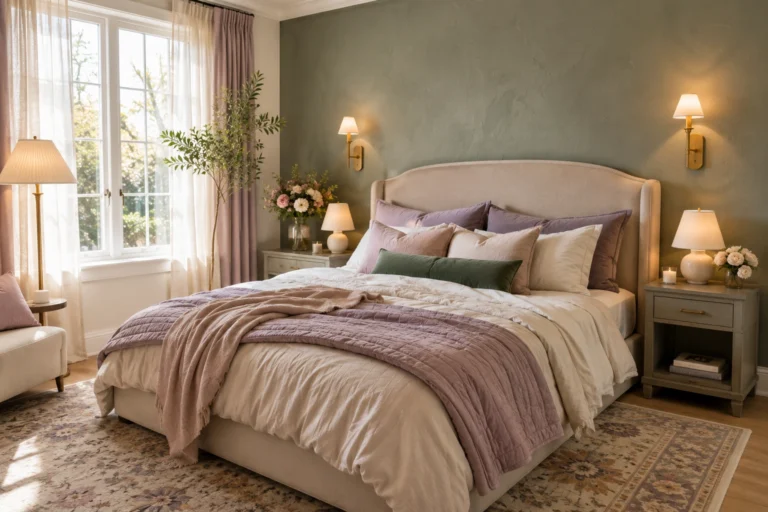
Sheer curtains on their own can feel a little unfinished, but layered under heavier drapes they do something really nice for a room.
They soften the light during the day without blocking it completely, which is the kind of thing people notice without knowing why the room feels good.
The sheer layer goes on the rod closest to the window, and the heavier panel sits on top.
This works especially well in living rooms and bedrooms where controlling light at different times of day actually matters.
Most of the time the sheer panels are inexpensive, so it is not a big investment to try.
4- Extend the Rod Past the Window Frame
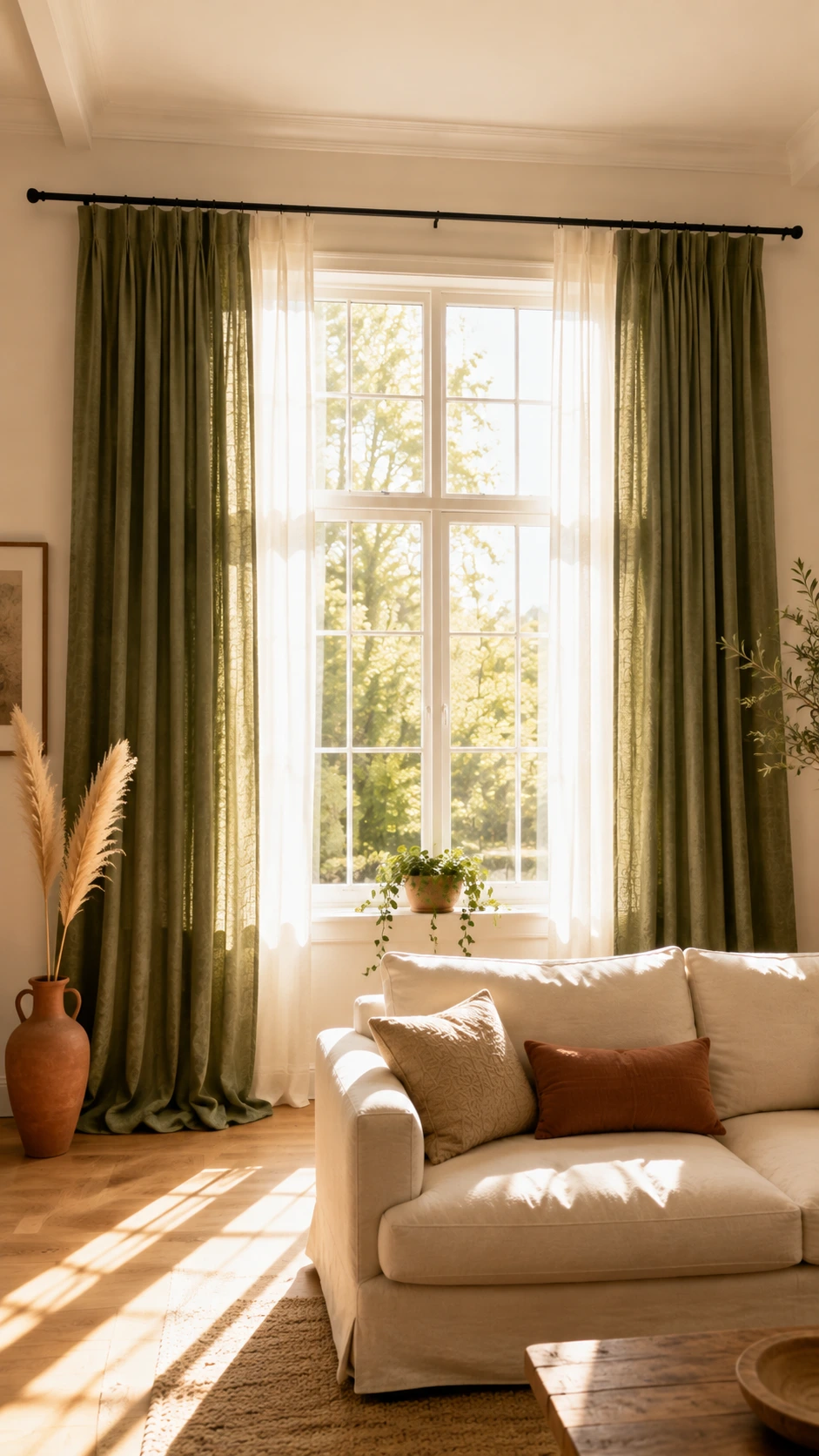
When the curtain rod only spans the window frame, the panels cover part of the glass even when they are open.
Extending the rod 6 to 12 inches past each side of the frame lets the curtains stack off the window completely when pulled back.
This lets in way more light during the day and makes the window itself look wider than it actually is.
It is one of those curtain decor ideas that sounds obvious once someone says it out loud but is easy to miss when hanging curtains the first time.
5- Pick a Curtain Color That Reads as Intentional
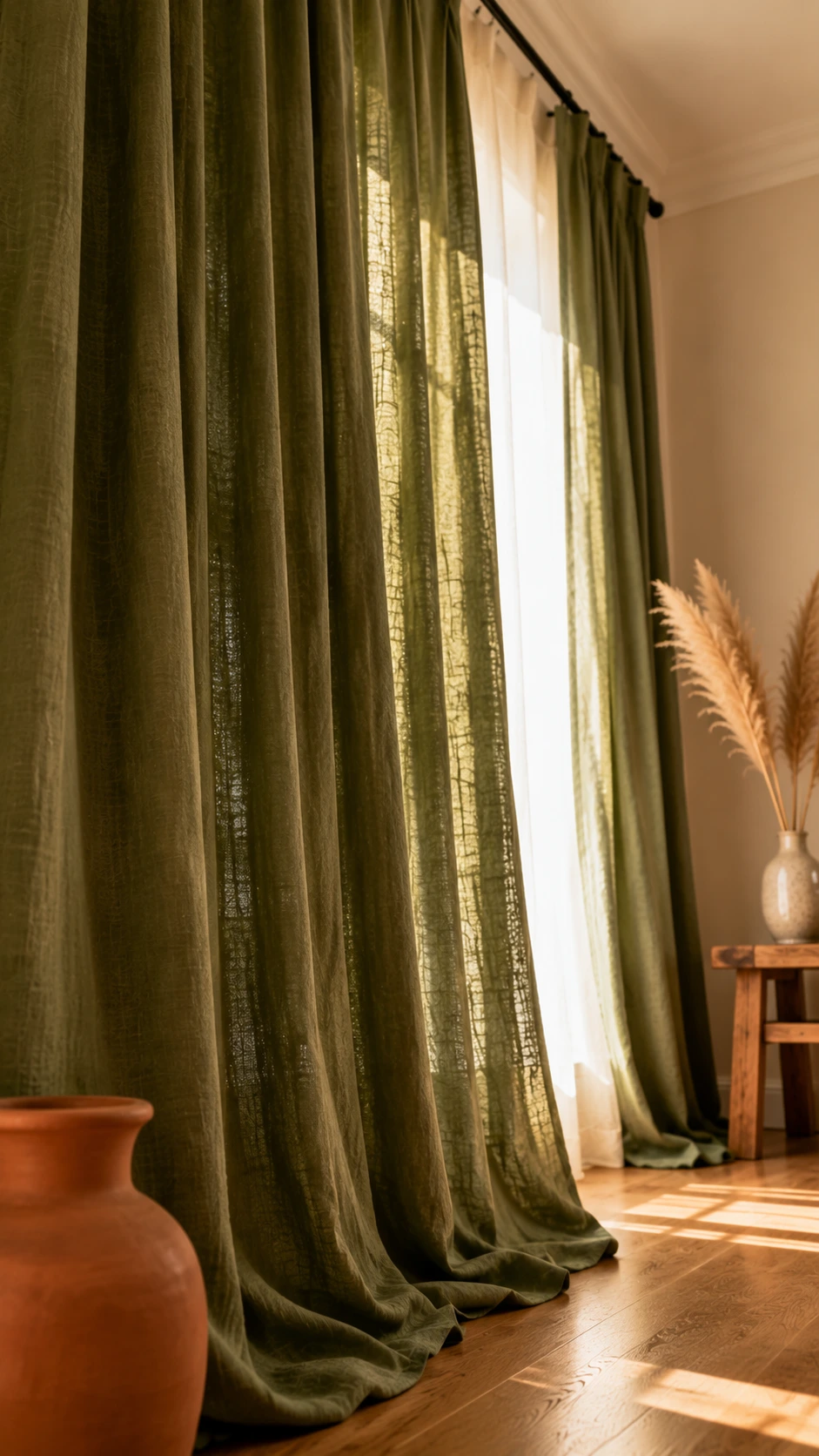
White and off-white curtains are popular because they work almost everywhere, but they can also just disappear into a room without doing anything interesting.
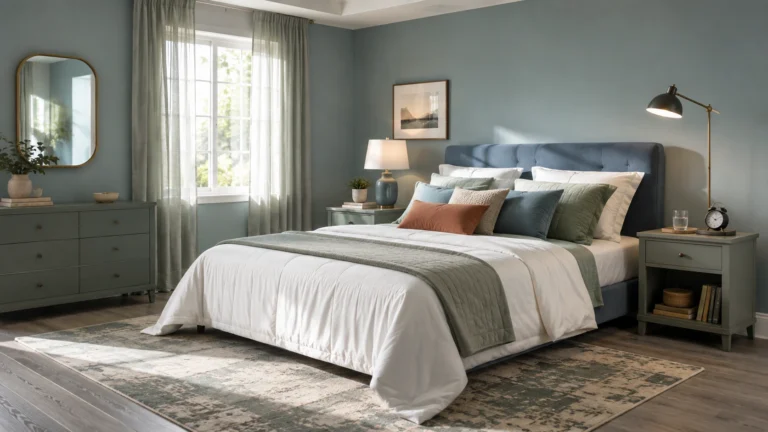
Choosing a color that either matches the wall closely for a tonal look, or contrasts it clearly for a statement, tends to look more intentional than something that sort of matches.
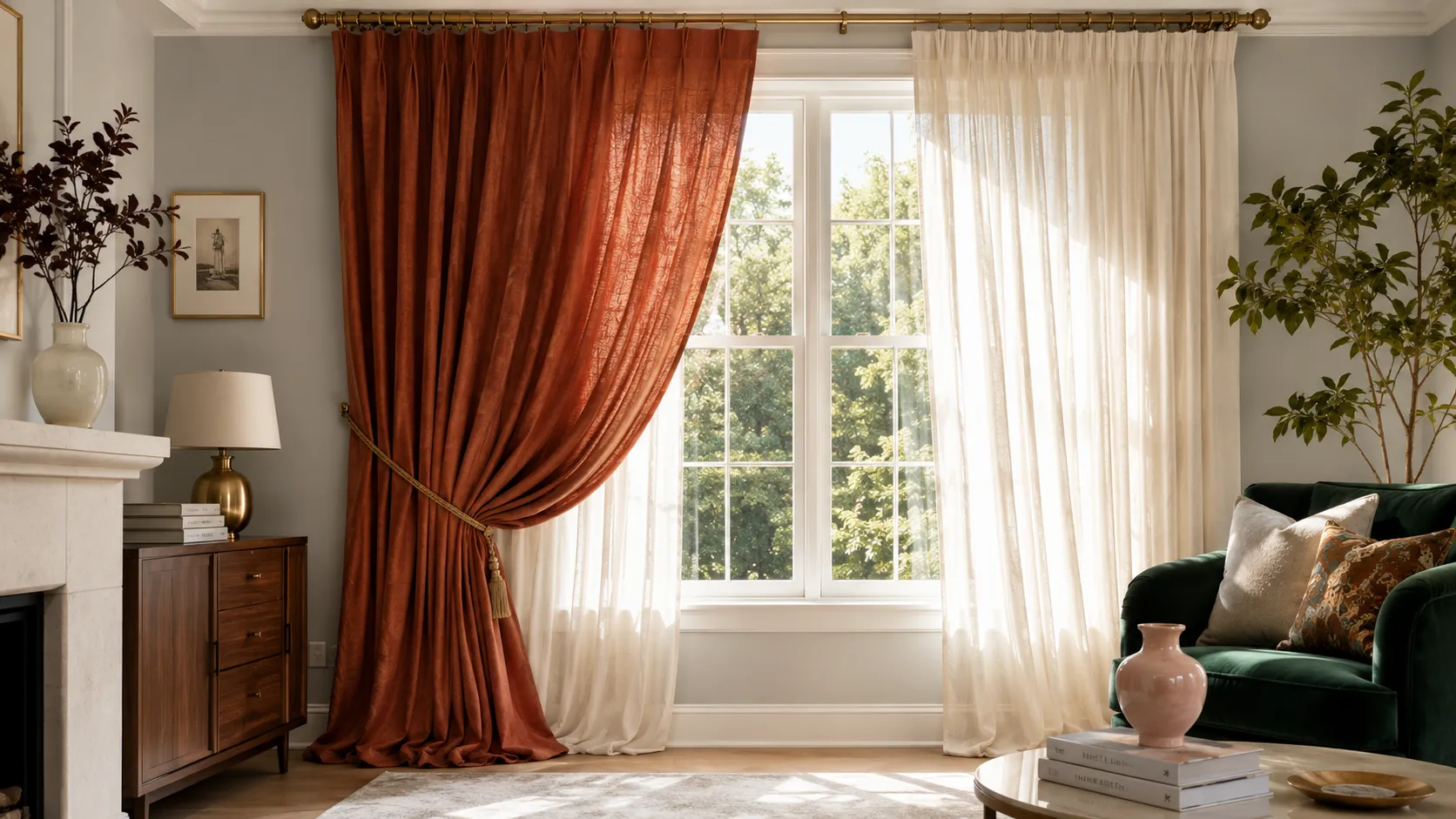
A deep terracotta, a soft sage, or even a warm linen color can change the whole feeling of a space without touching anything else.
The goal is just to make it look like the curtains were chosen on purpose, not defaulted to.
Neutral does not have to mean boring, it just has to be the right neutral for the room.
6- Try a Patterned Fabric in a Neutral Room

Rooms that are all neutrals can start to feel a little flat after a while, and curtains are actually a low-risk place to introduce some pattern.
A subtle stripe, a small print, or even a block-check fabric adds visual interest without competing with furniture or art on the walls.
The key is keeping the pattern scaled to the room, so a large bold print works better in a bigger space than a small bedroom.
Patterned curtain panels are also easy to swap out later if something stops working, which makes it a lower-commitment choice than patterned wallpaper or upholstery.
7- Use a Thick Curtain Rod as a Design Detail
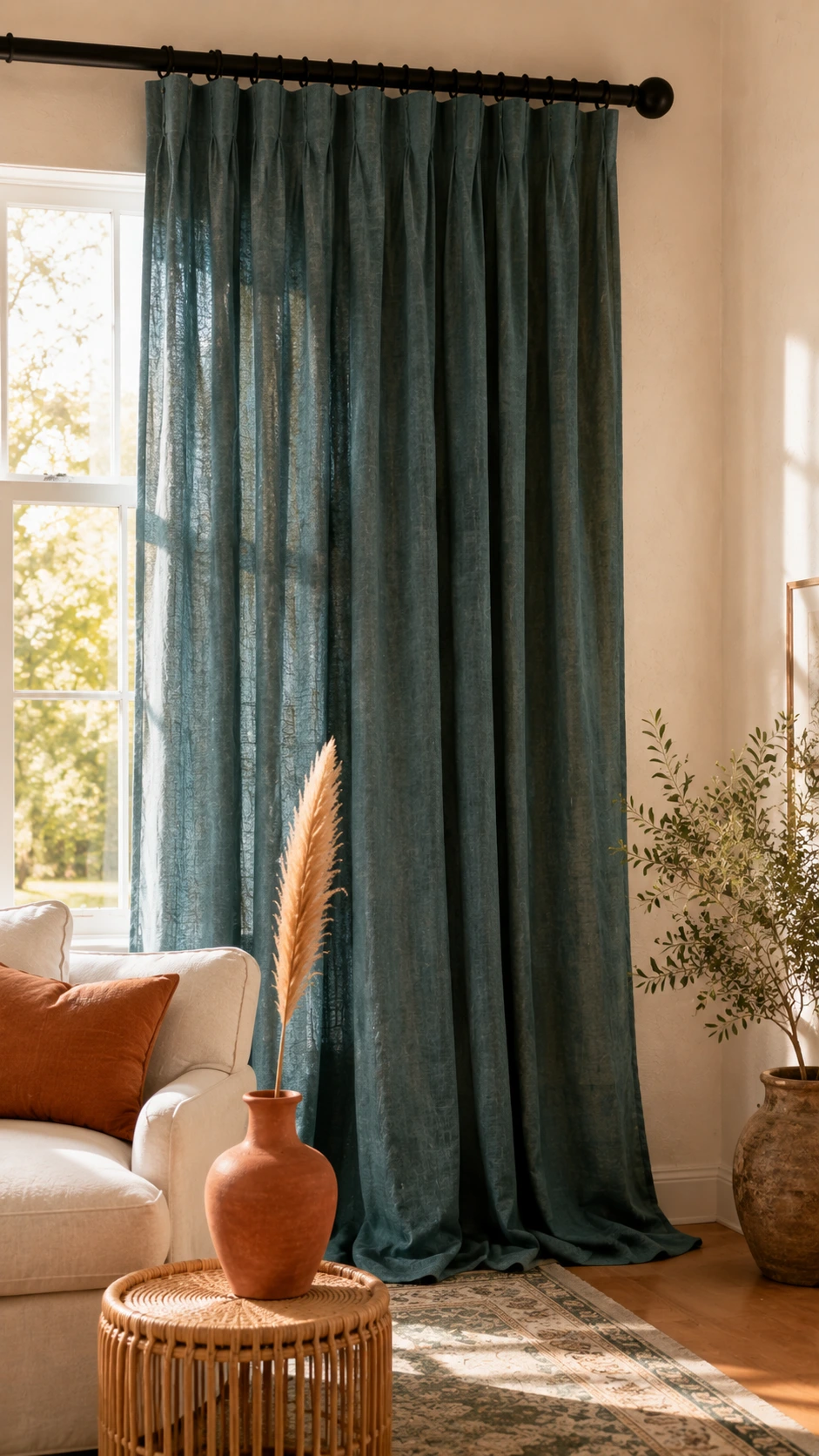
Thin curtain rods fade into the background, which is fine, but a thicker rod in a contrasting finish can actually become part of the room’s look.
Matte black rods work well in modern or minimalist spaces. Warm brass reads well in rooms with wooden furniture or warmer tones.
The rod does not have to be expensive to look good, it just has to feel like it belongs in the room rather than being whatever was on clearance.
More Ideas to Love
Finials, the end pieces on the rod, are worth paying attention to as well since they are visible and can either elevate or undercut the whole thing.
8- Add Curtains to Spaces Beyond Windows
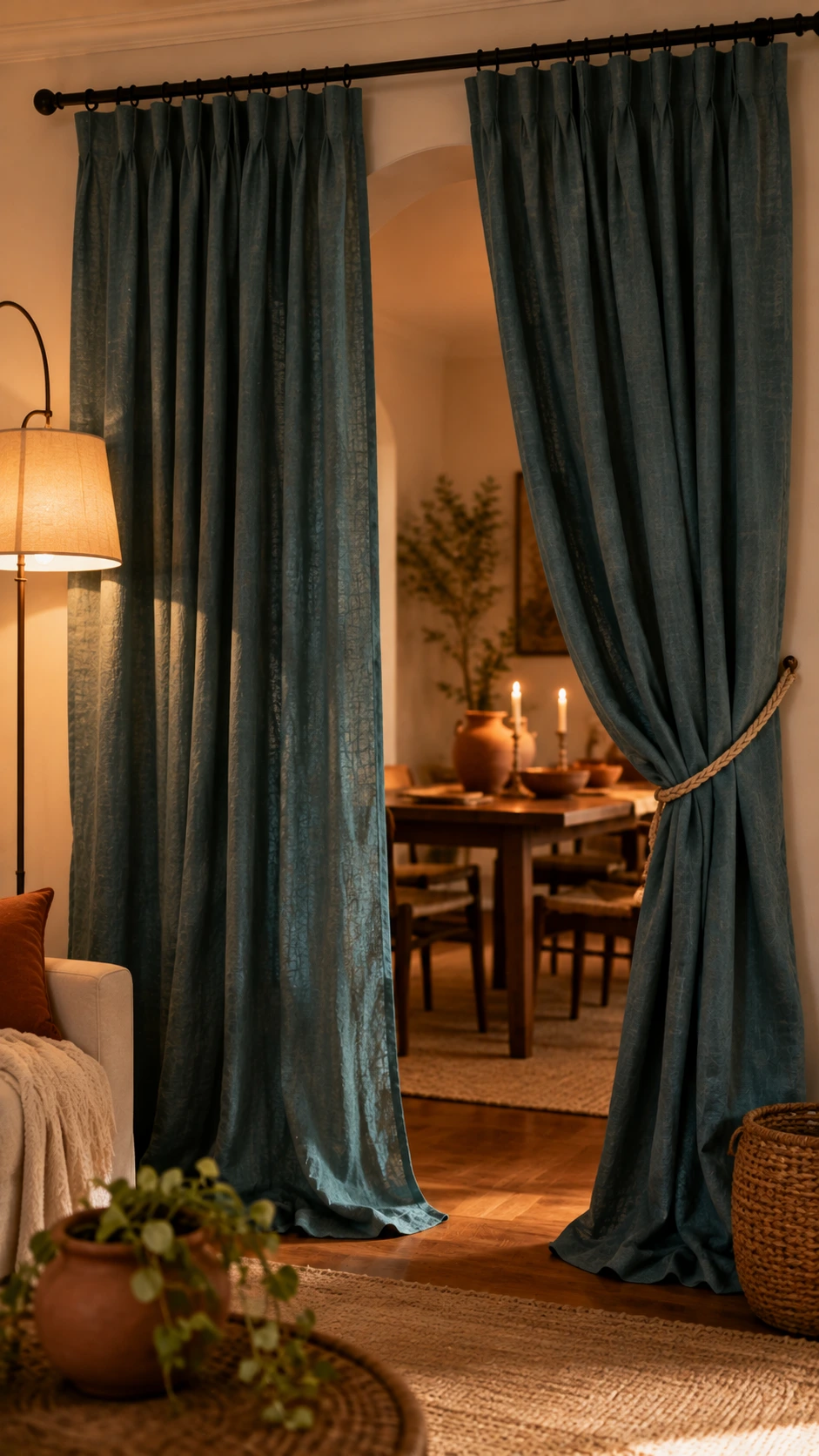
Curtains do not only belong on windows, and once someone starts using them in other spots the whole concept of curtain decor ideas opens up a lot.
A curtain hung in a doorway between rooms adds softness and a little drama without committing to a permanent wall or door.
Closets without doors look much neater and more intentional with a floor-length curtain panel in front of them.
Even a small curtain under an open shelf or a bathroom sink can clean up a space that otherwise collects visual clutter.
It sounds like a rental hack but it actually works really well in owned spaces too.
9- Mix Curtain Textures in the Same Room
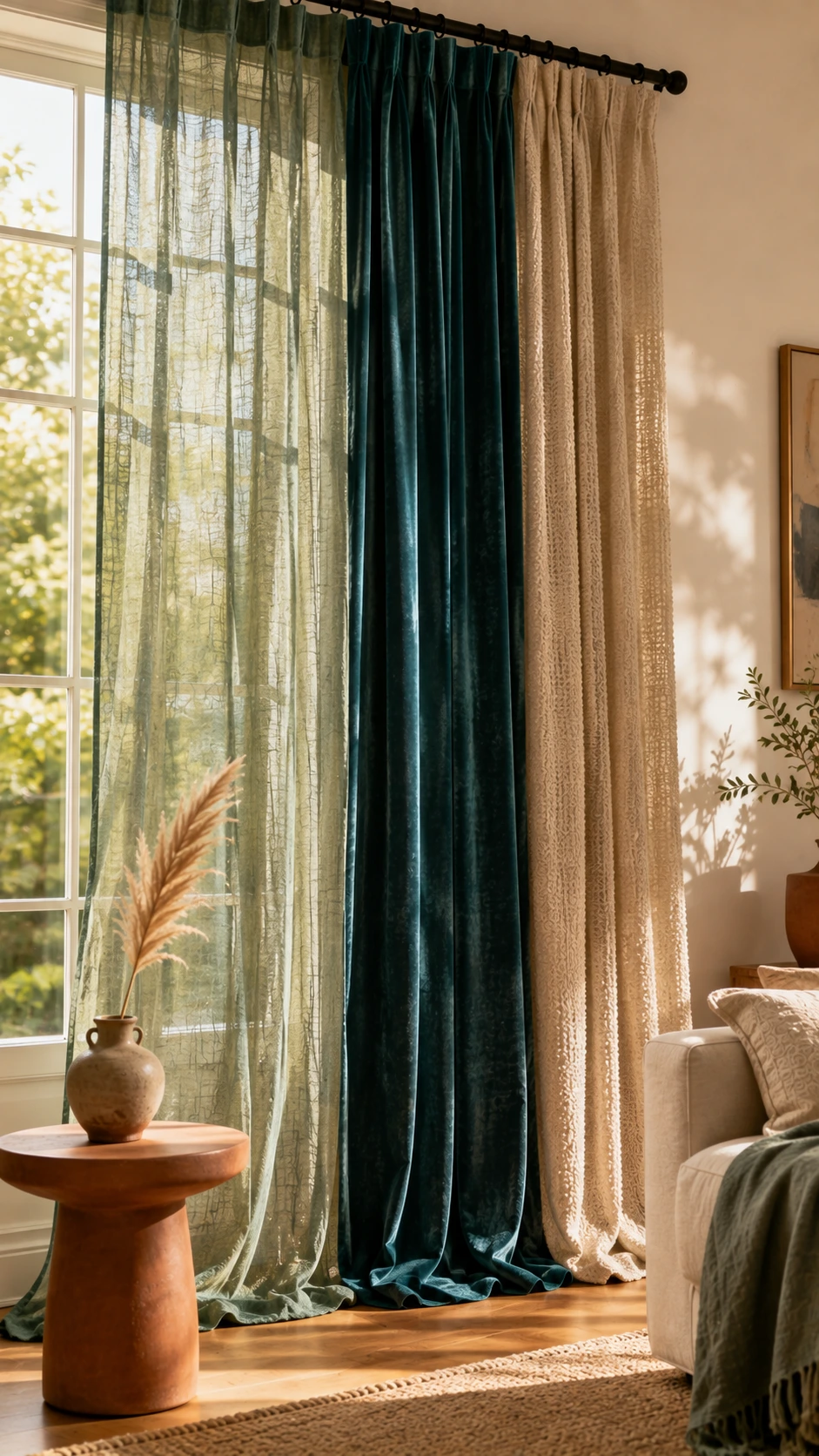
Using the same fabric everywhere in a room can start to feel a little one-note, especially in living rooms with multiple windows.
Mixing a linen panel with a velvet or cotton one in the same colorway adds depth without making the room feel mismatched.
The trick is keeping the colors consistent while letting the textures do the work.
This works especially well in rooms that get different light throughout the day, because the textures shift and catch light differently as the room changes.
It feels like a designer choice but is genuinely easy to pull off with basic panels from most home stores.
10- Use Curtains to Define a Zone in an Open Plan Space
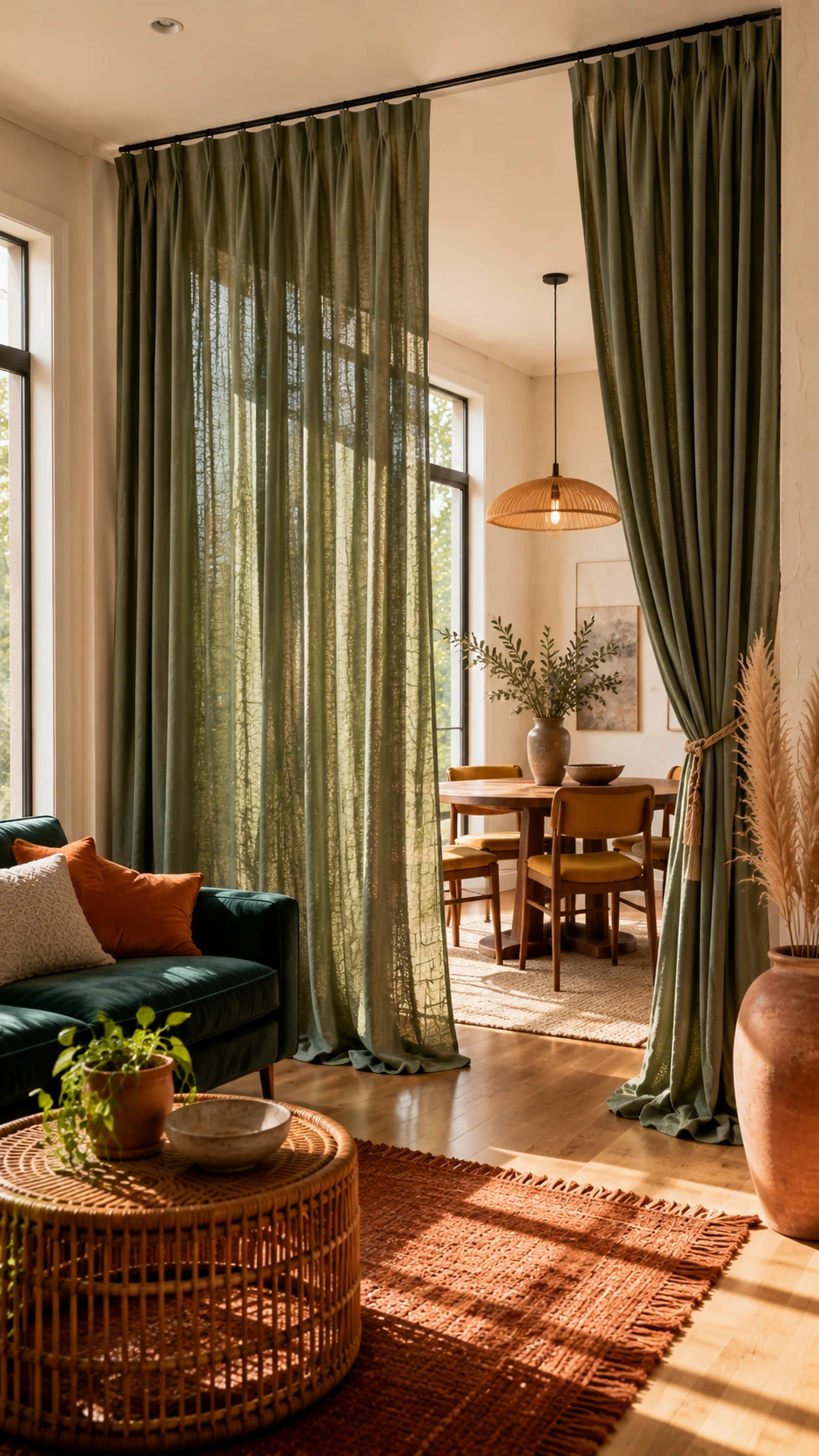
Open plan rooms are great until they feel like one big undefined space with no sense of where one area ends and another begins.
A curtain hung from ceiling height can loosely separate a dining area from a living area, or a reading nook from the rest of the room.
It does not have to block the view completely, a sheer or loosely woven fabric gives the sense of separation without closing the space off.
This is a much softer solution than a bookcase divider or a partial wall, and it can be moved or removed without any commitment.
Most of the time the curtain does not even need to be closed to do its job, the presence of it is enough.
11- Try Clip-Ring Curtain Hangers for a Casual Look
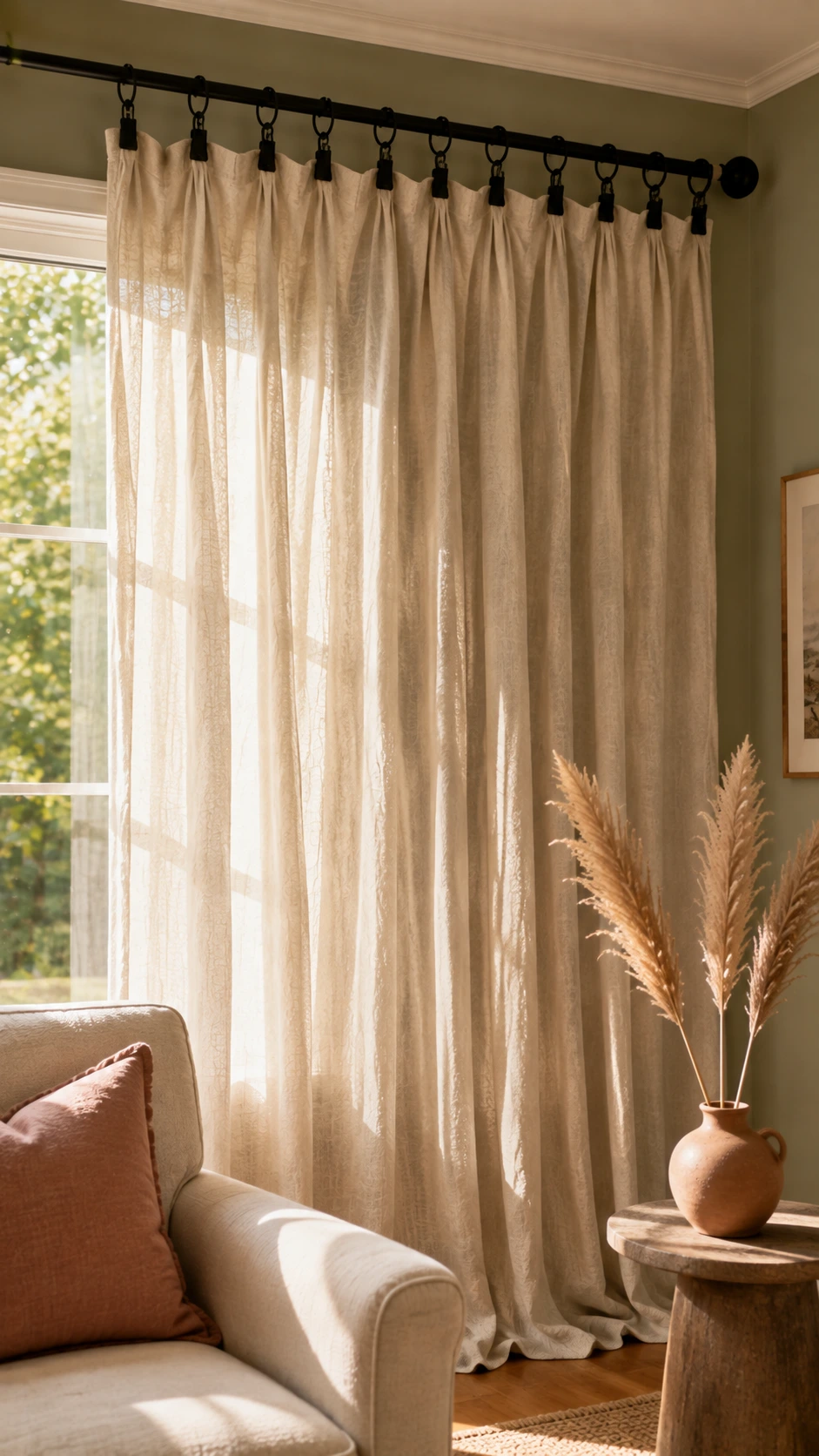
Rod-pocket curtains can look a little stiff and formal, especially in casual living spaces or kids’ rooms.
Clip rings give panels a looser, more relaxed hang that works well with linen, cotton, and lighter fabrics.
They are also much easier to slide open and closed, which sounds like a small thing until someone has struggled with a too-tight rod-pocket panel every single morning.
Clip rings come in most of the same finishes as curtain rods, so matching them is not complicated.
I think the casual hang they create makes even basic panels look a little more collected and relaxed.
Keep Reading
12- Tie Back Curtains Asymmetrically for a Relaxed Feel
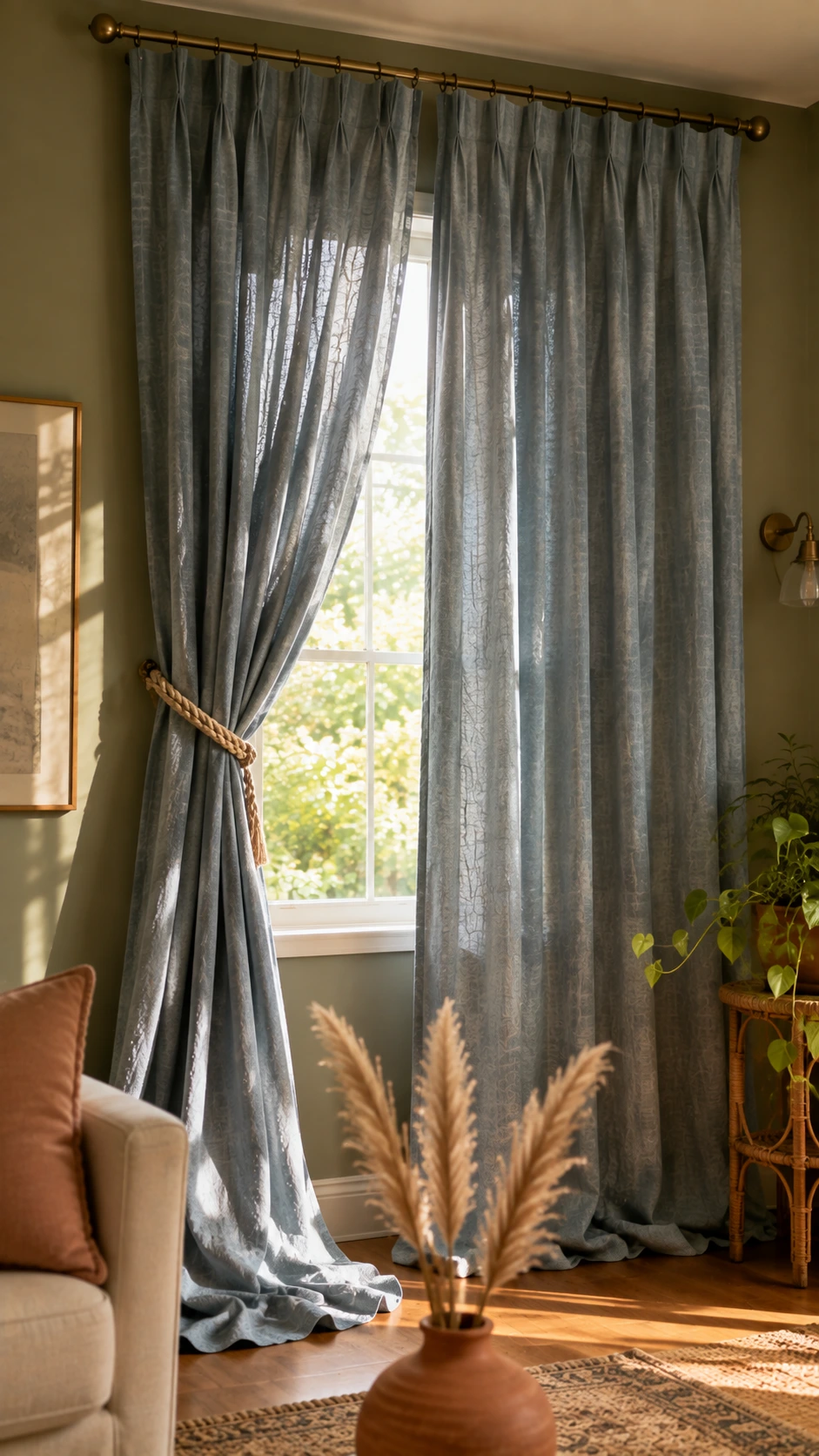
The symmetrical look where both panels are tied back at the same height is classic, but it is not the only option.
Tying back only one panel, or pulling one higher than the other, gives a window a more relaxed and less formal feel.
This works really well in bedrooms and reading nooks where the goal is comfort over polish.
A simple fabric tieback, a leather loop, or even a piece of thick rope can replace the standard plastic or metal hook and add a little personality.
The asymmetry sounds like it might look accidental but it almost always looks intentional once it is done.
13- Consider Blackout Curtains That Do Not Look Like Blackout Curtains
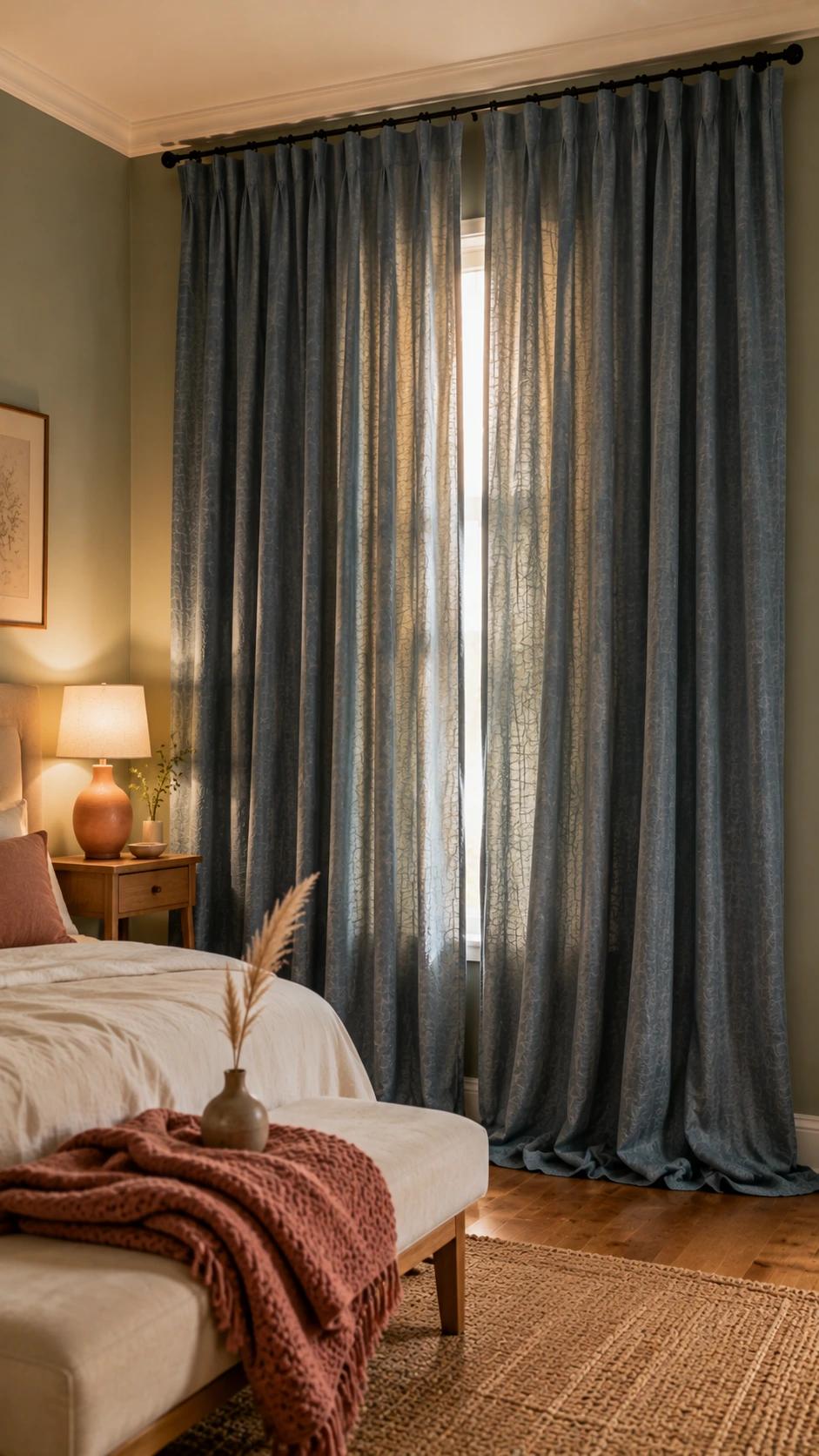
Blackout curtains used to be easy to spot because they had that thick, slightly plasticky look that gave them away immediately.
There are now a lot of options that have the blackout lining sewn in but look like regular linen or cotton panels from the front.
These work especially well in bedrooms and home offices where light control actually matters without sacrificing how the room looks.
The weight of the lining also makes the panels hang better, which is a nice bonus that most people do not expect going in.
It is worth reading descriptions carefully when buying online because the lining quality varies a lot between brands.
Curtain Changes That Are Worth Actually Making
None of these curtain decor ideas require a full room overhaul or a big budget commitment.
Most of them are about placement, proportion, and fabric choices that just work better for the space.
Curtains are one of the easiest things to swap out if something stops working, which makes them a good place to experiment.
A room that feels a little off sometimes just needs the curtains rehung a foot higher and suddenly the whole thing makes sense.

I am Eleanor Foy, the mom of two behind DaisyHacks. I am a lover of clean, calm homes and a person who will happily spend 45 minutes researching a 5 minute cleaning hack. No regrets.