Bedroom Feature Wall Ideas That Actually Look Good
A bedroom feature wall is one of those things people think about for months and then either do nothing or go way too big and regret it immediately.
You Might Also Like
The wall behind the bed just sits there looking flat and sort of unfinished, and it is hard to explain why the room still feels off even after new bedding and a couple of lamps.
Most people assume a feature wall means a big expensive renovation or at least a weekend of prep work and painter’s tape and a very specific color they saw on Pinterest that looks completely different in actual light.
The thing is, a lot of the best bedroom feature wall ideas are much simpler than that and the impact is still real and noticeable.
These are ideas that work in regular bedrooms, not staged ones, and most of them can be done without moving all the furniture into the hallway first.
1- Limewash Paint
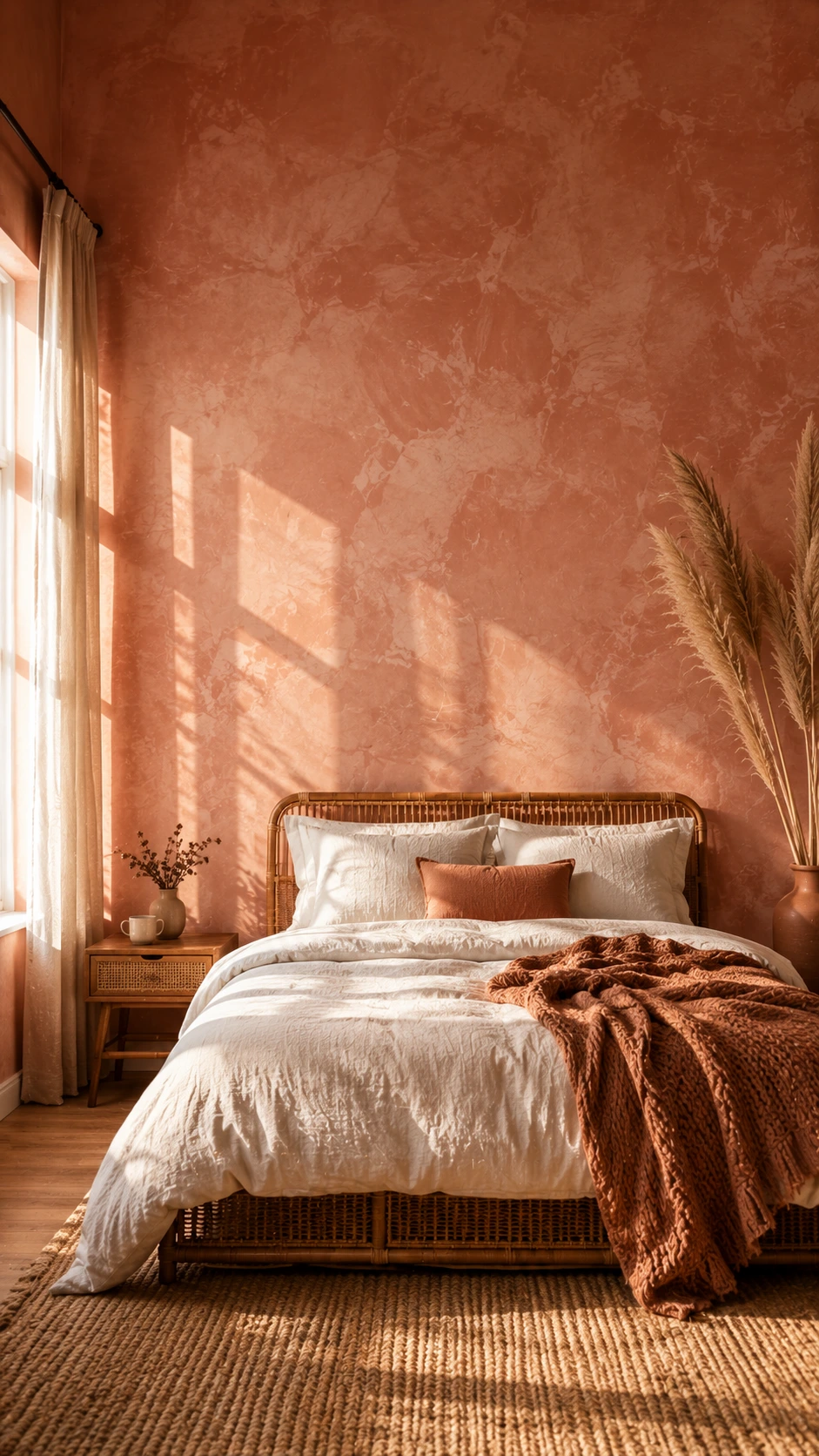
Limewash paint is one of those finishes that looks like it took a professional and a lot of money but is actually something most people can do themselves on a Saturday.
It goes on in layers with a wide brush in circular strokes, and the texture builds naturally without needing to be perfect.
The unevenness is the whole point, so there is no anxiety about brush marks or getting every inch the same, which is genuinely freeing compared to regular painting.
It works especially well in bedrooms because the soft, matte finish absorbs light instead of reflecting it and the room feels quieter somehow.
I think the warm earthy tones like terracotta or aged white are the most forgiving for first timers and they look good with almost any bedding.
2- Wooden Slat Panel
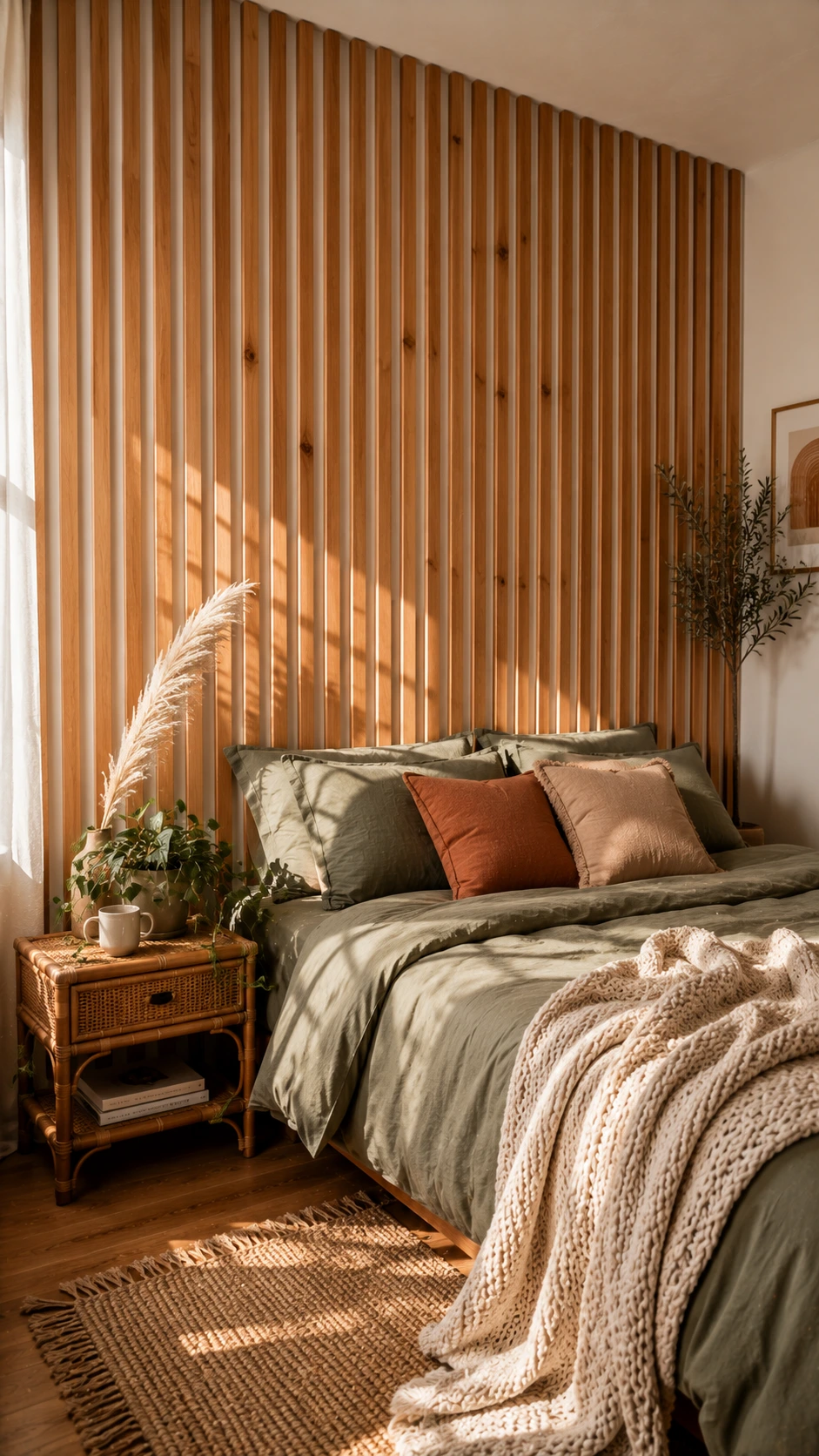
Wooden slat panels are everywhere right now and the reason is simple: they add warmth and texture without needing any art or accessories around them to look finished.
Most of them come in peel and stick or groove and clip systems that do not require professional installation, which makes this one of the more approachable bedroom feature wall ideas on the list.
The spacing between the slats is where the whole look lives, so it is worth taking a few minutes to plan that out before committing.
Narrower gaps feel more modern and structured while wider gaps give a looser, more relaxed feel that works well in casual or rustic bedrooms.
Painting the wall behind the slats a darker color first makes the depth look much more intentional and the whole thing reads as a proper design choice rather than something that got stuck up on a Sunday afternoon.
3- Wallpaper on One Wall Only
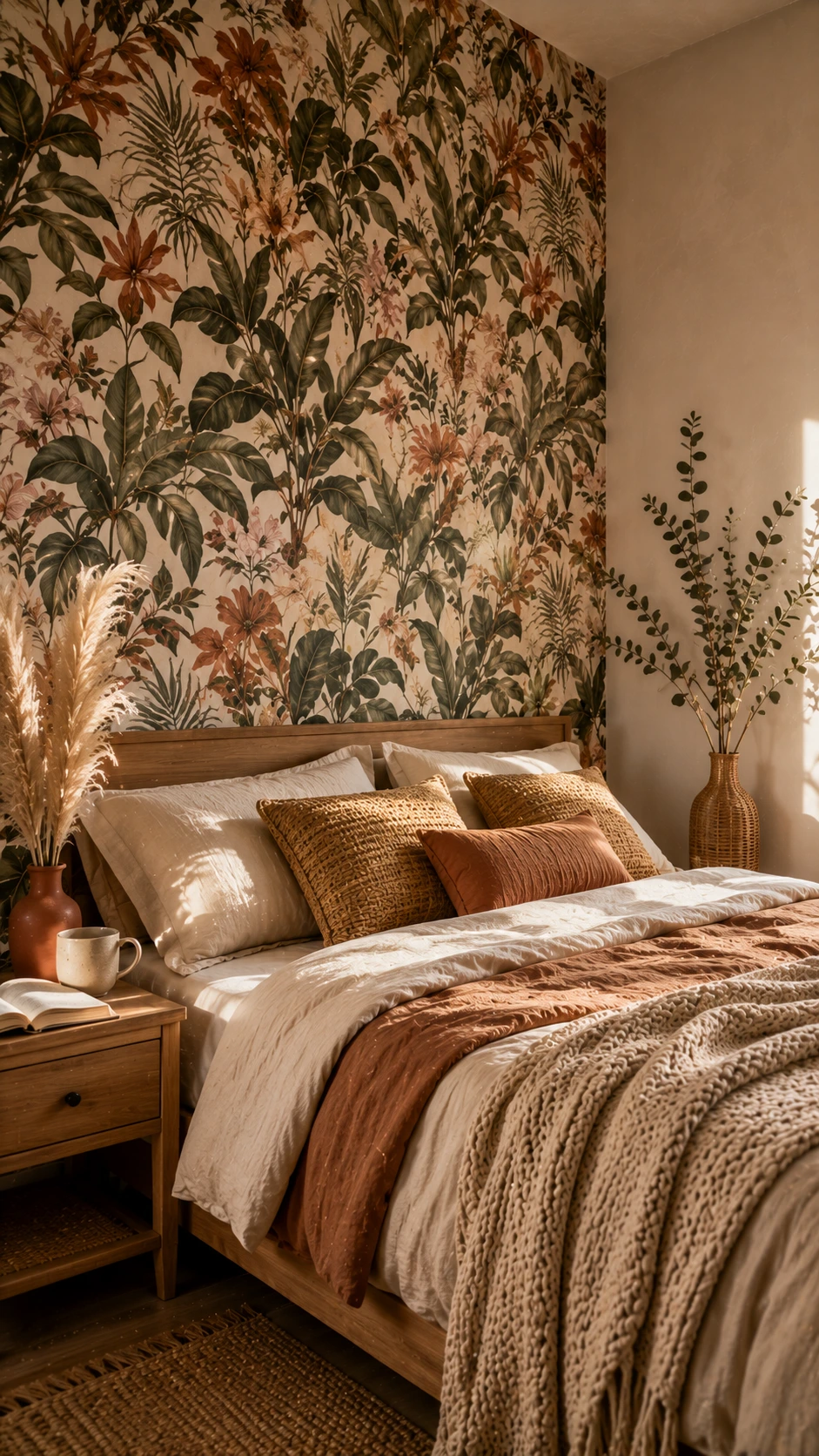
Putting wallpaper on the whole room feels like a commitment most people are not ready for, but one wall is a completely different conversation.
The wall behind the bed is the natural choice because it is the first thing you see when you walk into the room and it sets the tone for everything else.
Large scale botanical prints, soft geometric patterns, and textured grasscloth styles all work well in bedrooms without making the space feel busy or overwhelming.
Peel and stick options have improved a lot and they are worth considering for anyone renting or just not sure about a pattern long term.
The one thing to watch for is scale: a pattern that looks subtle on a sample card can feel very loud across a full wall, so most wallpaper brands will send physical samples and it is worth using them.
4- Gallery Wall Behind the Bed
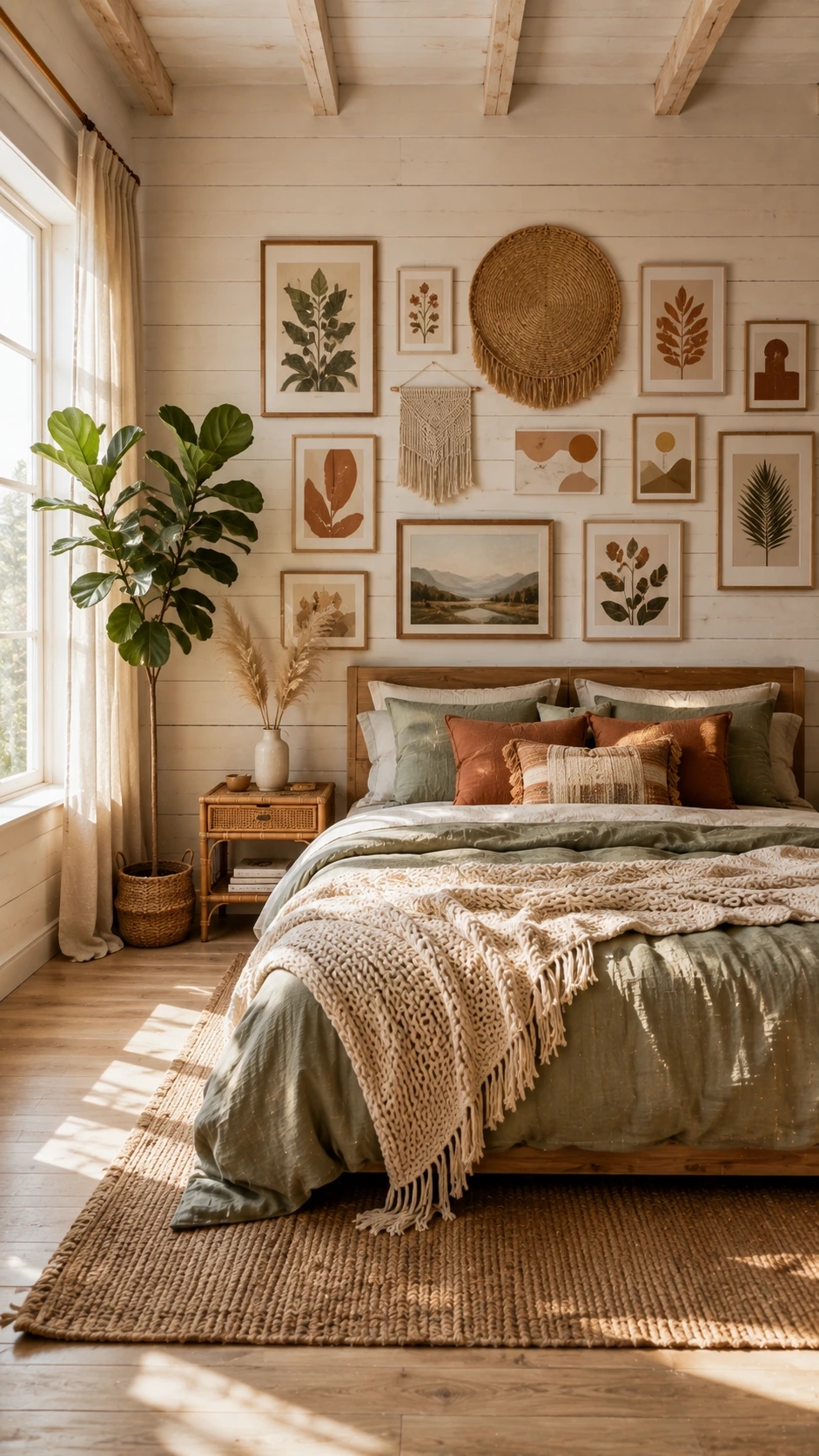
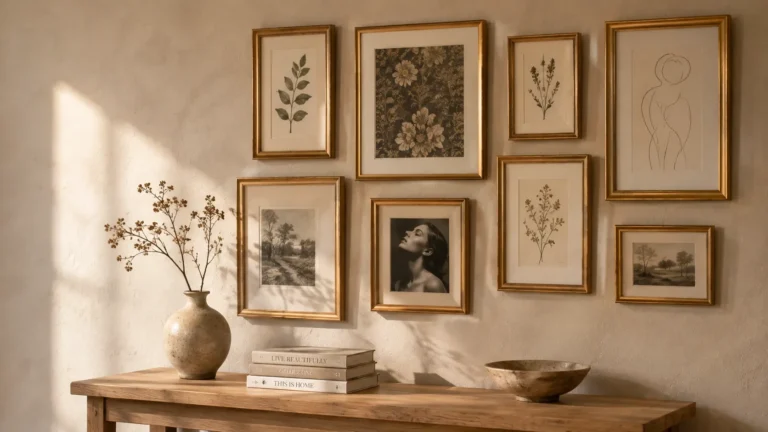
A gallery wall sounds like it requires a real eye for design but the actual trick is just committing to a cohesive frame style and not mixing too many different ones.
Matching frames in one metal finish or one wood tone instantly make a random collection of prints look considered and intentional.
The most common mistake is hanging everything too high, because gallery walls tend to float upward away from the bed and lose the visual connection to the rest of the room.
The bottom edge of the lowest frames should sit about 8 to 10 inches above the headboard, which keeps everything grounded and tied together.
Laying the whole arrangement out on the floor first before touching the walls saves a lot of patching later.
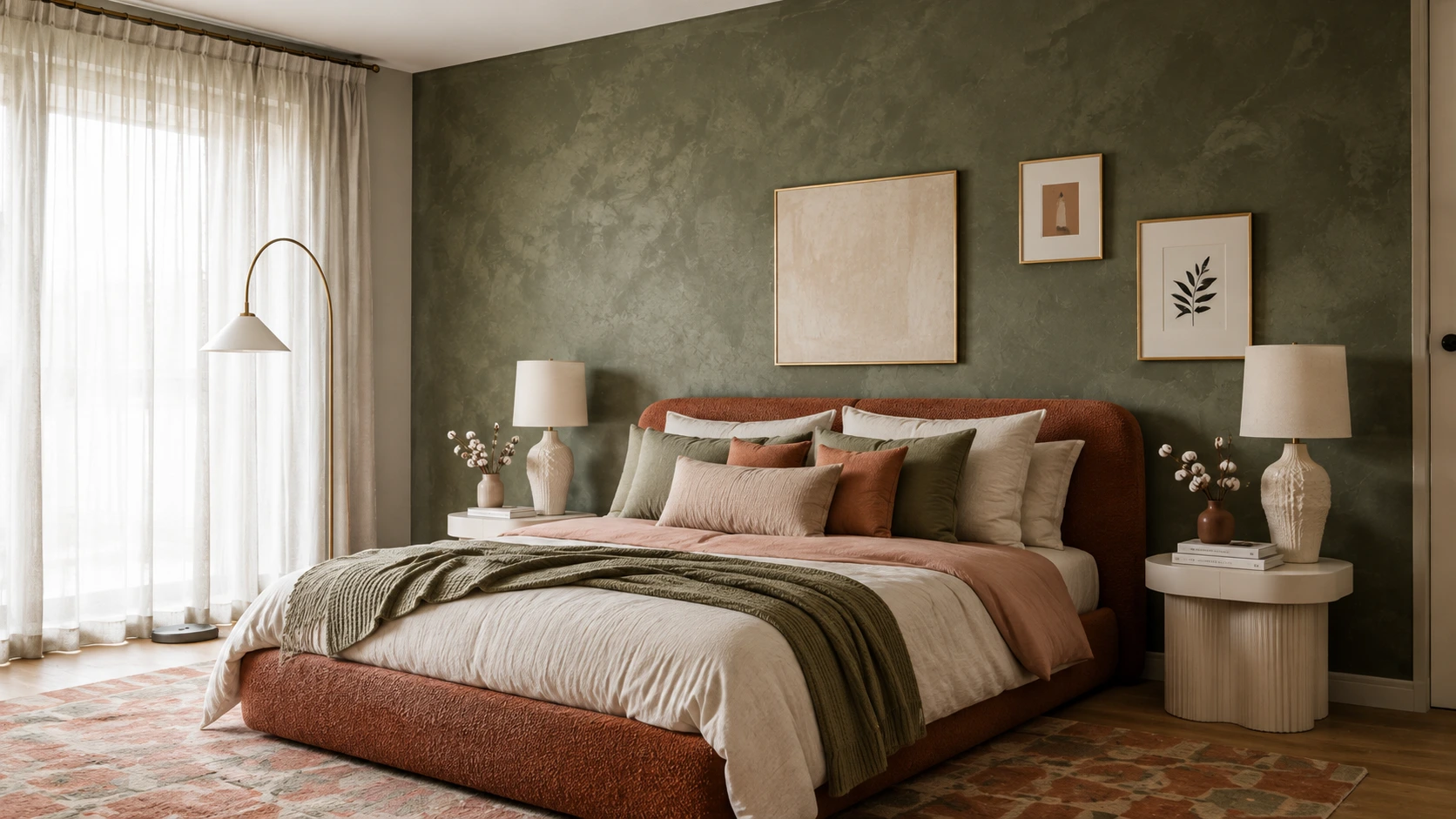
5- Textured Plaster Finish
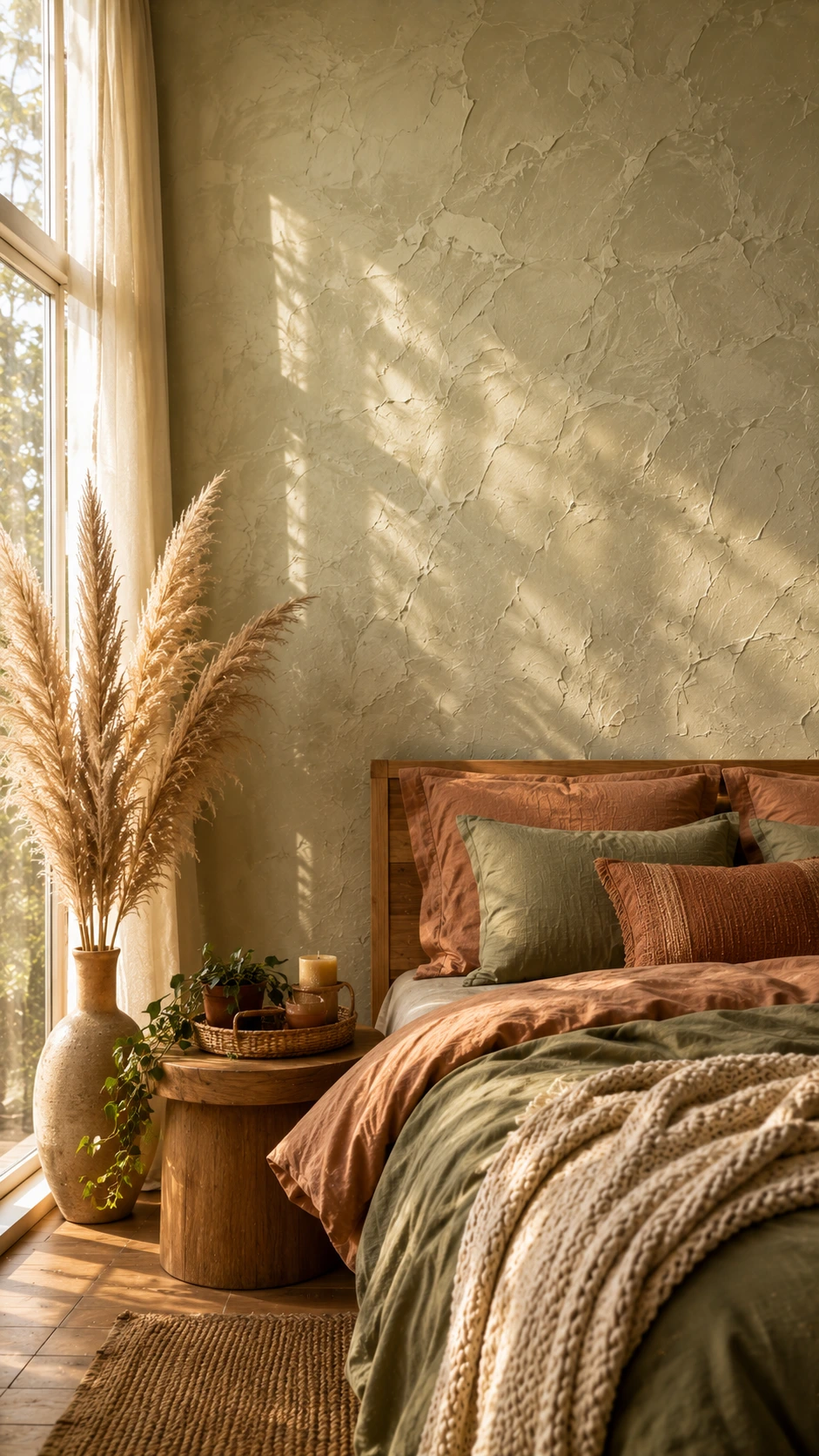
A textured plaster wall is the kind of thing that makes people ask if the house is old or if it was done by someone professional, and most of the time the answer is neither.
Venetian plaster and simple joint compound techniques can be applied over existing painted walls with a wide trowel, and the imperfections are what give it character.
This works best in bedrooms that already have a calm, neutral palette because the texture itself becomes the visual interest and nothing else needs to compete with it.
The finish can be left matte or sealed with a soft wax for a slightly polished look, and both feel appropriate in a bedroom setting.
It does take a little practice on a small test patch first, but once the motion makes sense the rest of the wall goes much faster than expected.
6- Fabric Panels or Upholstered Wall
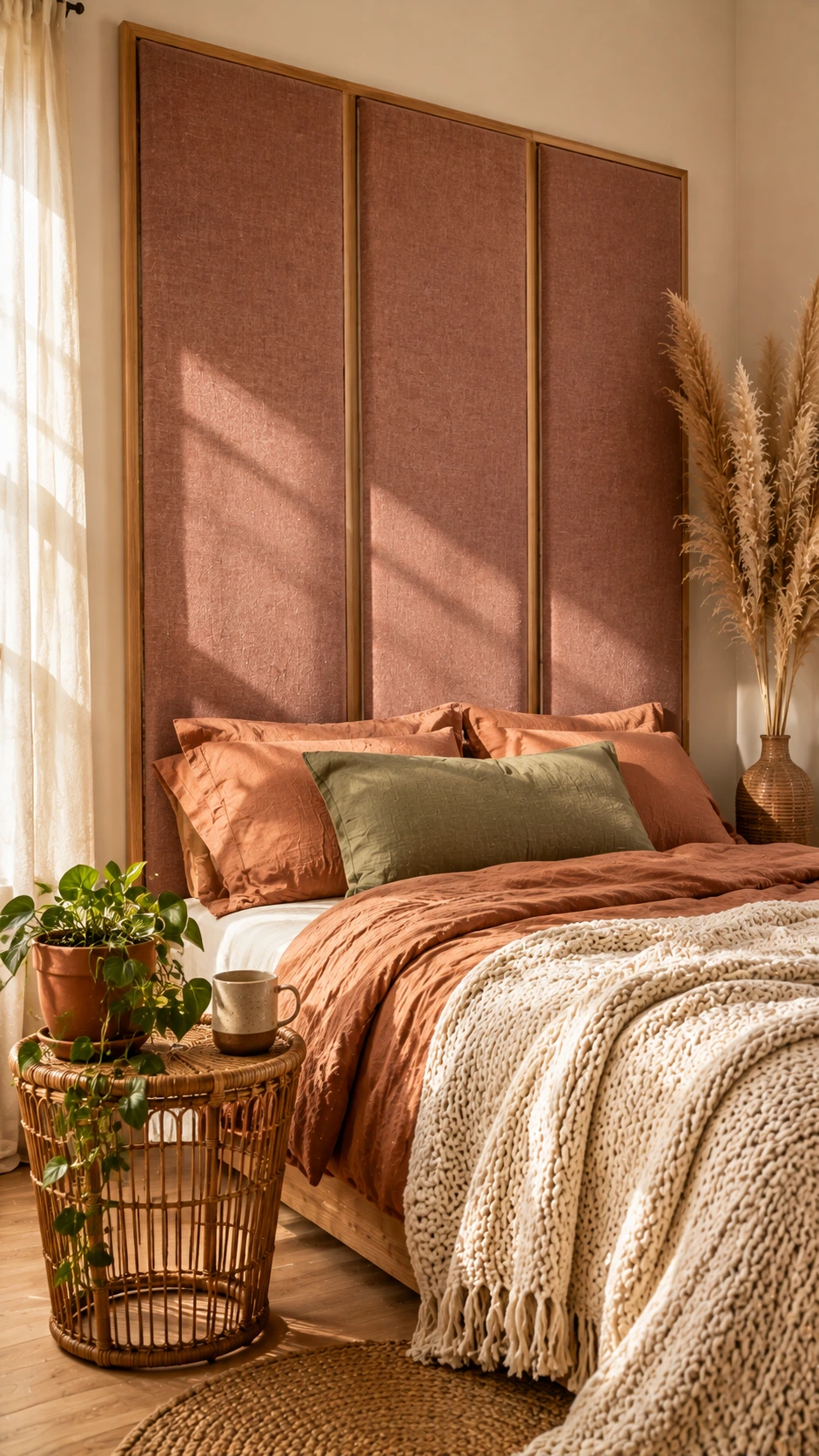
Fabric on a wall sounds like a strange choice until you see it in person and realize it makes the whole room feel softer and more finished at the same time.
The most common approach is stretched fabric panels in a simple wood frame, which can be hung like oversized art and swapped out if the style changes.
Linen, boucle, and velvet all work well for this because they have enough weight and texture to look intentional rather than decorative in a temporary way.
More Ideas to Love
This is one of the more practical bedroom feature wall ideas for renters because nothing is permanent and the wall underneath stays completely untouched.
Keeping the fabric color in the same family as the bedding and curtains pulls the room together without needing any extra effort on the styling side.
7- Arched Wall Detail
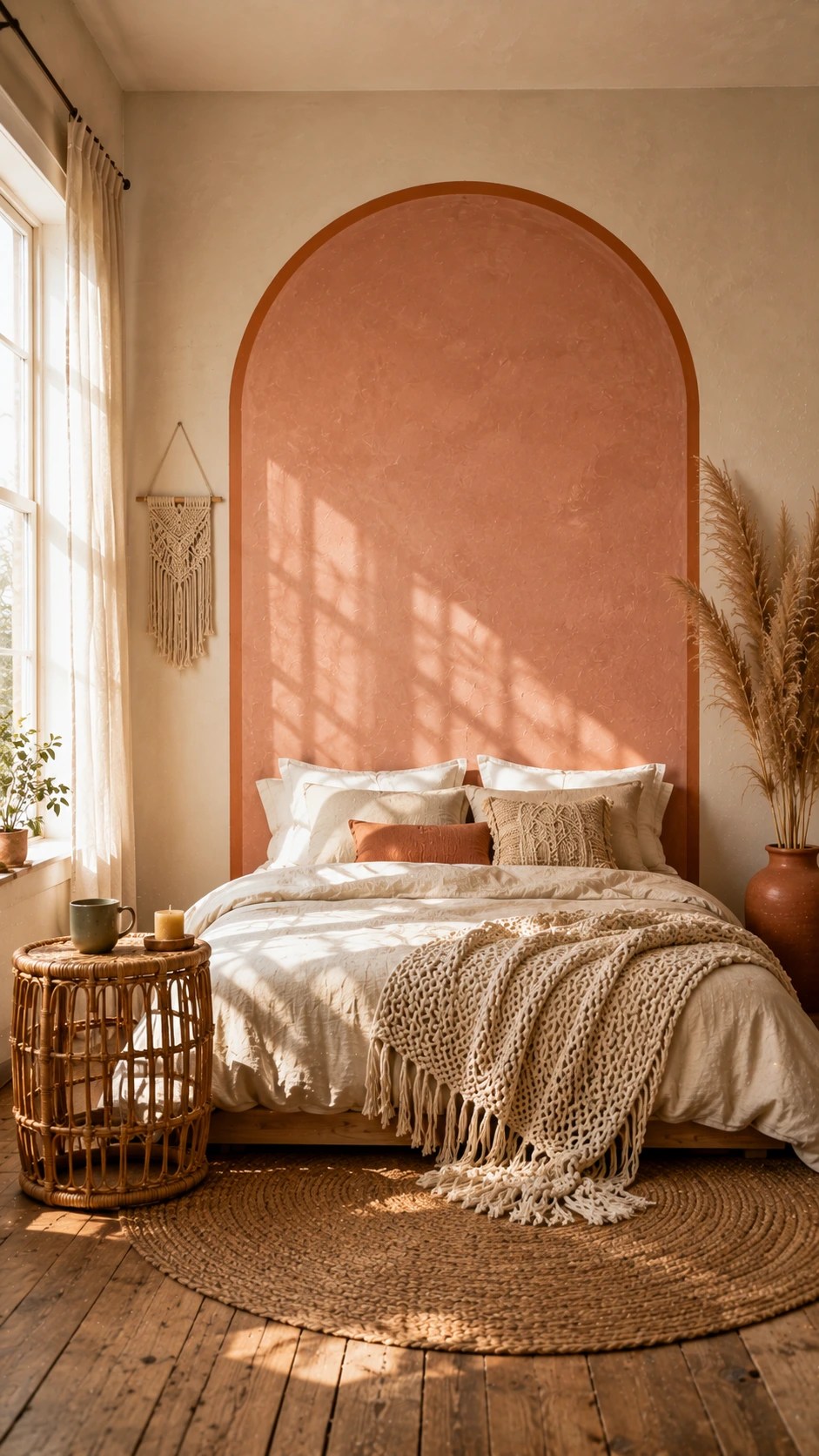
An arched shape on the wall behind the bed is one of those ideas that sounds complicated but is mostly just paint and a little patience with a template.
The arch gets painted in a contrasting or deeper shade of the wall color, and it frames the bed the way a headboard does but on a much bigger and bolder scale.
Making a large cardboard template first and taping it to the wall to check the proportions before touching paint is the step most people skip and then regret.
The arch works best when it is wide enough to extend past the sides of the bed slightly, otherwise it looks a little cramped and off balance.
I think this is one of the most impactful bedroom feature wall ideas for the effort involved because the whole thing can be done in a few hours with basic supplies.
8- Shiplap or Board and Batten
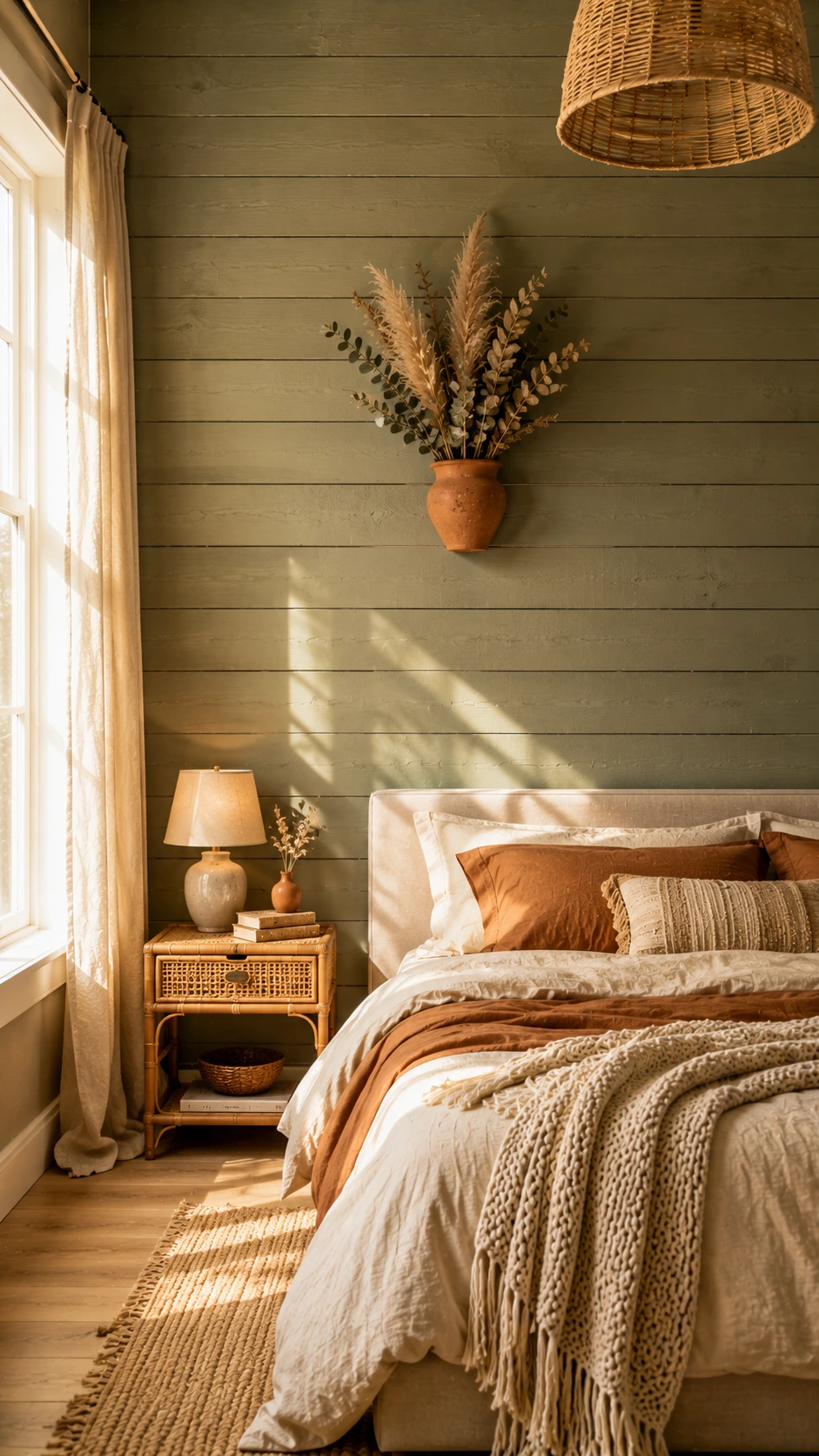
Shiplap and board and batten both add architectural interest to a flat wall without needing anything hung on them to look complete.
Board and batten is particularly good for bedrooms because the vertical lines draw the eye upward and make ceilings feel higher than they actually are.
Both can be painted the same color as the rest of the wall for a subtle tonal effect or a contrasting color for something with more presence.
The all white version is the most classic but soft sage, warm grey, and dusty blue all feel at home in a bedroom without trying too hard.
The installation requires more time and tools than a paint project but the finished result looks built in and intentional in a way that is hard to replicate with anything else.
9- Oversized Mural or Scenic Print
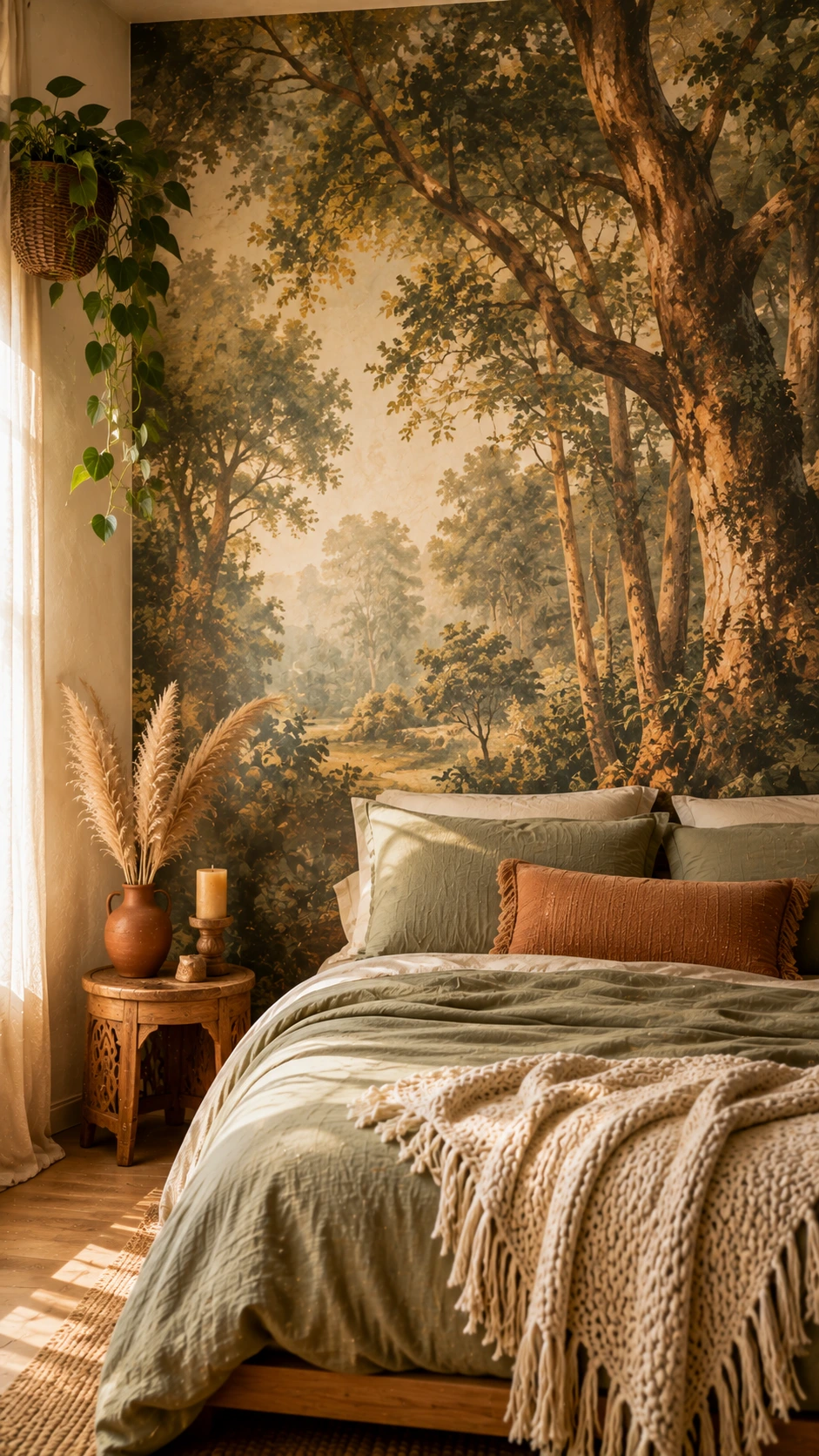
A mural wall used to mean hiring someone to paint it by hand, but large format wallpaper murals have made this a realistic option for most people now.
Forest scenes, abstract washes of color, mountain landscapes, and soft cloud prints are all popular in bedrooms because they set a mood without feeling decorative in a fussy way.
The key is sizing it correctly: most mural wallpapers come in panels and the total width needs to be measured carefully before ordering because trimming a mural mid scene is not a recoverable situation.
Bedrooms work well for bold mural choices because the room is usually only seen in low light and quieter moments, so something dramatic does not feel as overwhelming as it might in a kitchen or living room.
A single mural wall with everything else kept very plain keeps the balance right and gives the image room to breathe.
10- Floating Shelves as a Feature
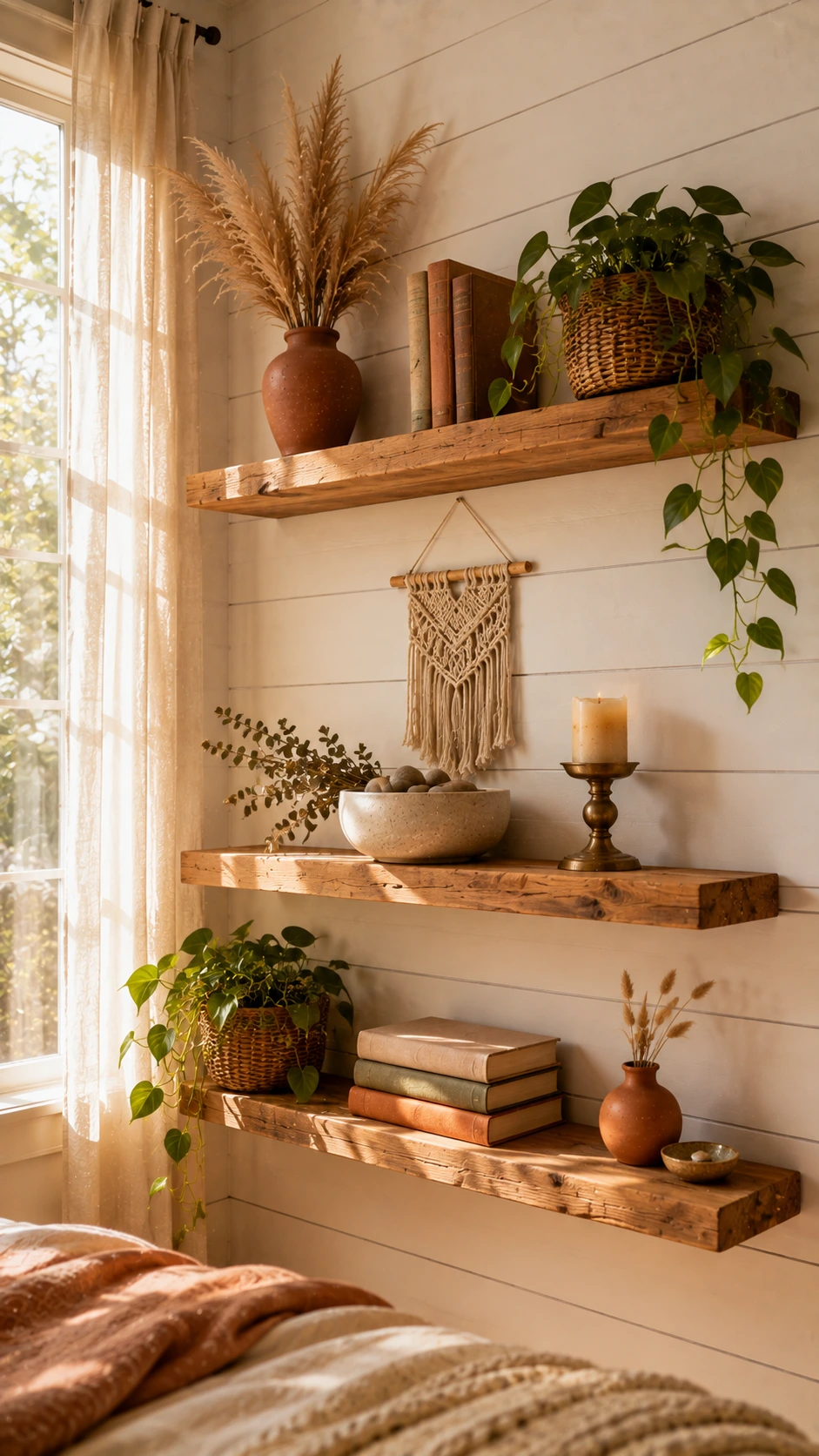
Floating shelves on a bedroom wall are one of those solutions that handle storage and style at the same time, which is always a nice surprise.
A symmetrical arrangement on either side of the bed with matching shelves reads as intentional and designed rather than practical and stuck up because there was nowhere else to put things.
Keep Reading
Keeping the shelf styling simple works better in a bedroom than in a living room because the space is meant to feel calm and not like there is a lot to look at.
A few books, a small plant, and one or two objects per shelf is usually the right amount before it starts to tip from styled into cluttered.
The wall color behind the shelves matters too, so if the rest of the room is very light, painting just that section a deeper shade makes the shelves stand out and feel more like a feature than an afterthought.
11- Draped Fabric or Canopy Effect
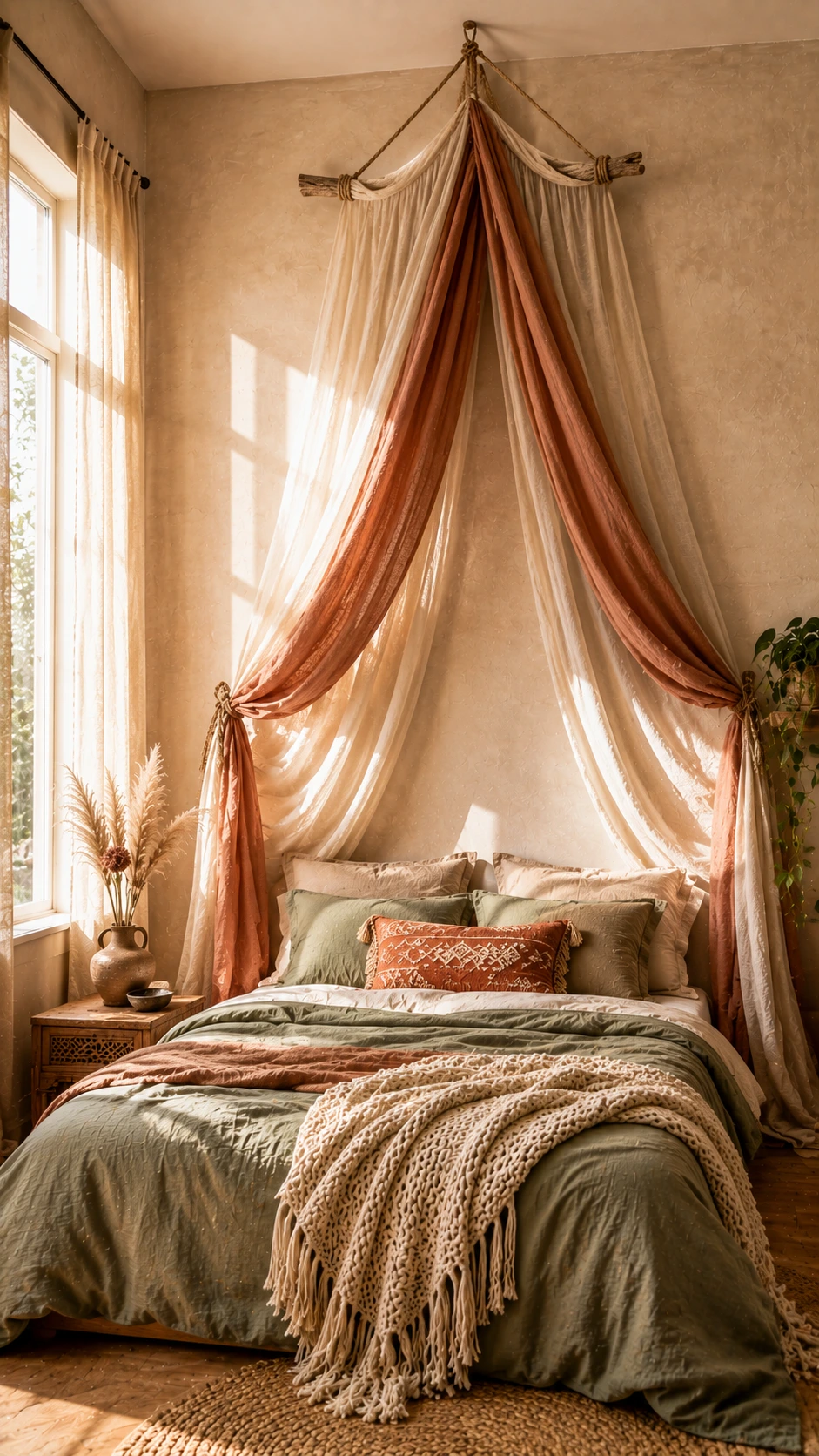
Fabric draped from the ceiling above the bed is one of the softest and most unexpected bedroom feature wall ideas because it works vertically and horizontally at the same time.
A ceiling hook or a simple curtain rod mounted at the top of the wall lets fabric cascade down behind the headboard and pool slightly at the base for a layered effect.
Sheer linen, light cotton muslin, and gauzy voile all work well because they move a little in the room and feel organic rather than stiff.
This is one of the easier ideas to try on a small budget because the fabric does not need to be wide, just long, and a lot of it can be sourced from fabric stores in basic widths without spending much.
It suits bedrooms that already lean toward a calm, collected, or slightly romantic style, and it feels completely out of place in a room with very modern or minimal bones, so it is worth thinking about the overall direction first.
Finding the Right Idea for the Room You Actually Have
None of these bedroom feature wall ideas require a full renovation or a very specific kind of home to work in.
Most of them scale up or down depending on the budget, the time available, and how permanent someone wants the change to be.
The wall behind the bed is a good place to start because even a small change there tends to shift how the whole room feels without touching anything else.
Picking one idea that fits the room as it already exists, rather than the room in a hypothetical version, is usually what makes the difference between something that looks finished and something that looks like a project that got halfway done.

I am Eleanor Foy, the mom of two behind DaisyHacks. I am a lover of clean, calm homes and a person who will happily spend 45 minutes researching a 5 minute cleaning hack. No regrets.