10 Genius Painted Exposed Basement Ceiling Ideas We Adore
A painted exposed basement ceiling is one of those fixes nobody warns you about until you see it.
Every basement has that one spot where pipes, ducts, and wires just hang there in plain view.
You Might Also Like
Most people assume the fix is a drop ceiling, so they spend thousands boxing in a room that already has decent height.
Turns out a few cans of paint can quietly solve the whole problem, starting with the right approach for your space.
A painted exposed basement ceiling works because it treats the mess overhead like a design choice instead of a flaw.
You are not hiding anything, you are just deciding how it gets to look 🖤
1. Go all black for that moody loft feel
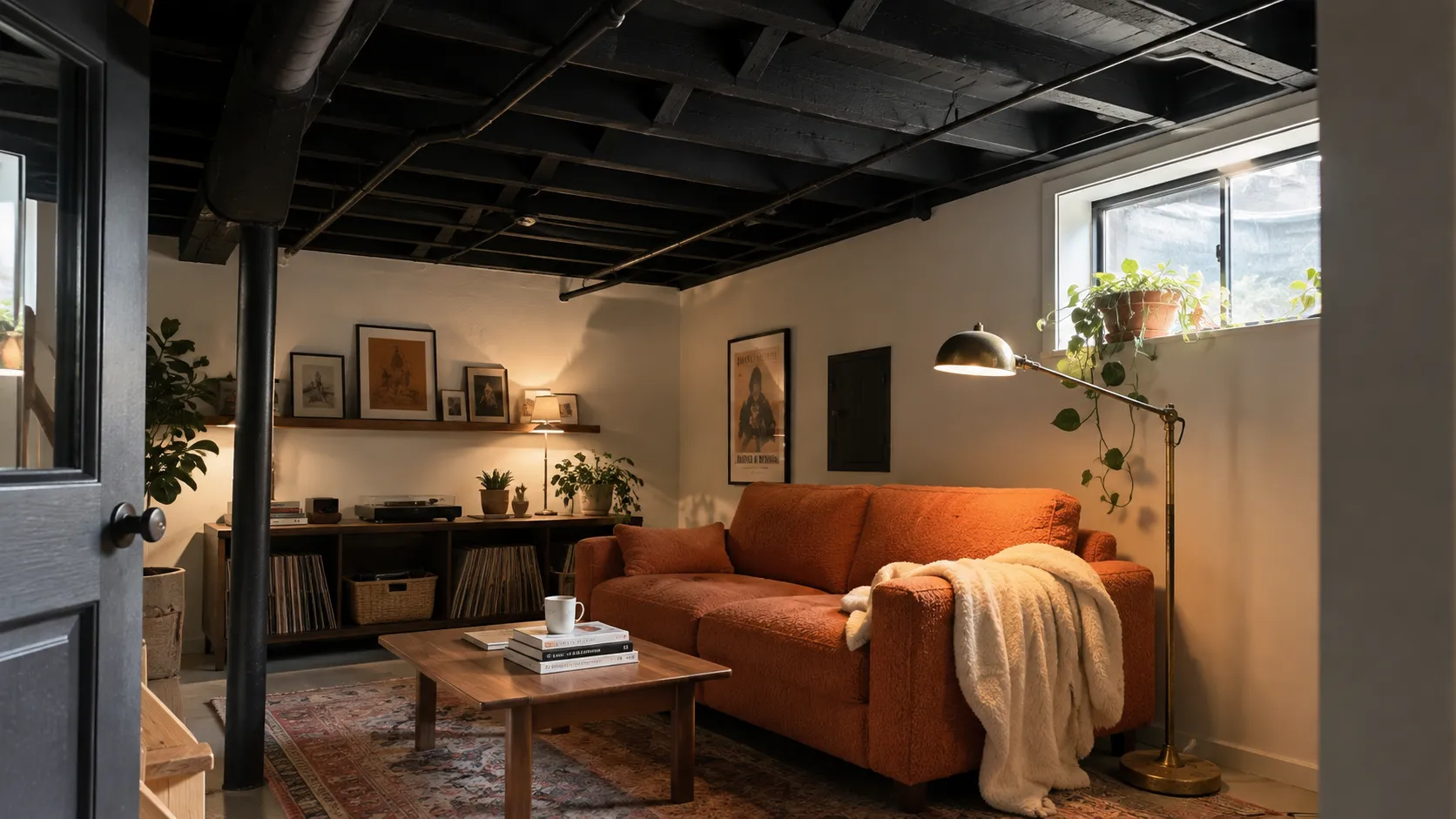
Painting every joist, pipe, and duct one solid black is lowkey the easiest way to make a basement look intentional.
The dark color swallows shadows, so uneven framing or mismatched pipe runs stop standing out once the lights are low.
It also tricks your eye into thinking the ceiling is higher, since dark tones recede instead of pressing down.
This works best in media rooms, home gyms, or any hangout space craving a grown up, industrial mood.
2. Brighten things up with warm white

If your basement barely sees natural light, a painted exposed basement ceiling in warm white can change the whole vibe.
Skip stark white and look for a shade with warm undertones, since cool white can feel sterile under artificial light.
White bounces light around the room, which matters a ton in a space with small or no windows.
This route works well for basements doubling as an office, playroom, or workout space that needs to feel awake.
3. Try a two tone pipe and joist combo

A two tone painted exposed basement ceiling turns the space overhead into a real design feature instead of an eyesore.
Matte black joists with brushed copper pipes read steampunk in the best way, especially under warm bulb lighting.
White joists with a bold red duct run feel graphic and fun, perfect for a creative studio or teen hangout.
The contrast draws the eye up on purpose instead of making you look away from a mess.
4. Keep it one moody monochrome
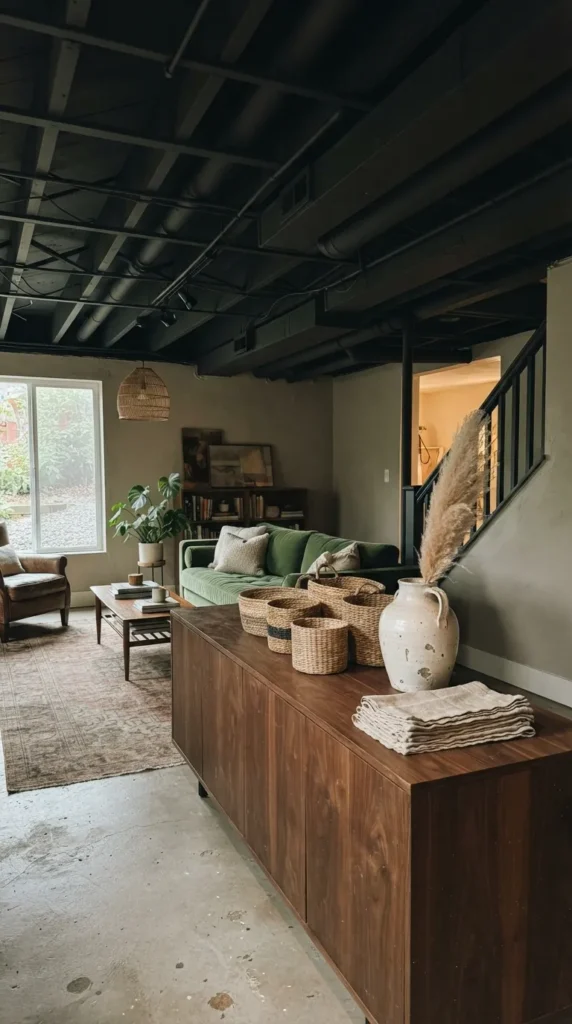
A single unbroken color across every surface is the most committed version of a painted exposed basement ceiling, and it pays off.
Every joist, duct, pipe, and wire folds into one continuous plane instead of competing for attention.
It reads as intentional the second you walk in, not gonna lie it looks designer.
This works in basically any basement, regardless of ceiling height or how many mechanical systems run overhead.
5. Add color blocked joist bays
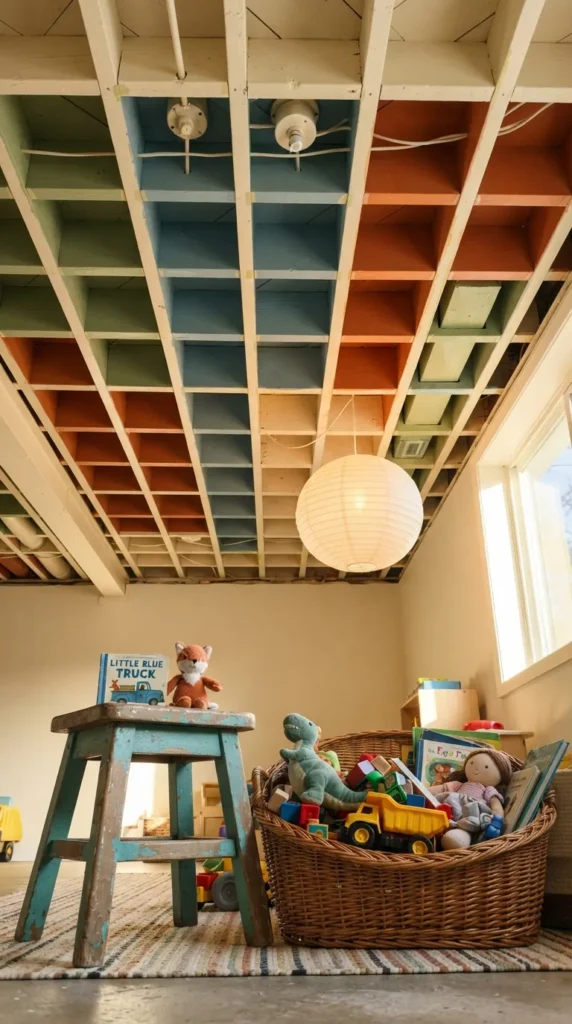
A color blocked painted exposed basement ceiling paints each joist bay a slightly different shade for a shadow box effect.
Soft sage, dusty blue, and warm terracotta rotating across the bays give a basement real personality without feeling chaotic.
For a kids playroom, swap in punchy primary colors for a space that feels genuinely fun.
It is a small effort that turns a plain ceiling into something people actually notice.
More Ideas to Love
6. Lean into rustic and raw
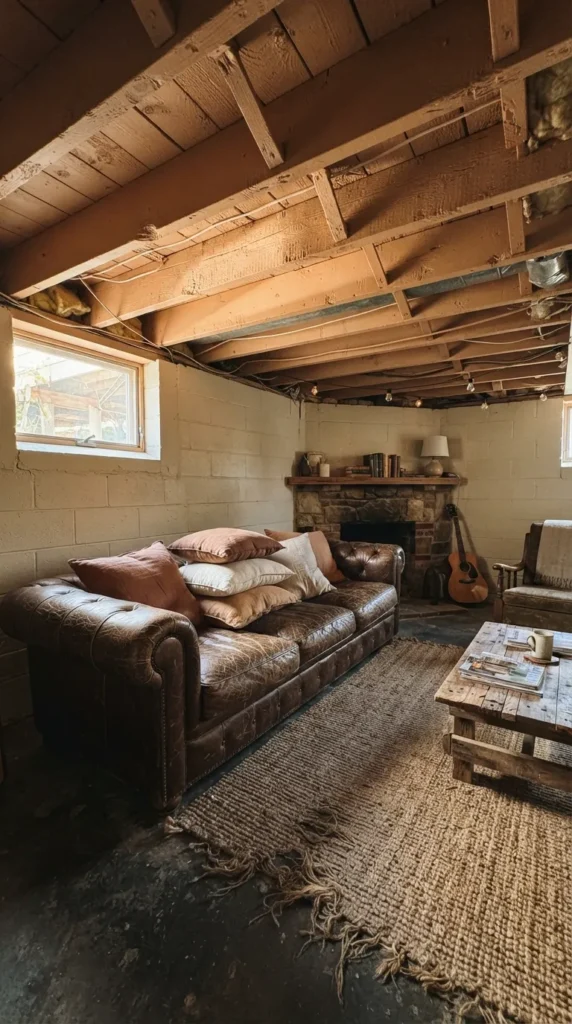
If your basement has older wood joists with real character, a painted exposed basement ceiling in an earthy flat tone lets that show.
Clean up rough spots first, then go with a warm clay or olive shade in a matte finish.
The goal here is texture, not perfection, so a little unevenness in the wood works in your favor.
This look fits basements with a cozy, lived in feel rather than a polished one.
7. Use black to fake extra height
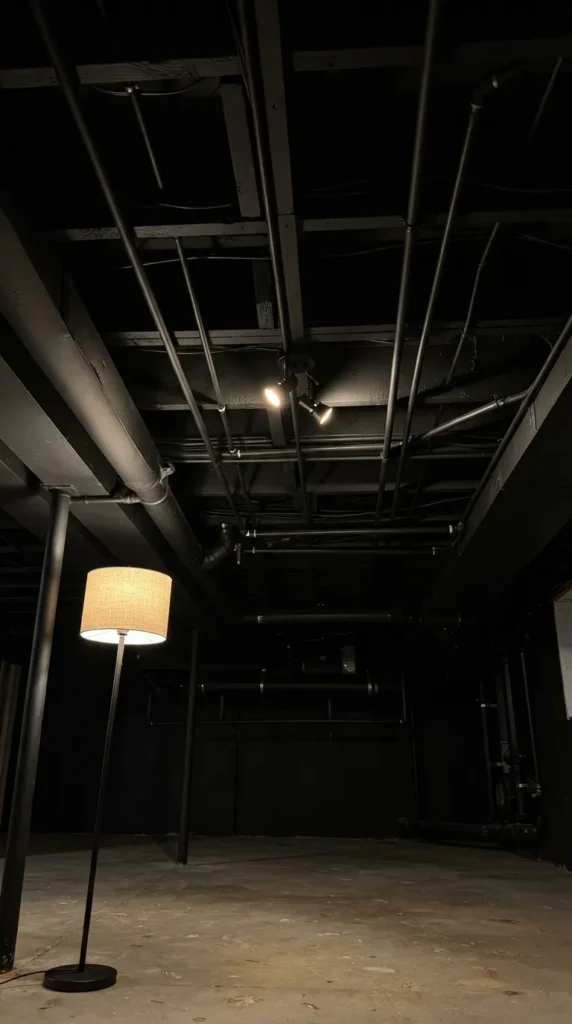
Low basement ceilings benefit most from a fully painted exposed basement ceiling in matte black, joists, pipes, and all.
When everything overhead is one dark shade, your eye reads it as a single plane instead of separate objects.
That single plane trick makes a six foot eight basement feel noticeably taller than it measures.
Pair it with recessed or track lighting so you are not losing headroom to fixtures either.
8. Bring in LED strips for a modern loft look
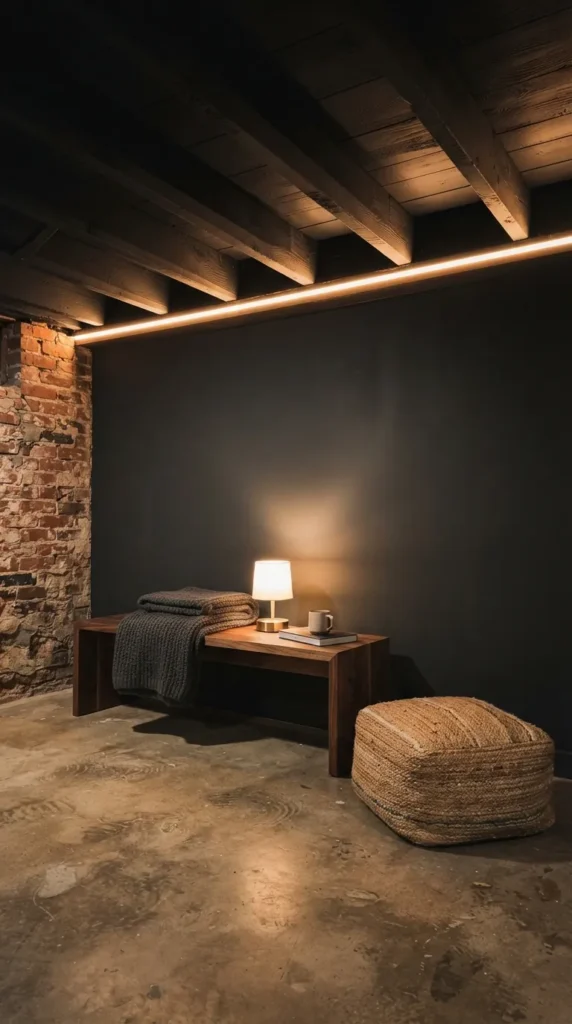
Add warm LED strip lighting along a painted exposed basement ceiling for a room that feels like a converted loft.
The light catches the texture of the paint and throws soft shadows across the beams, adding real depth after dark.
This pairs especially well with a matte black or charcoal ceiling, since light pops harder against a dark base.
It is a small upgrade that makes the room feel finished without adding a single inch of drywall.
9. Match paint sheen to your goals
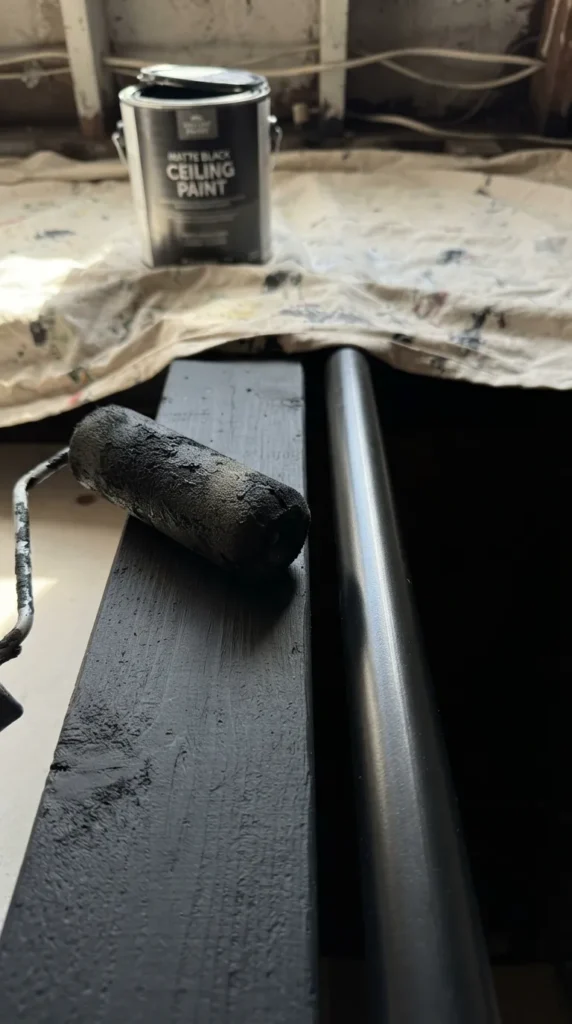
A flat or matte finish hides imperfections best, which matters since a painted exposed basement ceiling shows every roller mark in gloss.
Satin can work if you want pipes to read as slightly polished, but keep the joists themselves matte so they recede.
Keep Reading
Dry fall paint is worth asking for at the store, since it dries into a powder that will not drip on your furniture below.
Getting the sheen right is honestly what separates a professional looking finish from one that reads as a rushed weekend project.
10. Prep like a pro before you spray
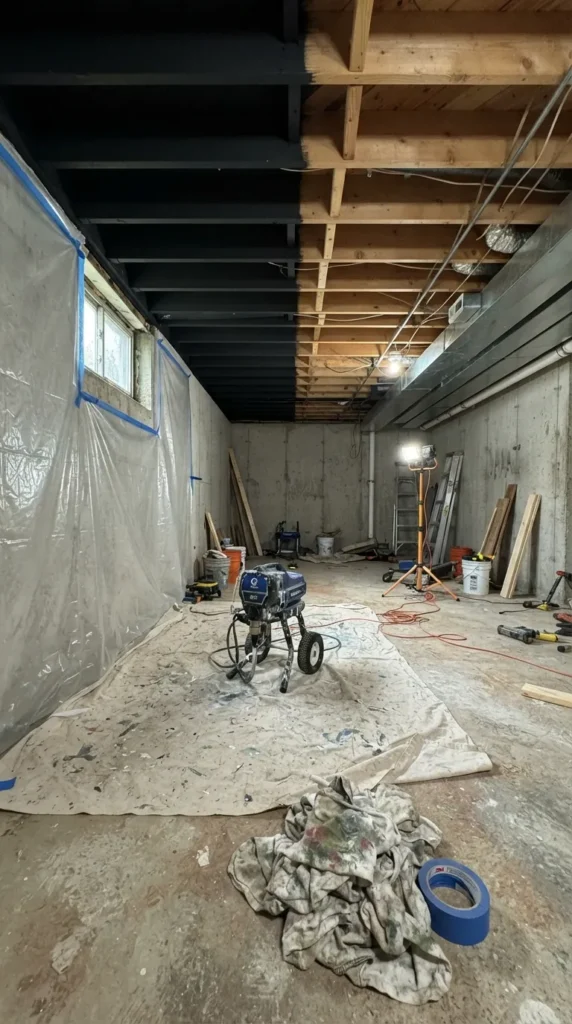
Clean every joist, pipe, and duct thoroughly, since dust and grease will keep paint from sticking no matter how nice the color is.
Prime raw wood, bare metal, and any plastic conduit separately, because each surface soaks up paint differently.
A sprayer covers a painted exposed basement ceiling far faster and more evenly than a roller ever could, especially in tight joist bays.
Tape off walls and floors first, since overspray travels further than expected in an open basement layout.
A painted exposed basement ceiling is proof that the ugliest part of your basement can become the best part of the room 🫧
Pick one shade, grab a sprayer, and give it a weekend, because the whole space will feel finished the second you look up.

I am Eleanor Foy, the mom of two behind DaisyHacks. I am a lover of clean, calm homes and a person who will happily spend 45 minutes researching a 5 minute cleaning hack. No regrets.