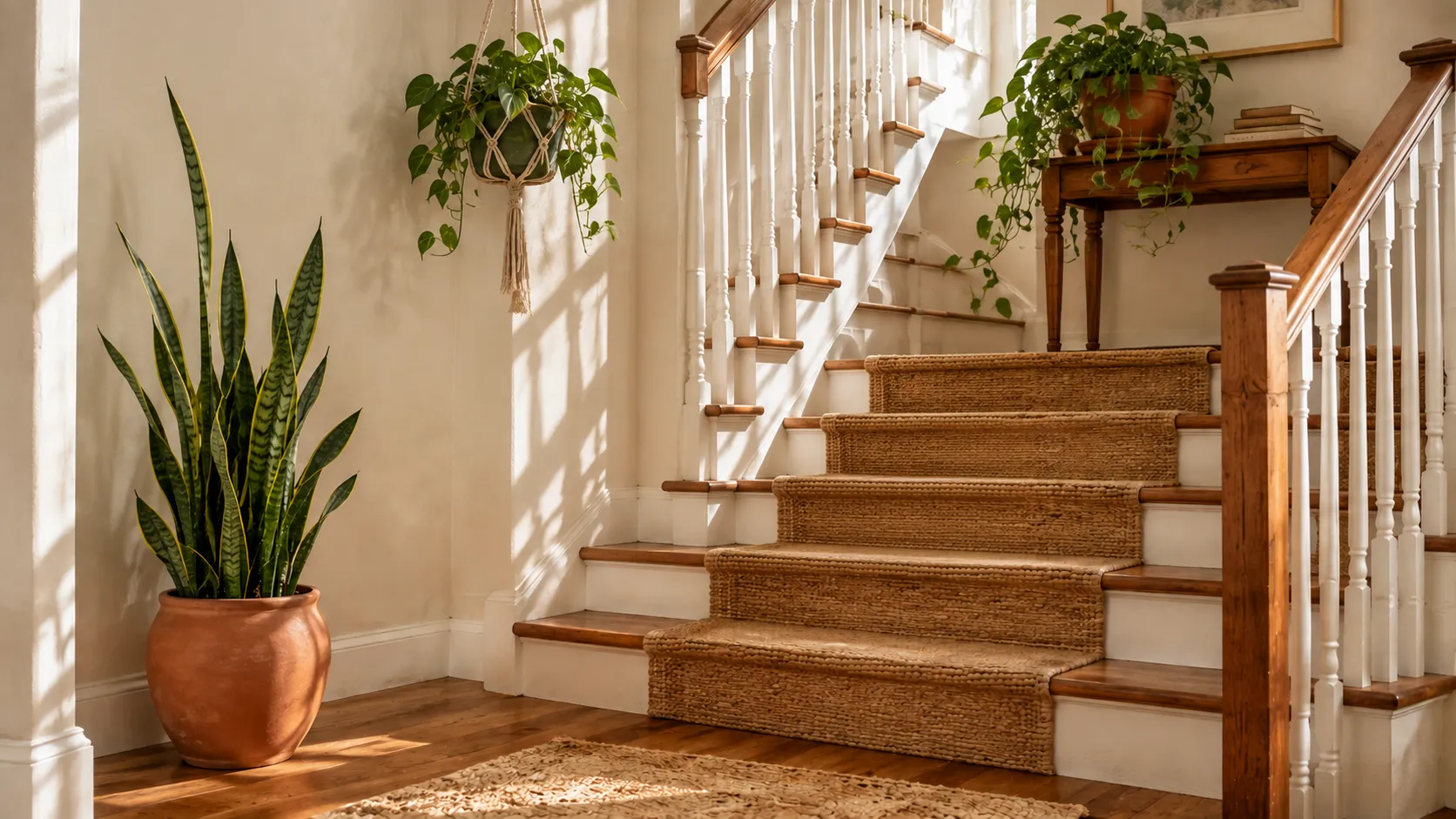
10 Staircase Plants Indoor Ideas That Feel Effortless
Staircases are one of those spaces people walk past a hundred times a day without really looking at them.
You Might Also Like
There’s usually a blank wall, an awkward landing, or a stretch under the steps that just sits there doing nothing.
Most people assume filling that space means a big renovation or expensive built ins.
The truth is a few well placed staircase plants indoor can do more for that space than any shelf or painting.
It doesn’t take a green thumb or a weekend project, just a little planning about light and placement.
Here are ten ideas that don’t feel like an afterthought.
1- Trailing Pothos on the Landing
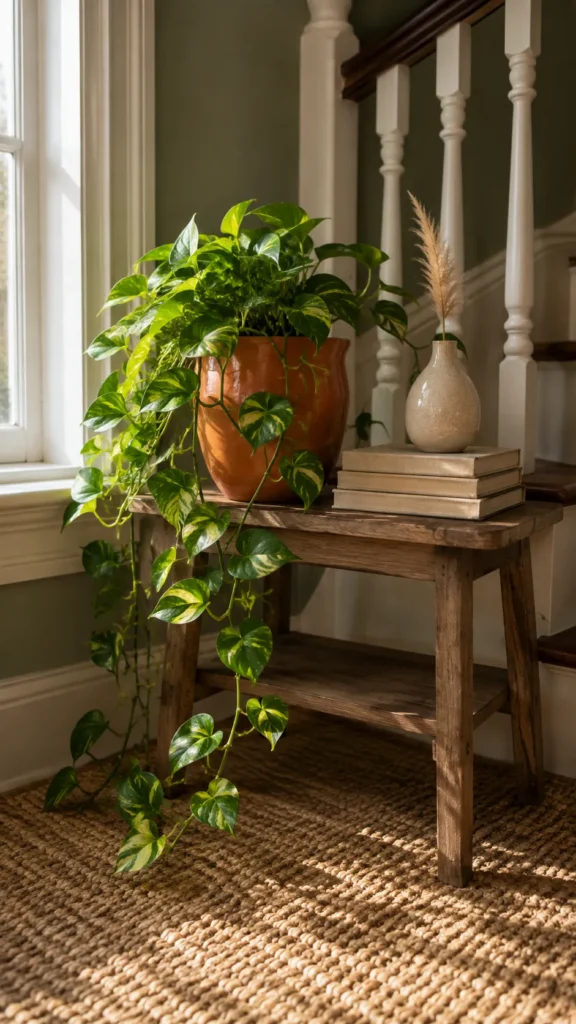
Landings are usually the most overlooked spot on a staircase.
A pothos in a simple pot on a small table or shelf lets the vines spill down the side naturally.
It grows fast and forgives missed waterings, which is always a nice surprise for a busy household.
Low to medium light works fine here, so a landing without a window still does the job.
This is one of the easiest staircase plants indoor to start with if the whole idea feels new.
2- Hanging Planters Along the Stairwell
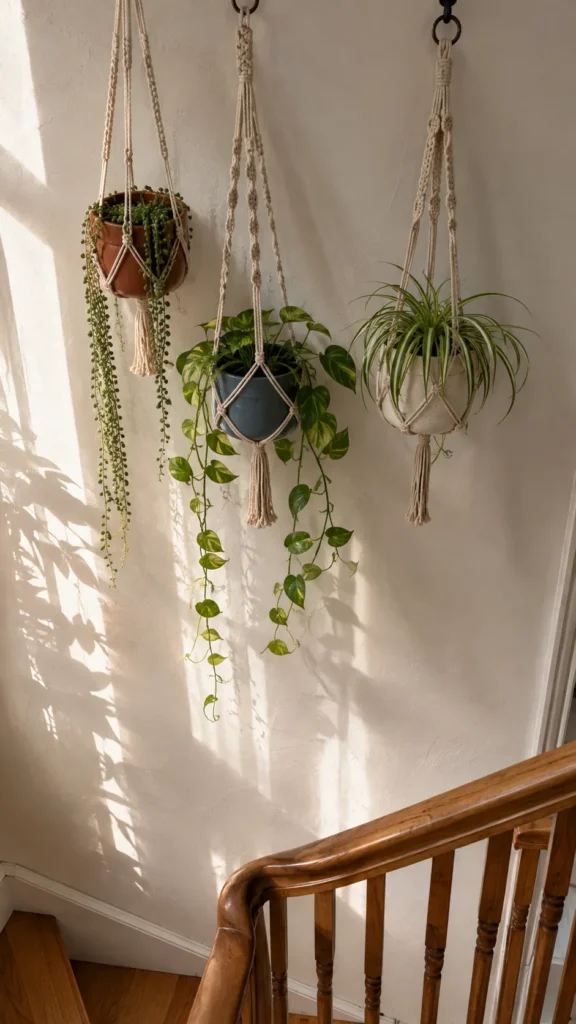
A tall stairwell wall is one of those places nobody thinks to use.
Hanging planters at staggered heights fill that vertical space without crowding the steps themselves.
Macrame hangers or simple ceramic pots both work, depending on the overall look people are going for.
The trick is spacing them so the eye moves upward instead of feeling cluttered.
Hanging varieties are some of the most flexible staircase plants indoor since they don’t need any floor space at all.
3- Under Stairs Plants as a Mini Garden
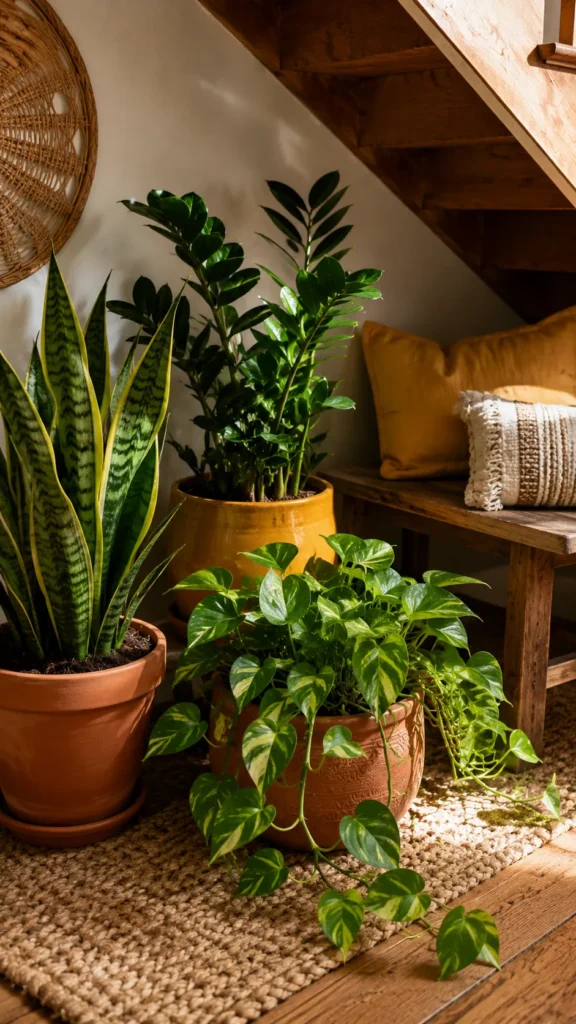
The space under a staircase is almost always wasted, usually just storing shoes or forgotten boxes.
Clearing it out and lining up a few under stairs plants turns it into an actual feature.
Snake plants and ZZ plants are the easiest choice since they tolerate low light and dry air.
A small rug and a bench nearby makes the corner feel intentional instead of leftover.
Grouping staircase plants indoor like this in one spot makes a bigger visual impact than scattering them around.
4- Entryway Plants Indoor by the Front Door
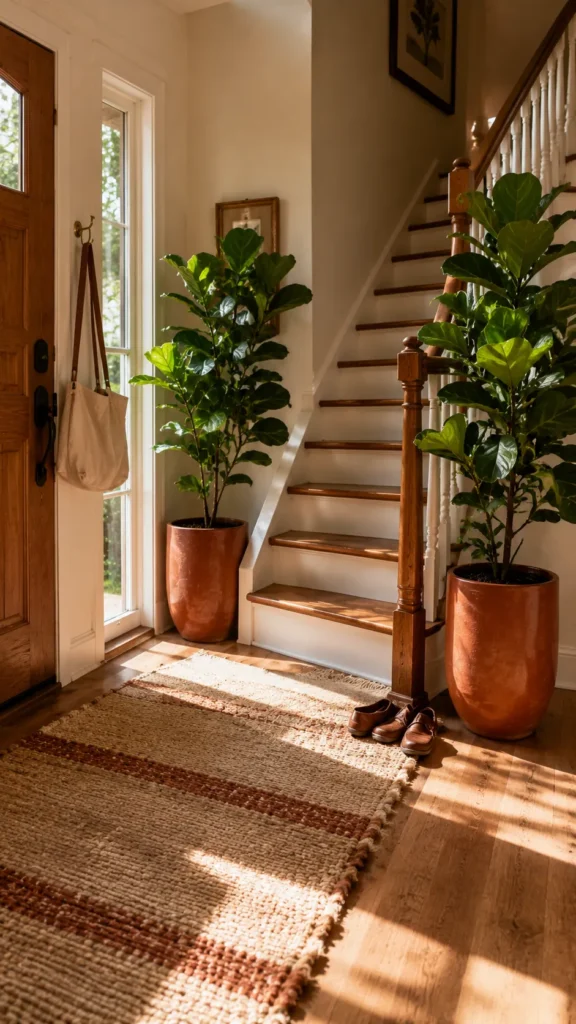
4- Entryway Plants Indoor by the Front Door
The first few steps of a staircase often sit right near the entryway.
A pair of entryway plants indoor on either side of the bottom step gives that spot some structure.
Something upright like a fiddle leaf fig or a rubber plant reads as more formal than trailing greenery.
Consistent light is important here since entryways can get drafty near the door.
Starting a staircase plants indoor layout right at the entrance sets the tone for the rest of the stairs.
5- Floating Shelves for Staircase Garden Styling
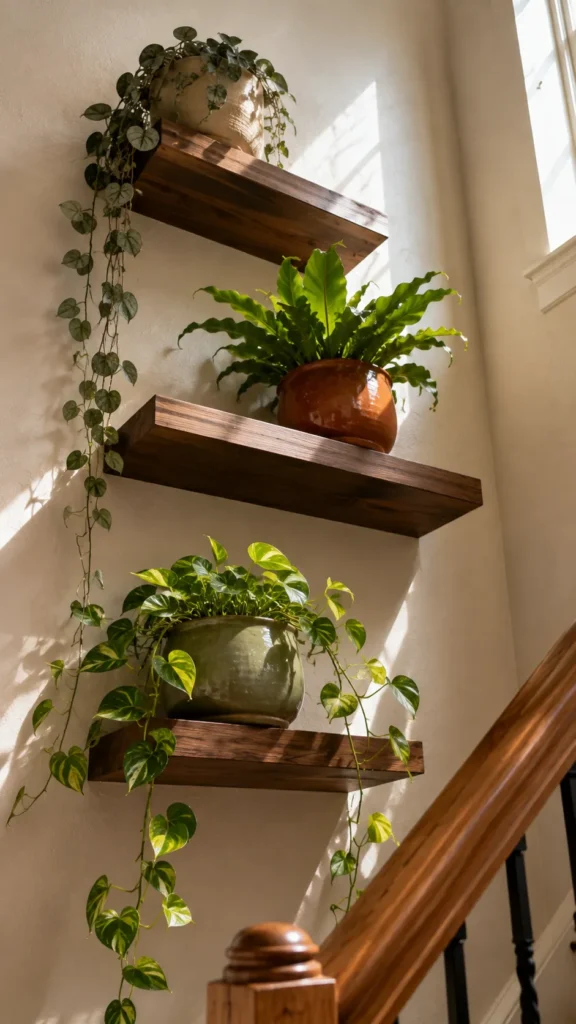
A staircase garden doesn’t need a lot of floor space to feel full.
Floating shelves installed along the stairwell wall give plants a place to sit without taking up any room.
Mixing pot sizes and plant heights keeps the shelf from looking too matched or staged.
A mix of trailing and upright varieties adds movement without overwhelming the wall.
Shelves are one of the simplest ways to fit more staircase plants indoor without touching the actual steps.
More Ideas to Love
6- Hallway Plant Ideas at the Top of the Stairs
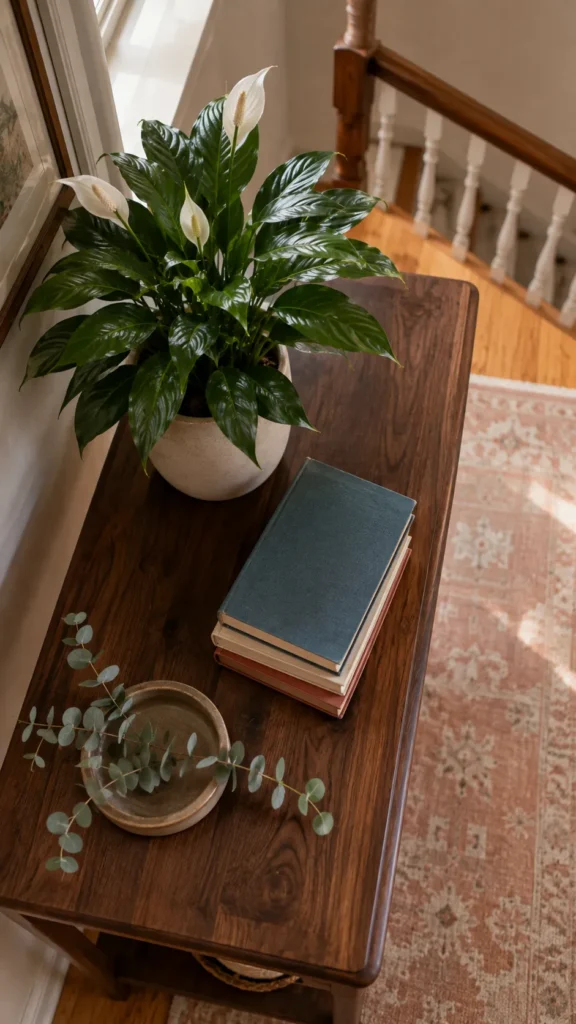
The landing at the top of the stairs often connects to a hallway, and that spot gets skipped constantly.
A simple console table with one or two plants is one of the easiest hallway plant ideas to pull off.
Peace lilies do well here since they like a bit of shade and still flower without much fuss.
The goal is just to soften the transition between the stairs and whatever room comes next.
It’s another easy spot to keep the staircase plants indoor theme going once people reach the top.
7- Staircase Flowers for a Softer Look
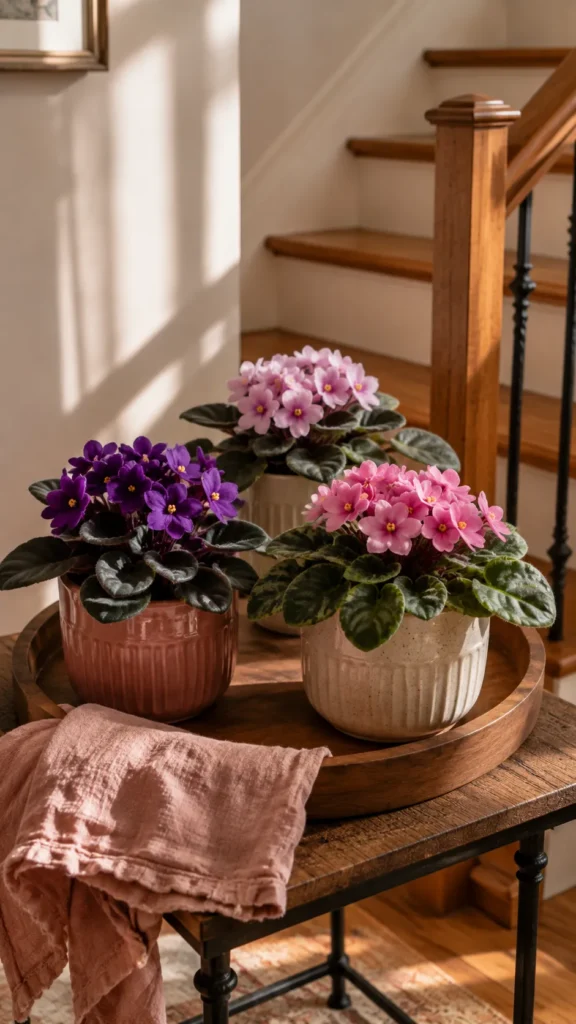
Not every plant on a staircase needs to be green and leafy.
A few staircase flowers, like African violets or begonias, add color without needing a full garden setup.
They do best on landings with bright indirect light rather than direct sun through a window.
Rotating them seasonally keeps the space from feeling static year round.
Flowering staircase plants indoor bring a softness that leafy greenery alone doesn’t quite give.
8- Low Light Plants for Dim Stairwells
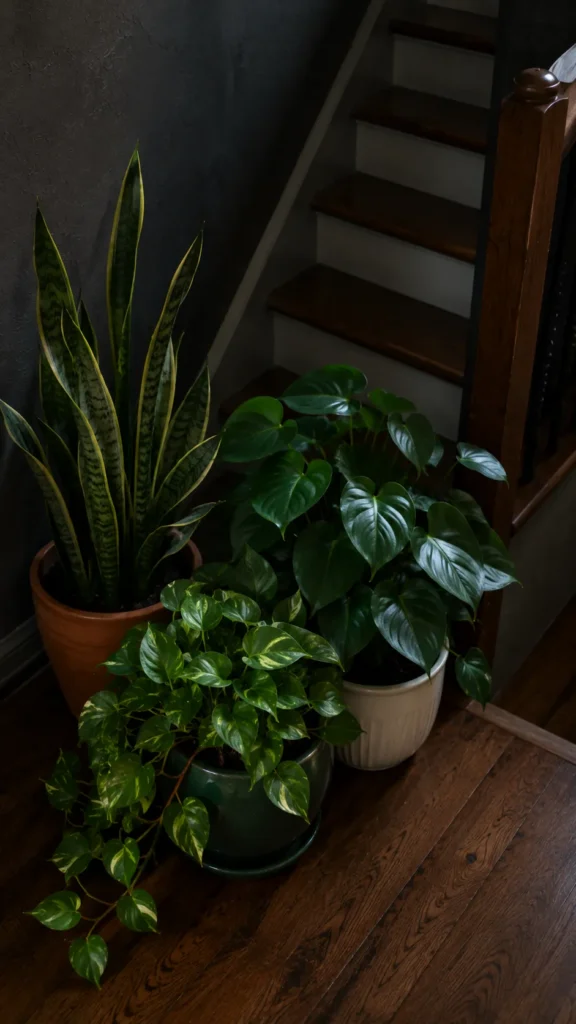
A lot of staircases sit in the darkest part of the house, which rules out plants that need direct sun.
Low light plants like pothos, snake plants, and philodendrons are really the only realistic option here.
These varieties are forgiving of inconsistent watering too, which matters in a spot people walk past quickly.
Grouping a few together on one step or shelf reads as more intentional than scattering single pots around.
Even a dark stairwell can work as a home for staircase plants indoor once the right varieties are picked.
9- House Plants Aesthetic Through Pot Choice
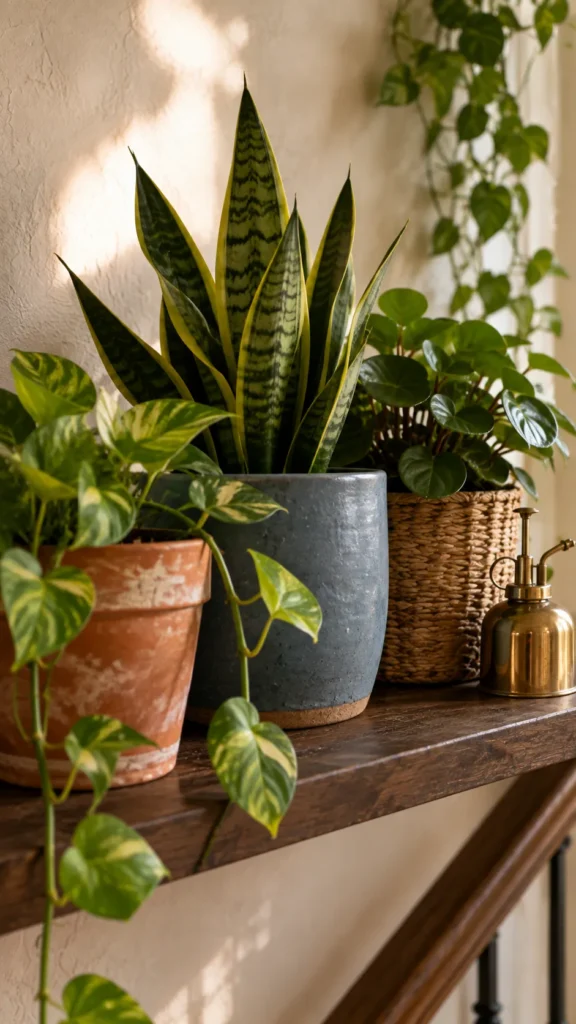
The plant matters, but the pot is what pulls a staircase together visually.
Matching a few terracotta or ceramic pots across the stairwell creates a cohesive house plants aesthetic without much effort.
Mixing textures, like a woven basket next to a smooth glazed pot, keeps things from feeling too matchy.
Keep Reading
Sticking to a simple color palette, two or three tones at most, makes the whole staircase feel curated.
I think pot choice ends up mattering more than people expect once they start arranging staircase plants indoor.
10- Indoor Plants Styling With Repetition
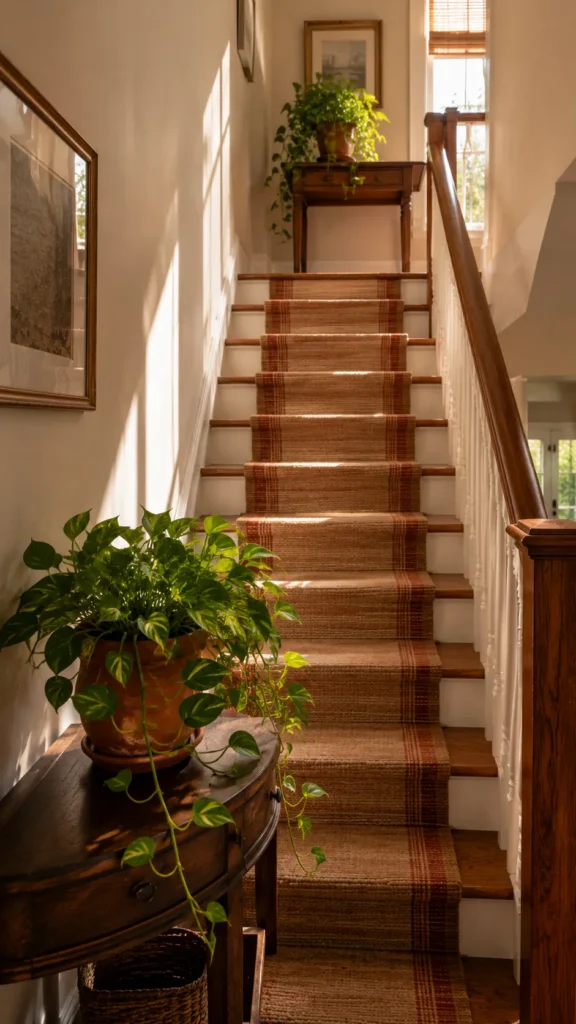
Repetition is one of those styling tricks that quietly makes a big difference.
Using the same plant variety at two or three points along the stairs ties the whole indoor plants styling together.
It could be the same trailing pothos on the landing and again at the top of the stairs.
That kind of visual echo makes the staircase feel planned instead of randomly decorated.
Once the rhythm kicks in, adding new plants later feels natural instead of random.
Bringing a Staircase Back to Life With Plants
A staircase doesn’t need much to stop feeling like a pass through space.
A few well chosen staircase plants indoor, placed with a little thought, can carry the whole area.
Nothing here requires special tools or a big budget, just paying attention to light and repetition.
Start with one landing or one shelf, and the rest tends to follow on its own.

I am Eleanor Foy, the mom of two behind DaisyHacks. I am a lover of clean, calm homes and a person who will happily spend 45 minutes researching a 5 minute cleaning hack. No regrets.