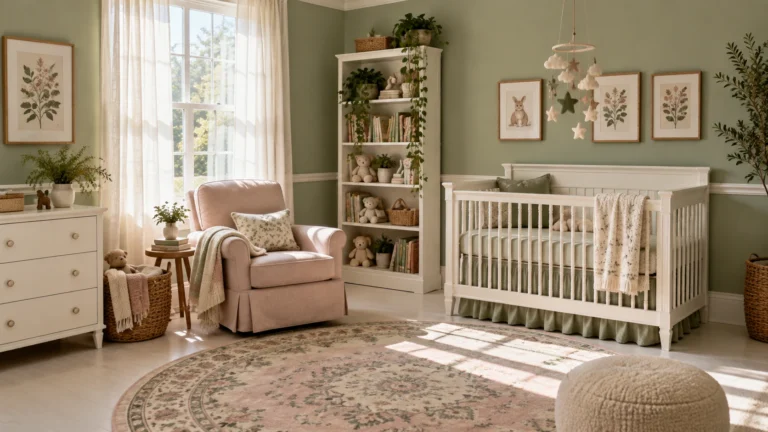
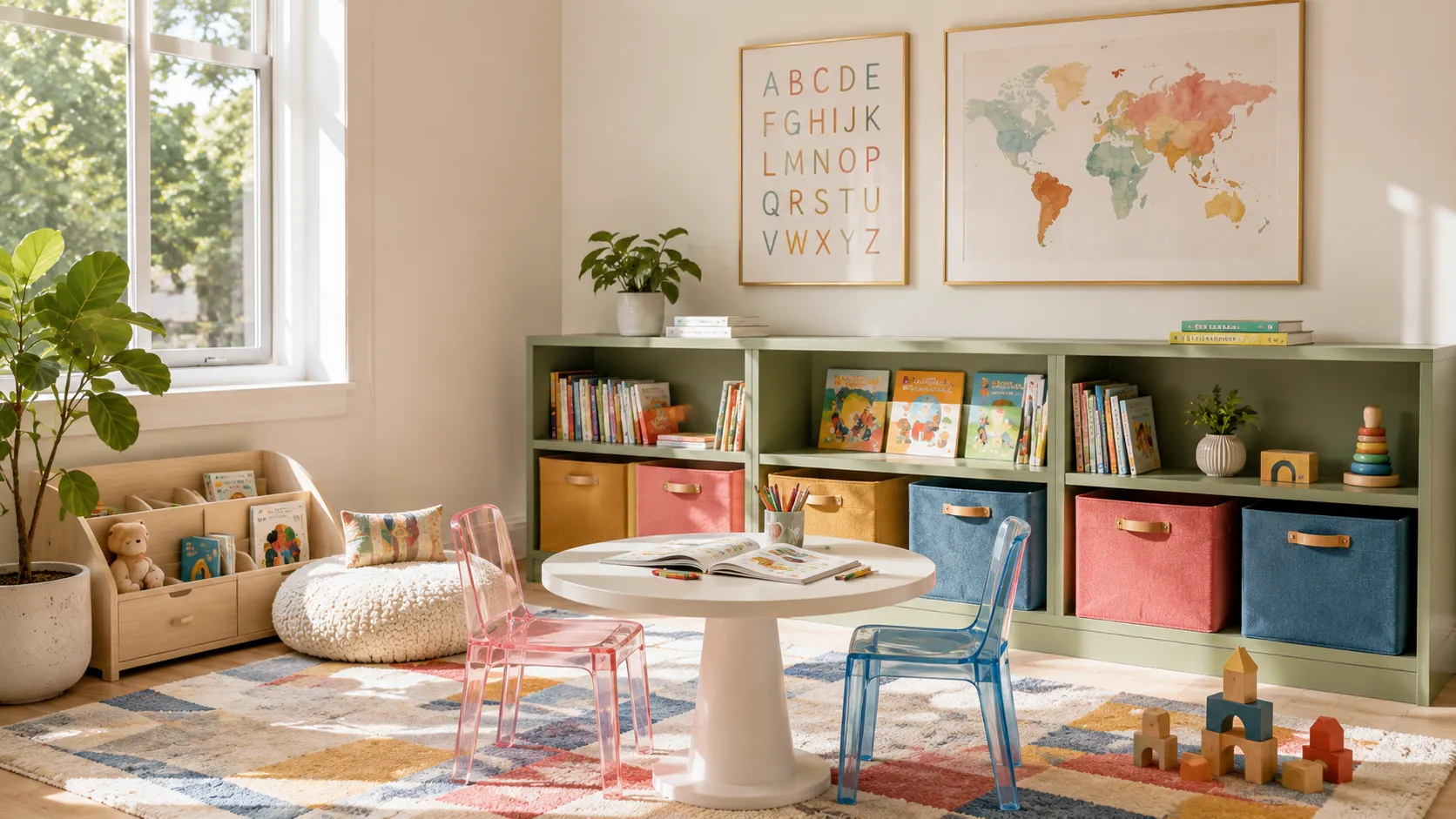
How to Set Up a Kids Learning Corner at Home
Setting up a kids learning corner at home is one of those ideas that sounds simple until the space ends up becoming a pile of books, random art supplies, and a craft kit from three holidays ago that nobody has opened.
You Might Also Like
Most people picture something from a Pinterest board, perfectly color-coded bins and a tiny chalkboard wall and matching pencil cups, and then feel stuck before they even start.
The real version does not need to look like a classroom or cost a lot of money to actually work for kids.
What makes a learning corner actually get used comes down to a few small decisions about setup, storage, and how the space feels to a child standing in it.
These are the things worth thinking about before buying anything or rearranging the whole room.
1- Picking the Right Spot in the House
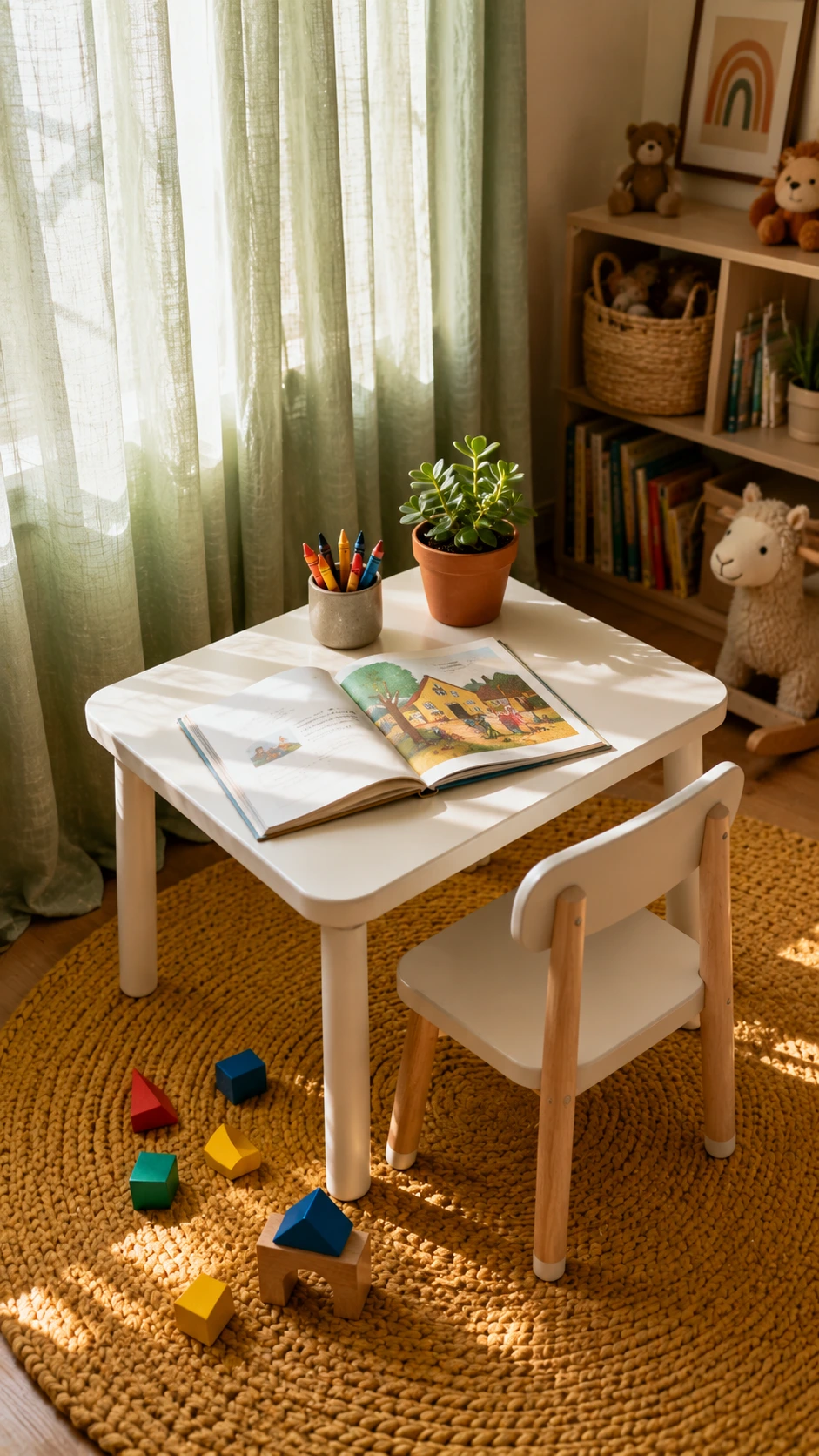
The location matters more than most people expect when it comes to whether kids actually use the space.
A corner tucked too far away or behind a closed door tends to get ignored, because kids naturally gravitate toward wherever the household action is.
Most of the time a spot in the living room, kitchen corner, or a visible part of a shared space works better than a dedicated room.
The light in that spot matters too, natural light where possible, or a good lamp if the corner is darker.
Once the spot feels right, the rest of the setup is much easier to figure out around it.
2- Choosing a Table That Fits the Child
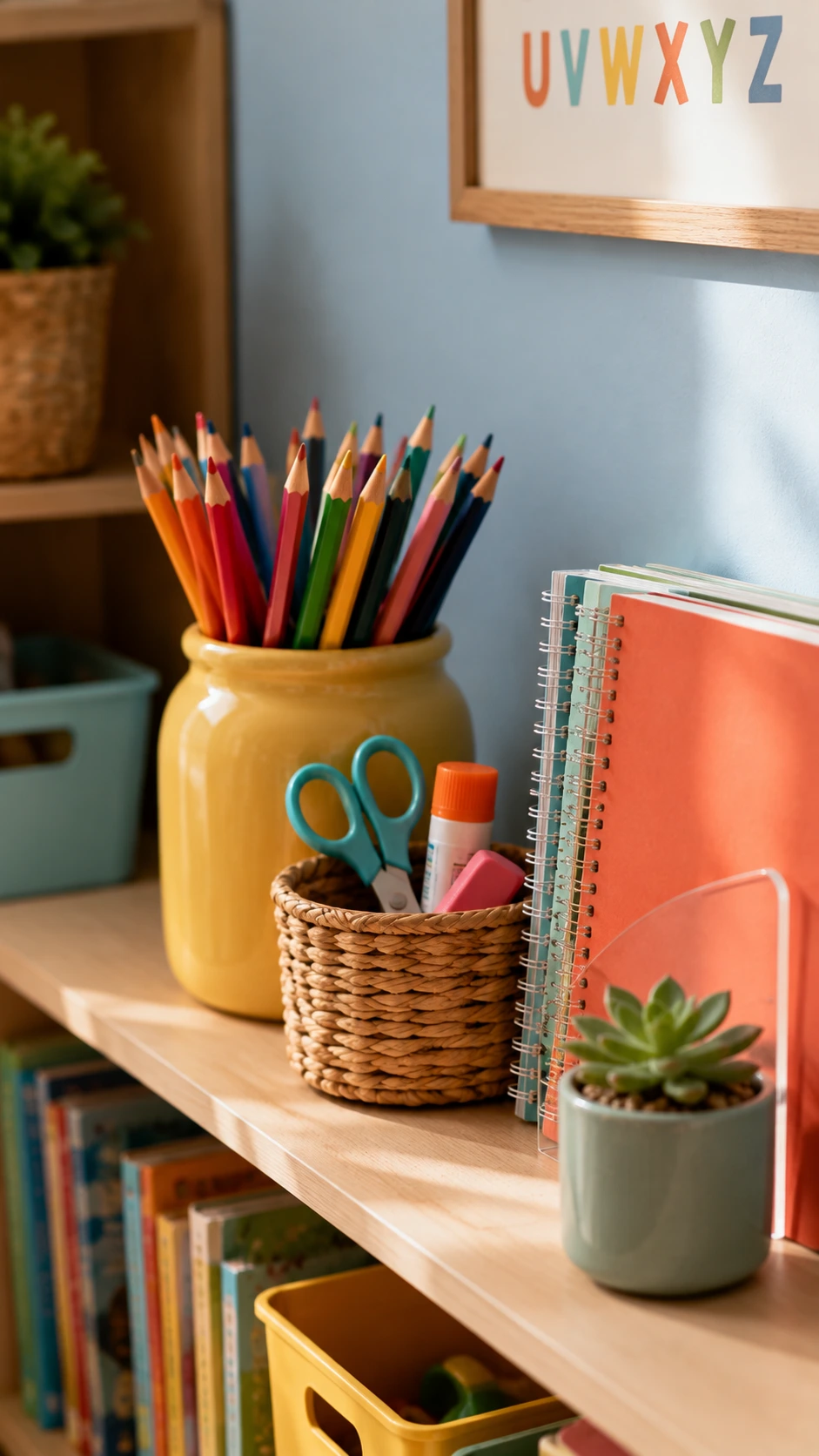
A table that is the wrong height is one of those things that quietly kills a learning corner before it ever gets going.
Kids slouch, fidget, and give up faster when they are reaching up or hunching down to work on a surface.
A small table and chair set sized for the child’s age is the most useful investment in the whole setup.
It does not need to be expensive, most basic versions from discount stores or secondhand shops work perfectly well.
I think this one detail makes more difference than any bin system or wall decal people spend time on.
3- Keeping Supplies Within Reach
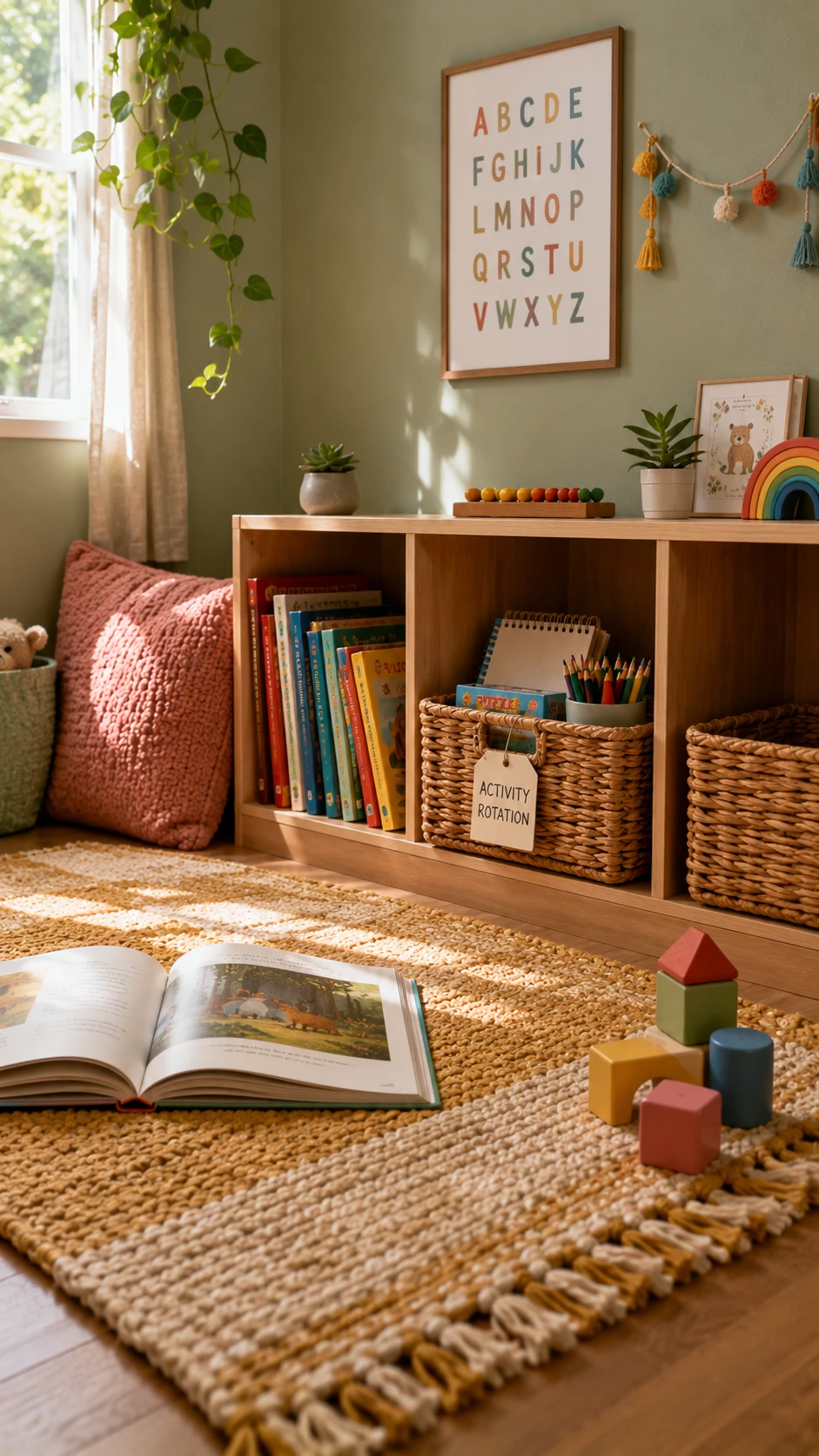
If a child has to ask for help getting supplies every single time, the corner stops feeling like their space and starts feeling like a supervised activity.
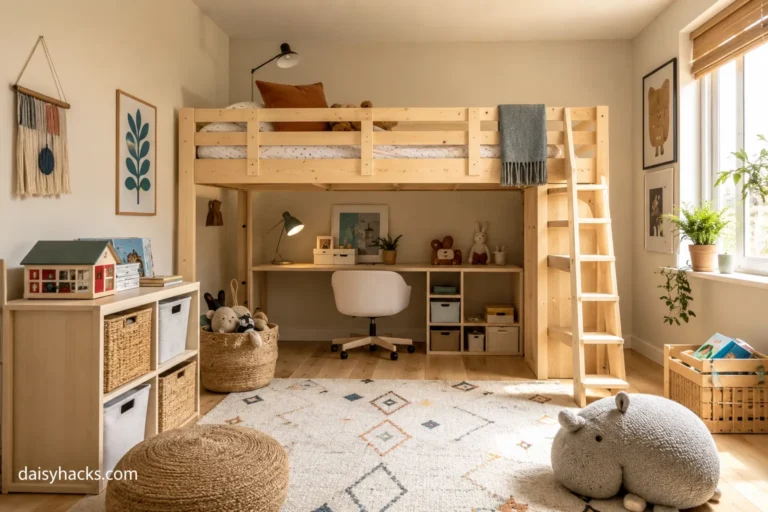
Low shelves, open bins, and a pencil cup at table height let kids start on their own without needing an adult to set everything up.
A basic system with three or four bins works better than anything complicated, one for art supplies, one for books, one for loose learning materials.
The goal is just to make it easy enough that a kid can walk over, sit down, and start without any friction.
Overfilling the bins is the thing that usually causes the whole system to fall apart within a week.
4- Using a Simple Rotation for Books and Activities
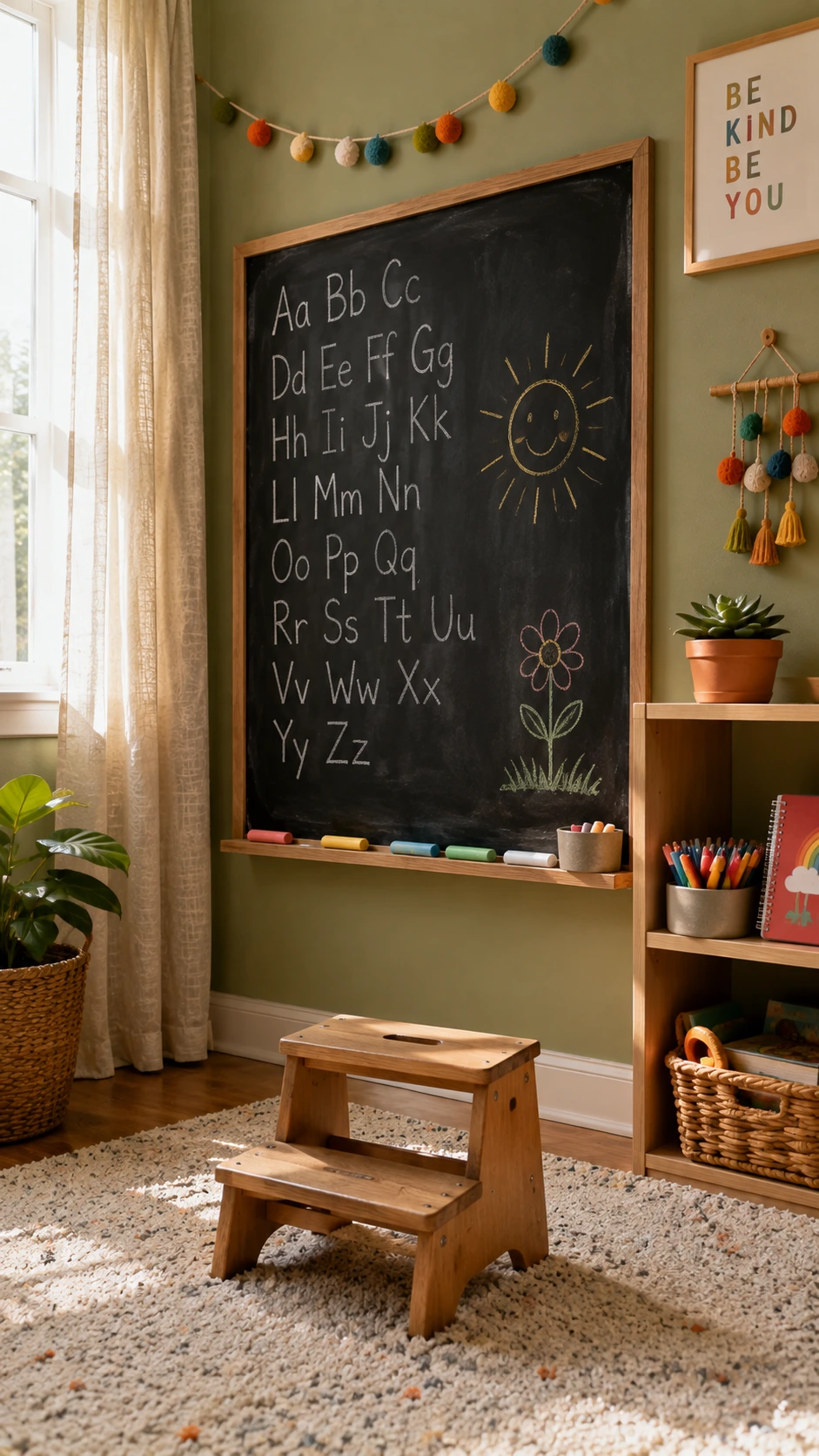
Leaving every book and activity out at once tends to overwhelm kids more than it encourages them.
A small rotation system, swapping out a handful of books or materials every week or two, keeps the corner feeling fresh without buying anything new.
Most parents are surprised by how much more a child engages with something when it reappears after a short break.
Seasonal books, library borrows, and activity sheets fit naturally into this kind of rotation without taking up permanent shelf space.
It also makes cleanup much faster when there are fewer things out at once.
5- Adding a Writing Surface Kids Can Actually Use
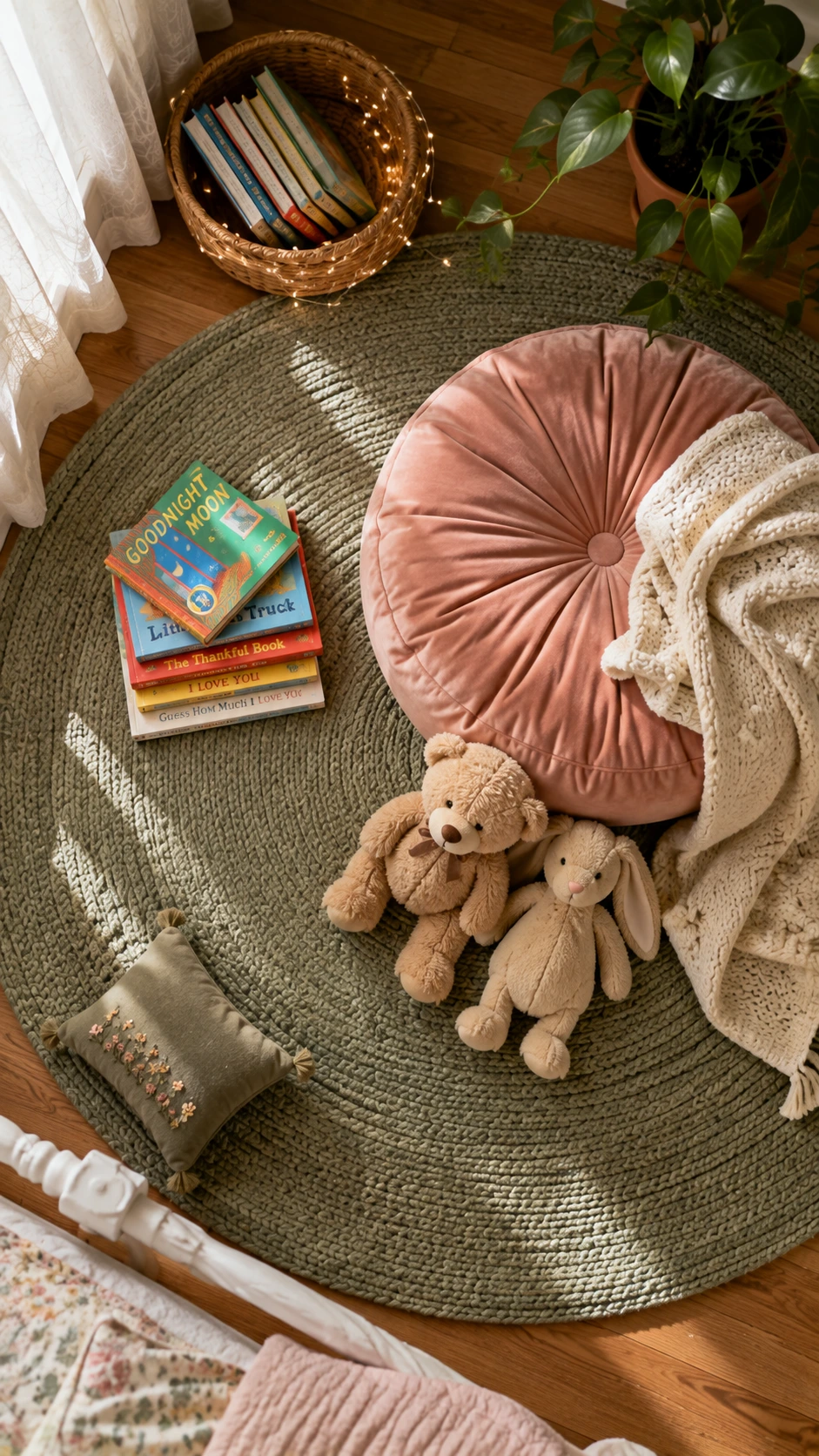
A small whiteboard or chalkboard surface at kid height is one of those additions that gets used far more than expected.
Kids use it for drawing, practicing letters, doing pretend school, playing games, and honestly just making a mess in a contained way.
A wall-mounted board works well if the space allows, but a tabletop version or an easel works just as well in a smaller corner.
The writing surface takes some pressure off paper supplies too, which adds up faster than people think.
More Ideas to Love
6- Creating a Reading Nook Feel Within the Corner
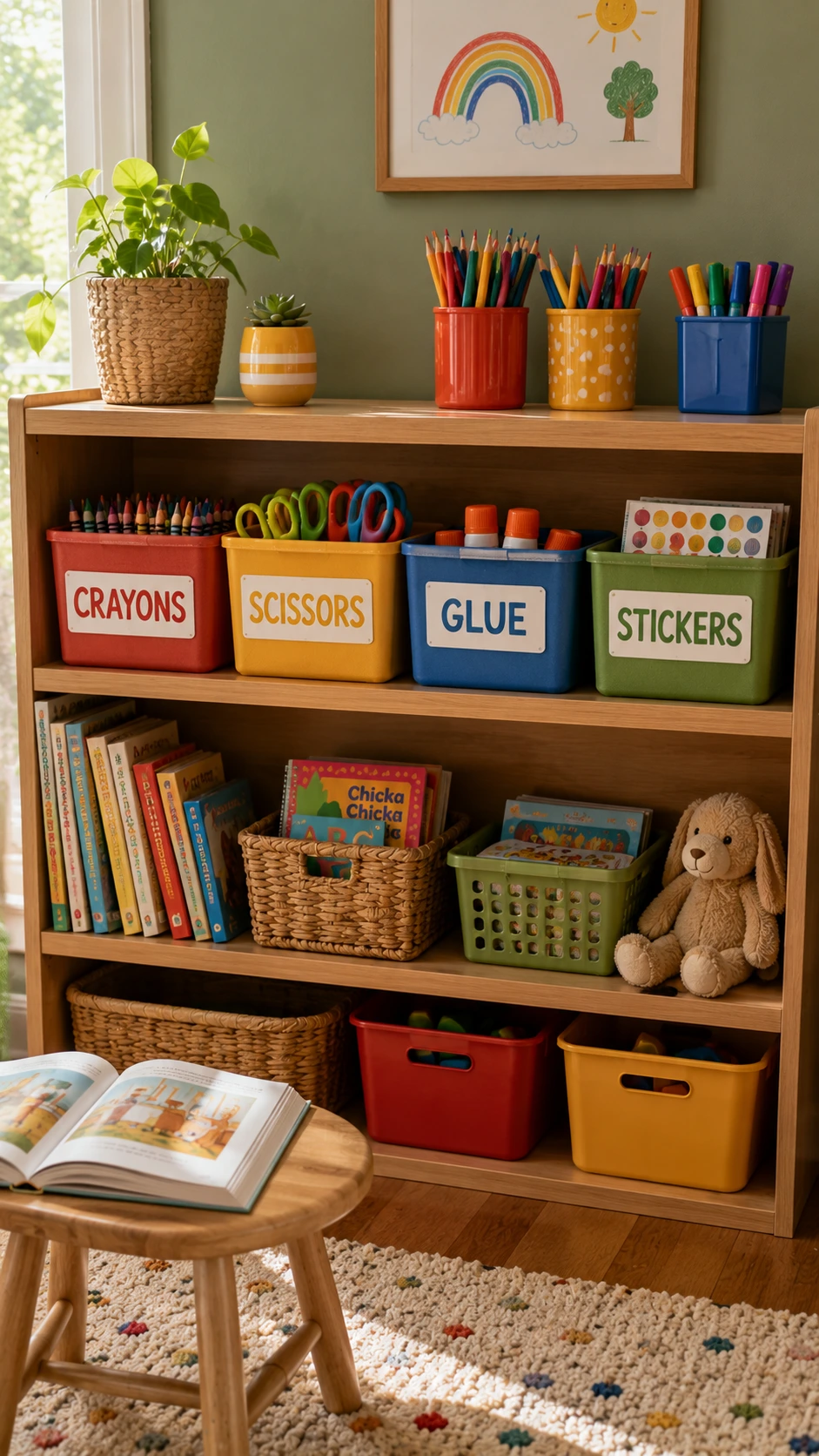
A learning corner that includes a cozy spot for reading tends to get more use overall, not just during structured activity time.
Something as simple as a small floor cushion, a bean bag, or even a folded blanket on the floor next to the bookshelf is enough to create that feeling.
Kids are more likely to pick up a book on their own when the spot feels comfortable and low-pressure rather than like a little desk they have to sit up straight at.
The reading nook part of the corner does not need to be decorated or designed, it just needs to feel soft and inviting.
7- Labeling Bins in a Way Kids Can Actually Read
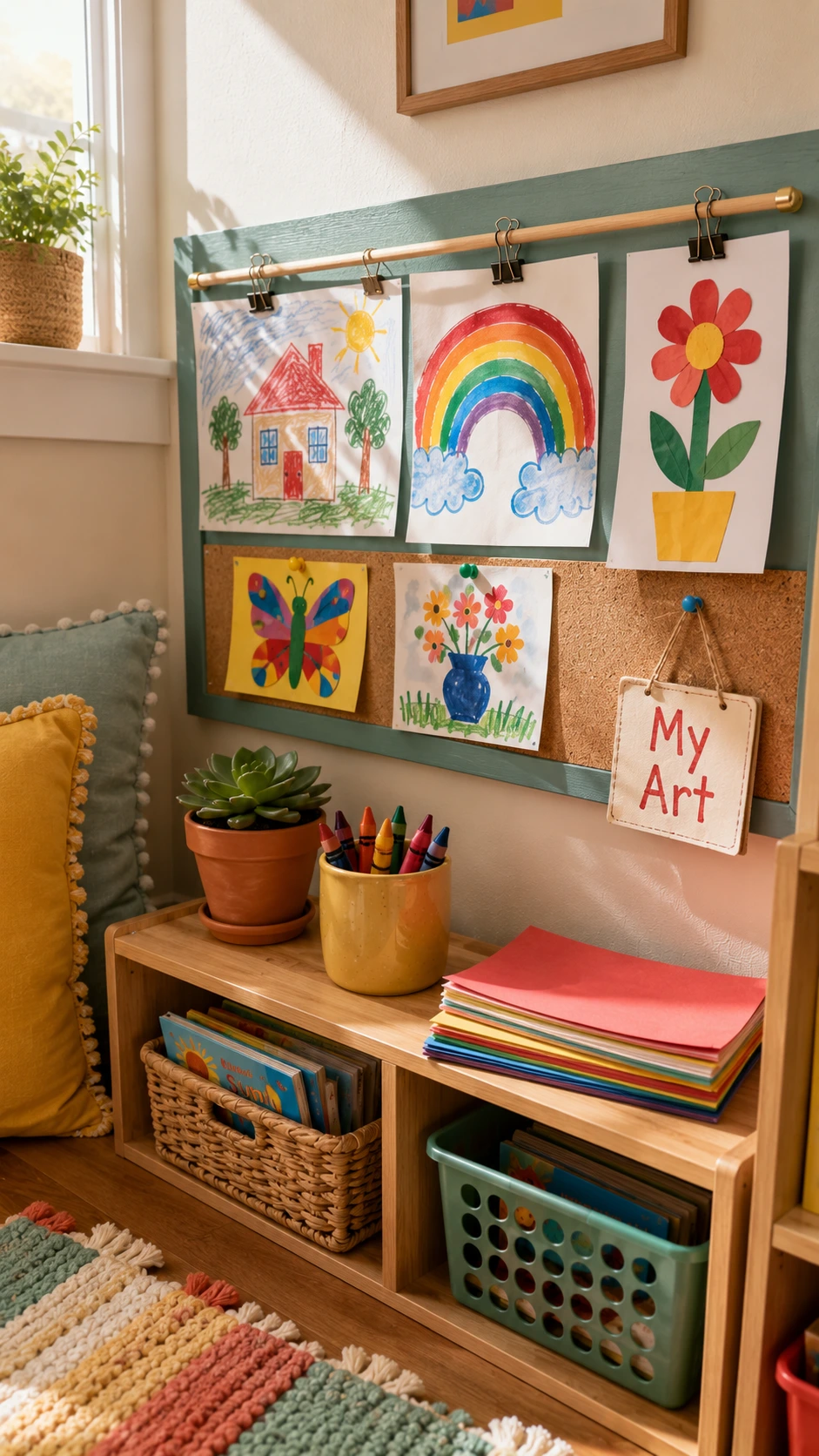
Labels work better when the child can actually understand them, which sounds obvious but gets overlooked a lot.
For younger kids, picture labels work far better than written words, a small drawing of crayons on the crayon bin, scissors on the supply bin, and so on.
Older kids can handle simple word labels as long as the words match what is actually inside and stay consistent.
The goal is just to make putting things away as easy as getting them out, so the space stays usable without constant adult reorganization.
Laminated labels or ones written on painter’s tape both work fine, nothing fancy needed.
8- Including a Small Display Space for Finished Work
Kids notice when their work goes straight into a pile or gets tucked away immediately, and it does affect how motivated they feel about the space.
A small display area, even just a length of string with a few clips or a section of wall with low-mounted sticky strips, gives finished drawings and projects somewhere visible to land.
It does not need to be a gallery wall situation, just a designated spot that says this work matters enough to be seen.
Rotating pieces off the display every few weeks keeps it from getting crowded and gives every new piece a moment.
9- Keeping the Corner Separate From Toy Storage
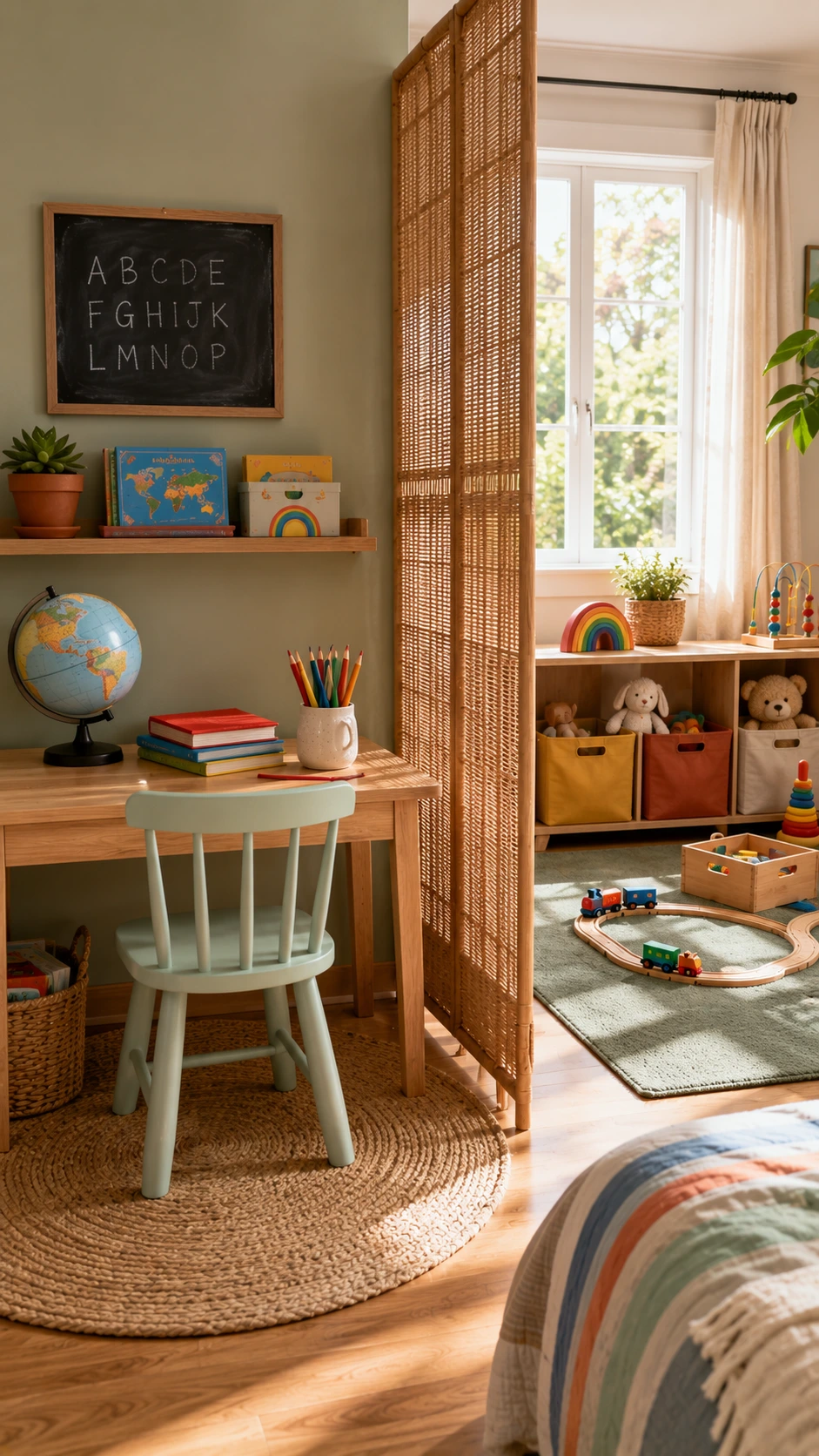
One of the fastest ways a learning corner stops working is when it quietly becomes general toy overflow storage.
When the bins fill up with action figures and random game pieces, the learning supplies get buried and the corner loses its purpose.
A clear boundary, even just a visual one like a small rug or a different colored bin set, helps kids understand what the corner is for.
Keep Reading
It also makes it easier for adults to tidy the space quickly without having to sort through everything each time.
This is one of those things that feels unnecessary to set up but saves a lot of frustration later.
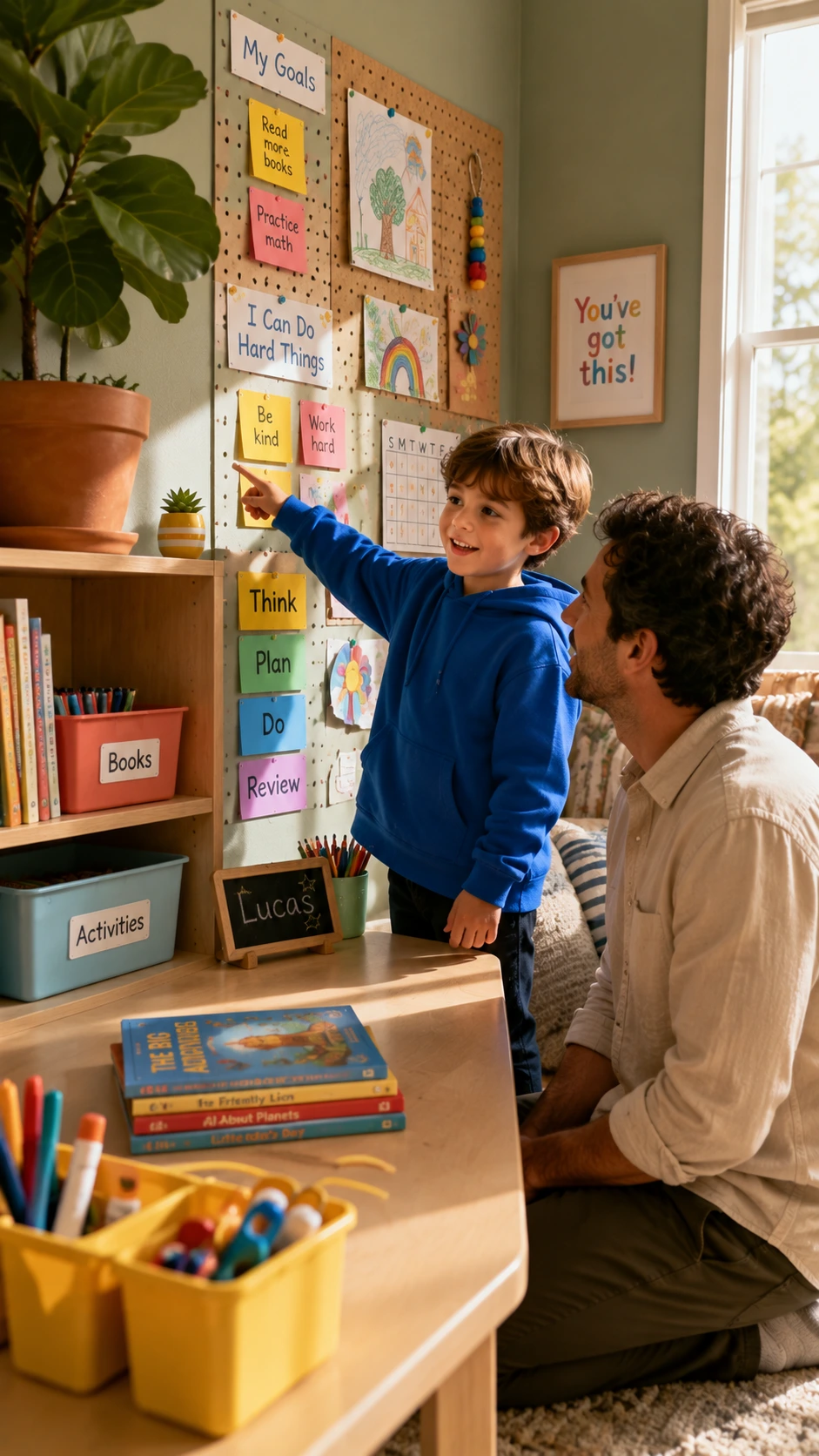
10- Letting the Child Have Some Input on the Setup
A learning corner that a child helped choose details for is one they feel ownership over, which makes a real difference in whether they actually use it.
It does not mean letting them design the whole thing, but asking what color bin they want or which books go on the shelf this week gives them a stake in the space.
Most kids are much more likely to sit down and engage with a corner that feels like theirs rather than something set up for them.
Even small choices add up, and it tends to reduce the resistance that comes when a space feels imposed rather than shared.
I think this is the piece most home setup guides skip entirely, and it is probably the most important one.
A Learning Corner That Works for Real Life
A kids learning corner at home does not need to be perfect or Pinterest-worthy to do its job.
The spaces that actually get used are the ones that are easy to access, simple to maintain, and feel comfortable to a child standing in them.
Starting small and adjusting as the child grows is a much better approach than trying to build the whole thing at once.
Most families find that a few good decisions early on are enough to make the corner a place kids actually want to be.
I am Eleanor Foy, the mom of two behind DaisyHacks. I am a lover of clean, calm homes and a person who will happily spend 45 minutes researching a 5 minute cleaning hack. No regrets.