16 Patio Shade Ideas That Make Summer Easier
Patios have a sneaky way of looking useful until the sun hits them like a toaster oven.
You Might Also Like
Patio Shade Ideas sound simple enough, but then the umbrella misses the chairs and the concrete still feels hot through sandals.
The frustrating part is most people assume one shade thing should fix sun, heat, privacy, bugs, and maybe their electric bill too.
The easier way is to think about when the patio gets used, where the sun actually lands, and how permanent the shade needs to be.
Some of these are quick fixes, some are bigger projects, and most work best when people stop guessing and watch the sun for a day first.
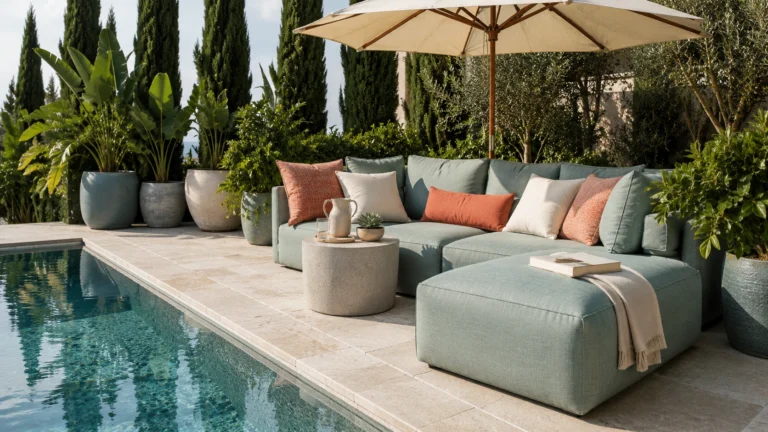
1- Patio Umbrella Over the Table
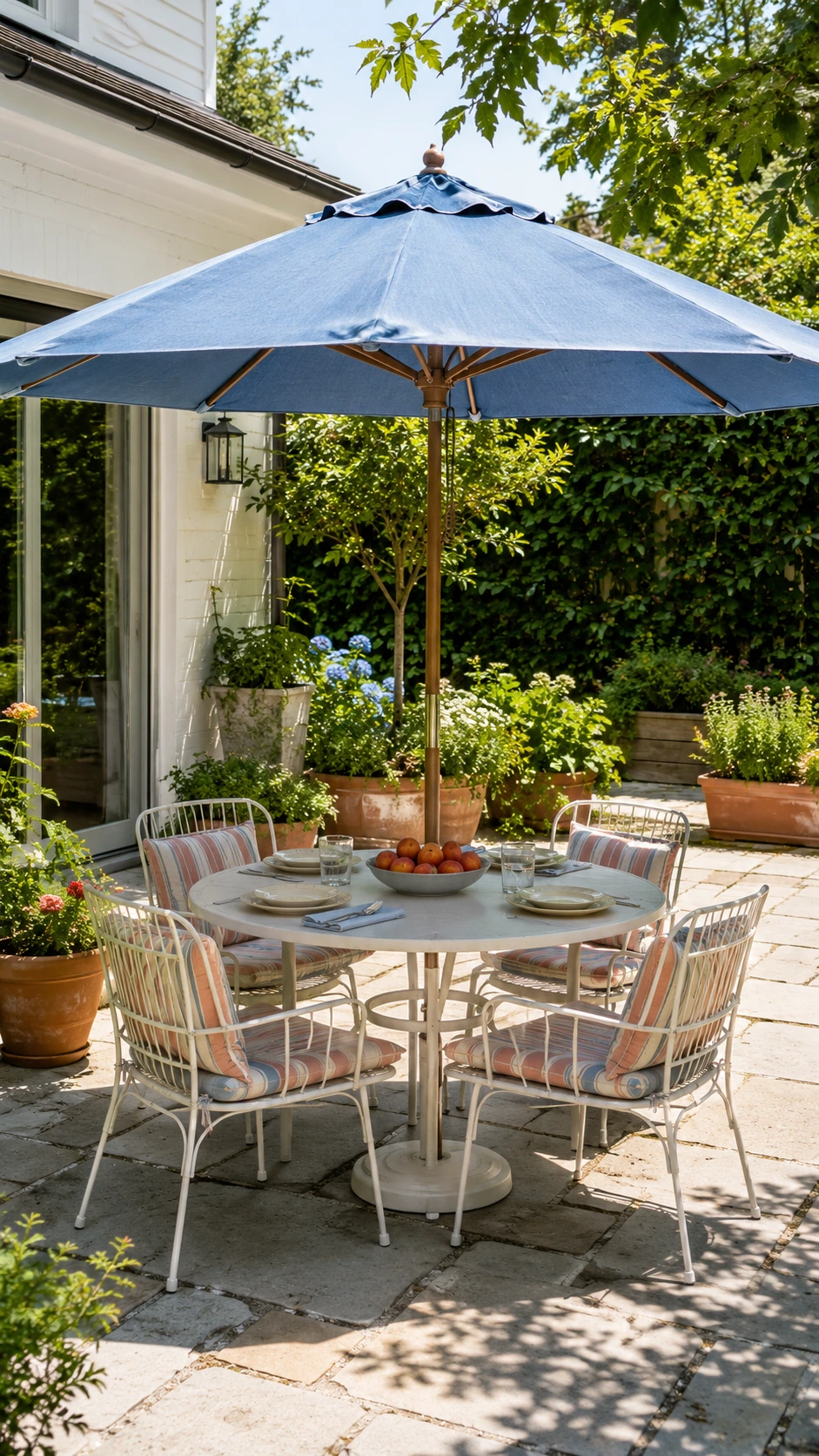
A patio umbrella is usually the first thing people try because it feels familiar and does not require a construction moment.
It works best when the umbrella is bigger than the table, not just barely covering the center where nobody is sitting.
For dining, the canopy should reach past the chairs a bit, especially once people pull them out and lean back.
The annoying part is wind, so a heavy base matters more than the cute fabric most of the time.
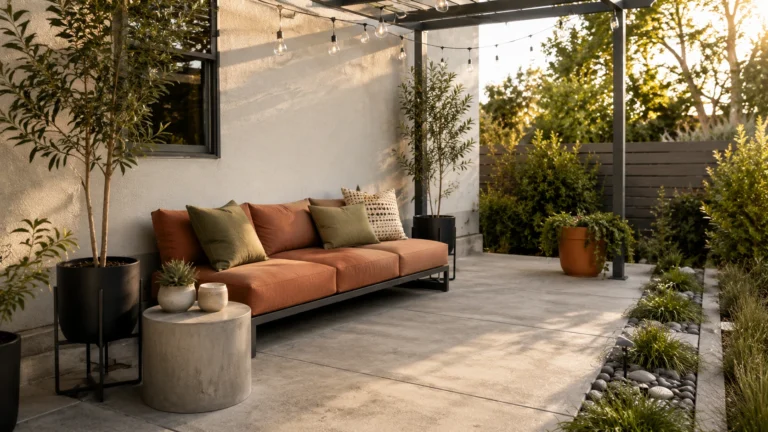
This is still one of the easiest Patio Shade Ideas for renters or anyone who wants shade by dinner without calling a contractor.
2- Cantilever Umbrella for Lounge Seating
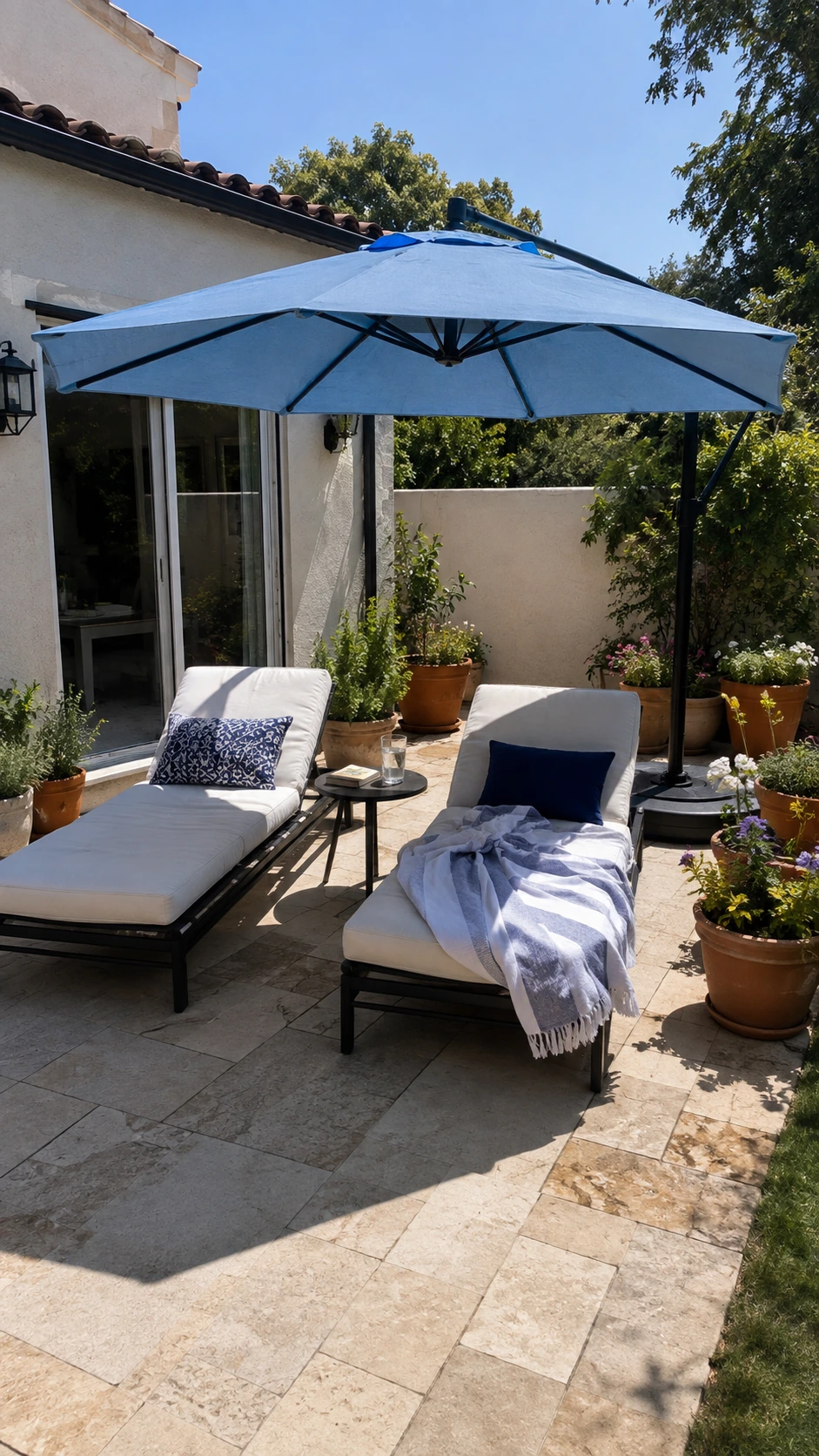
Cantilever umbrellas are handy because the pole is off to the side instead of right in the middle of everything.
They are nice over sectionals, conversation sets, and those lounge chairs that always end up in the full sun somehow.
The base needs real weight, and I think this is where people get surprised by how serious a big umbrella can be.
Two smaller cantilever umbrellas can work better than one huge one because each can chase the sun a little differently.
It is a good flexible option when the patio layout changes every summer anyway.
3- Shade Sail With Proper Anchors
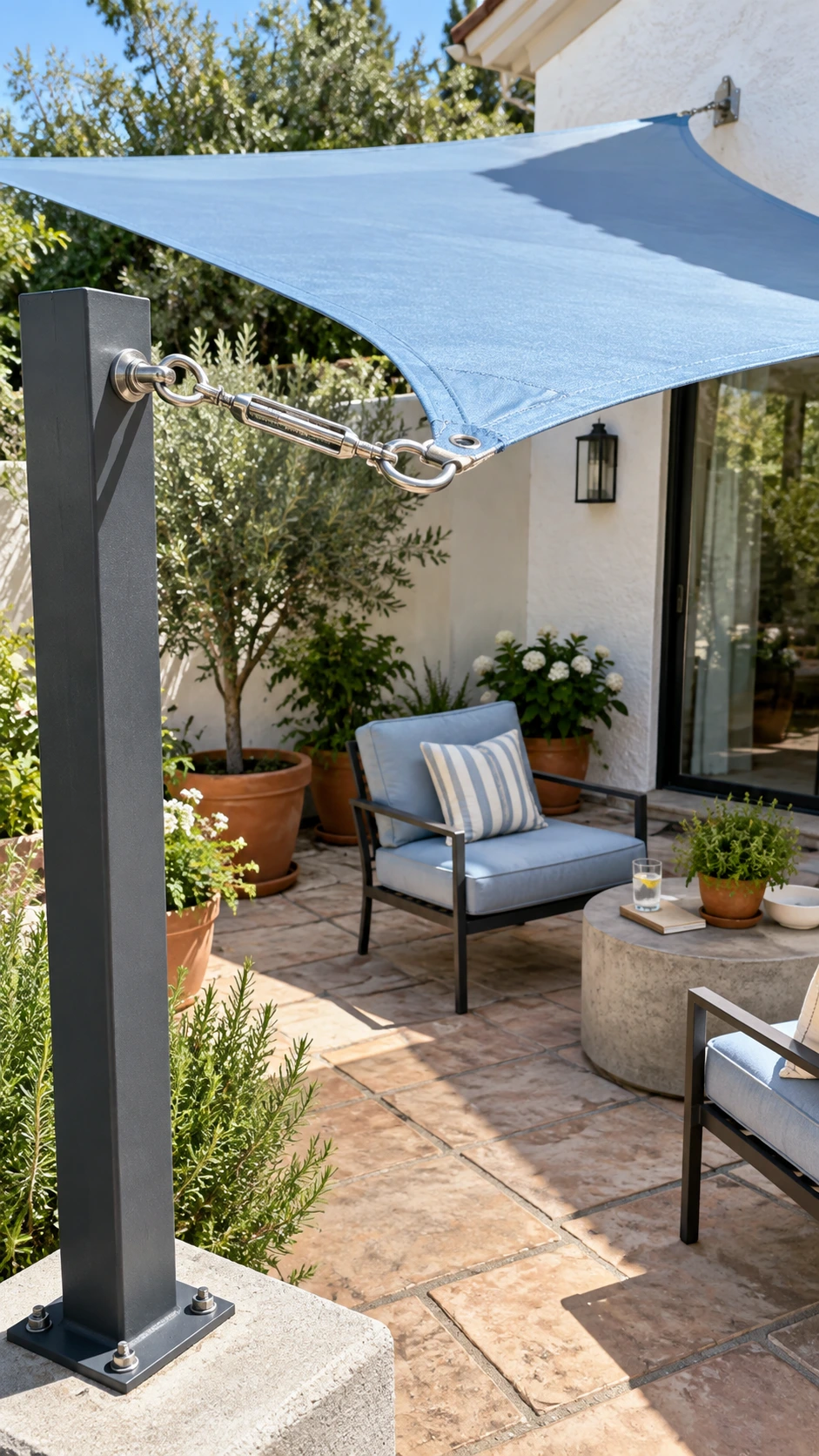
Shade sails look relaxed and simple, but the anchors are the whole story.
The fabric can be affordable, but it needs strong posts, house brackets, or proper fixed points that can handle tension and wind.
Uneven heights help rain run off, which sounds obvious but matters a lot when a sail starts sagging in the middle.
Porous shade cloth usually feels cooler and catches less wind than waterproof fabric, which can act like a giant kite.
Take sails down before storms if the yard gets wild, because nobody needs patio shade anxiety at 2 a.m.
4- Multiple Small Shade Sails
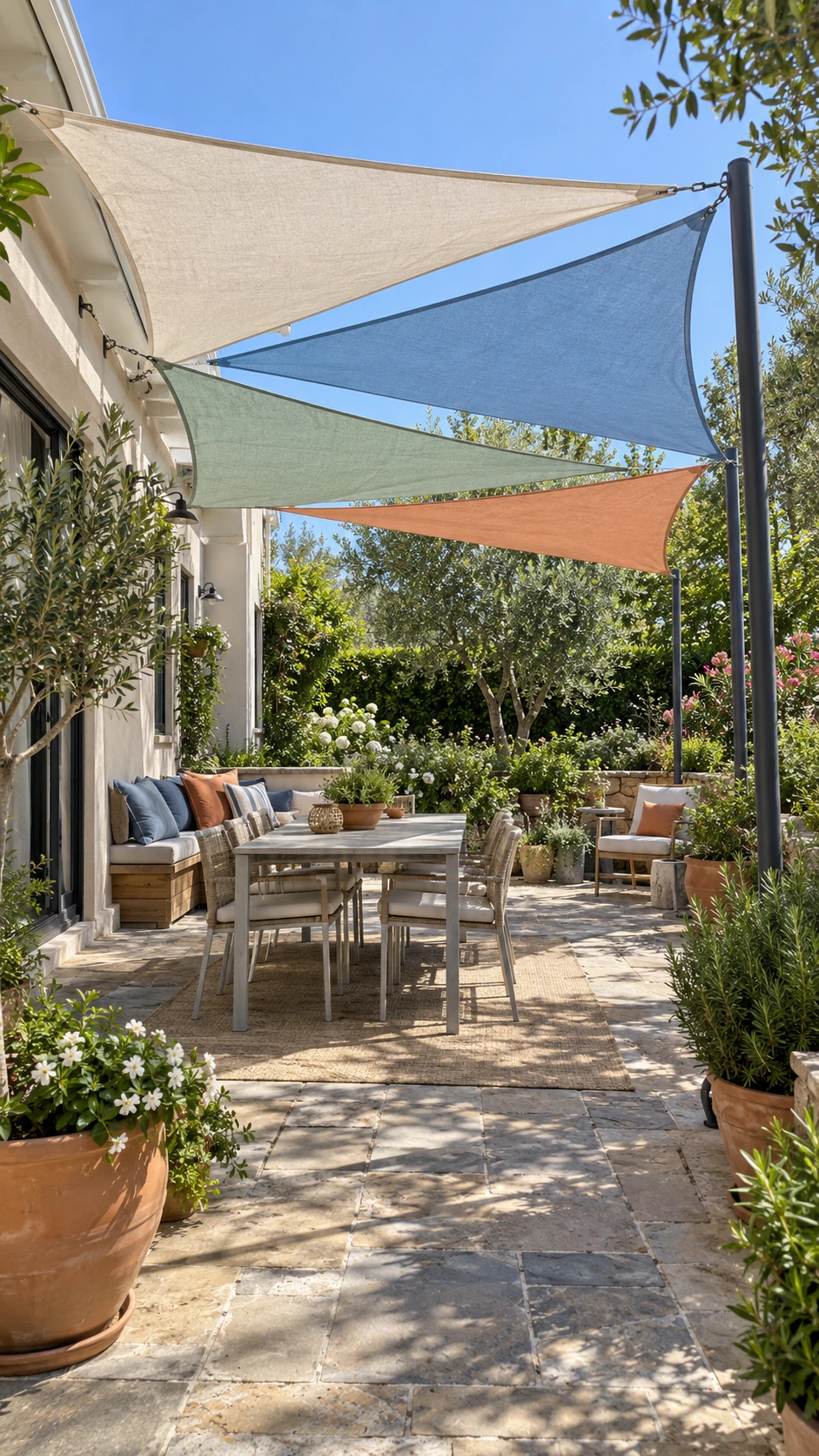
One big sail sounds easier until people realize it needs serious tension and lands shade in one stubborn spot.
Smaller sails can overlap and angle in different directions, which is useful when the sun shifts across the patio.
This works especially well over narrow patios, play areas, and odd little concrete pads that never match standard sizes.
Each sail still needs its own solid anchor points, so this is not a shortcut around safe installation.
The result feels more flexible and usually less stressful in windy spots.
5- Retractable Awning Over the Door
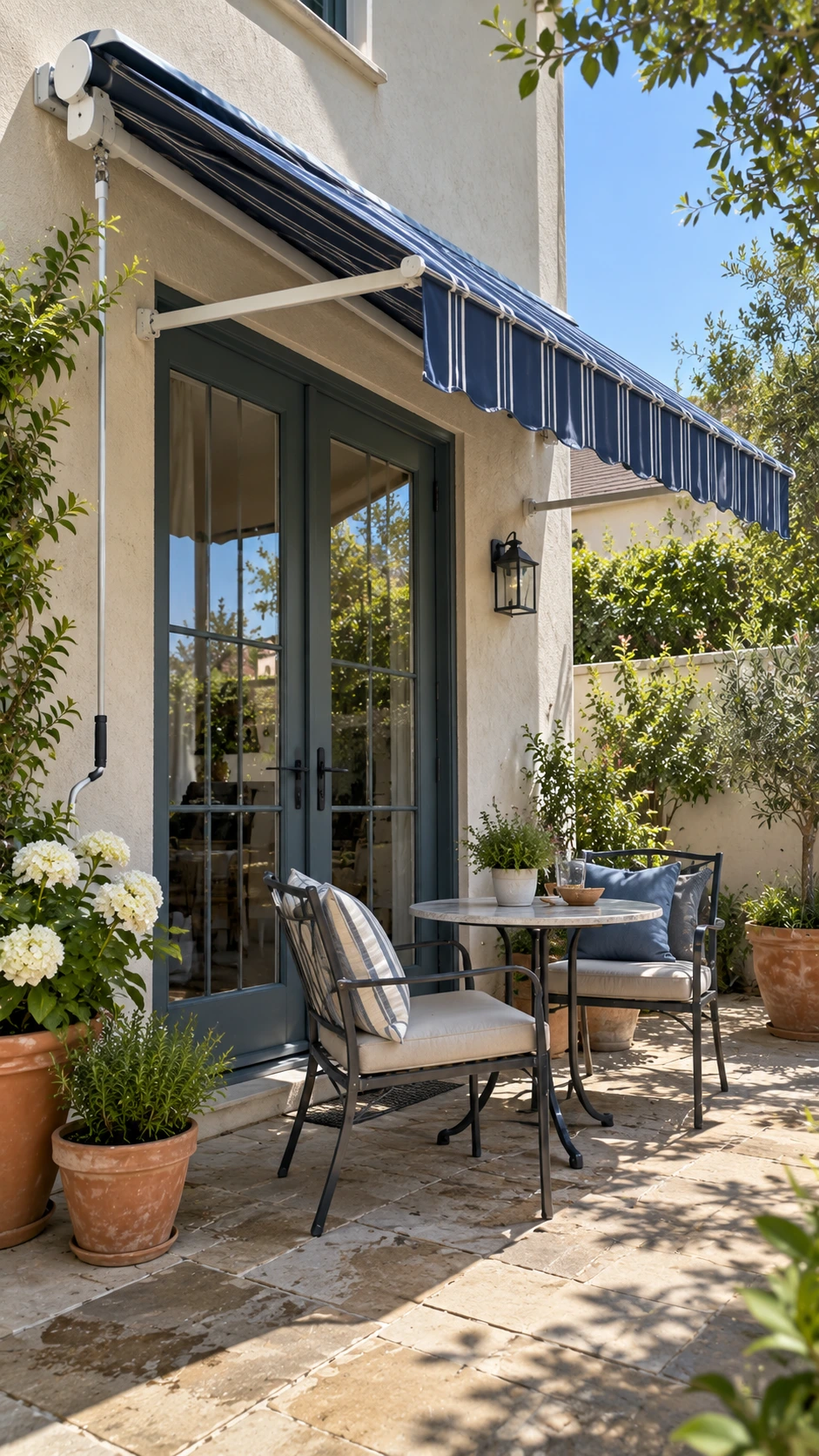
A retractable awning is nice when the patio sits right outside kitchen doors or French doors.
It shades the doorway, the first few feet of patio, and sometimes keeps the inside room from feeling baked by late afternoon.
Wall mounting needs to go into solid framing, not weak siding or trim that was never meant to hold anything.
It is also worth checking where rain will run, because water dumping by the foundation is not the cozy patio moment anyone wanted.
This works best for people who want shade sometimes and winter sunlight the rest of the year.
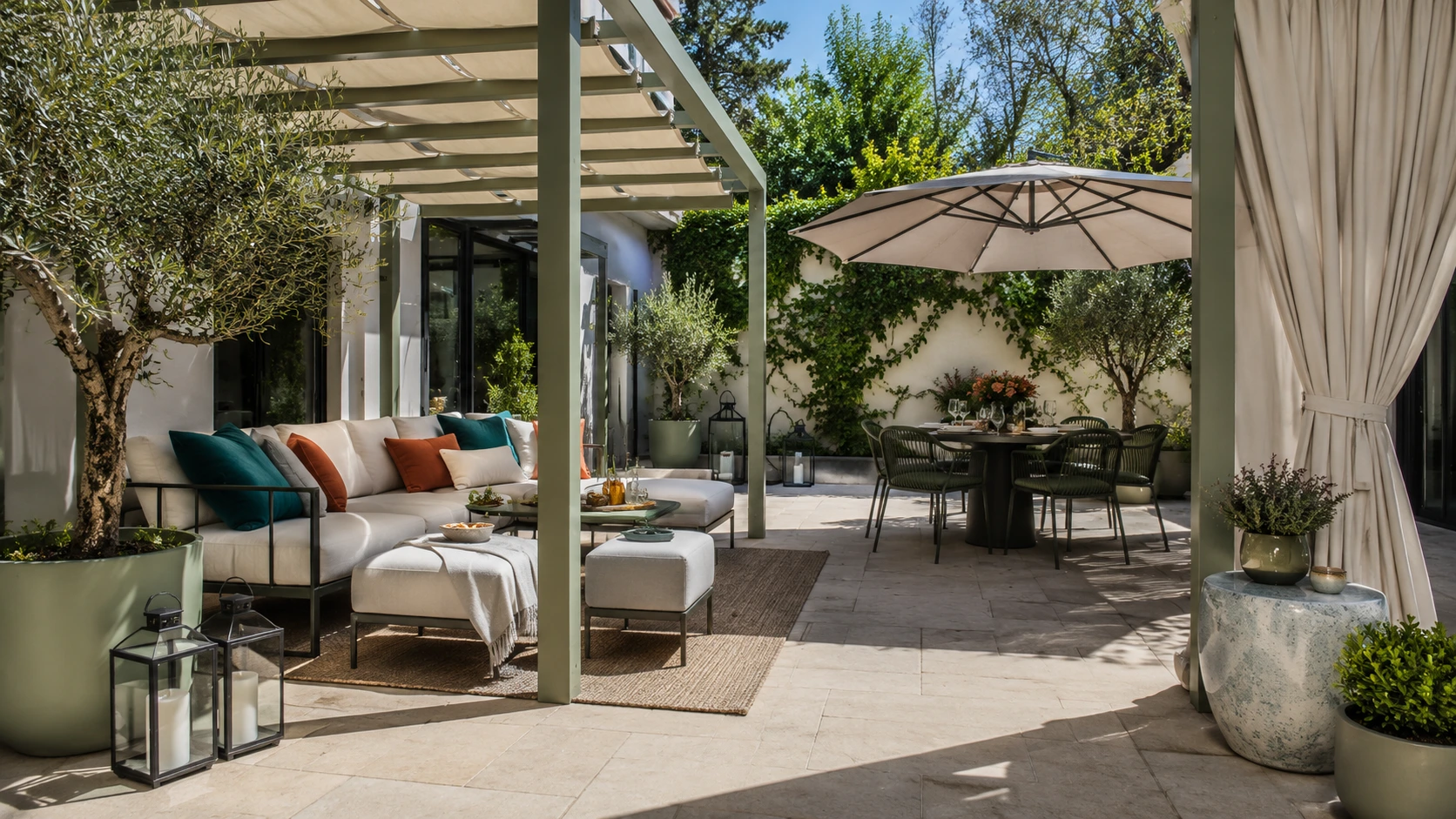
6- Pergola With Shade Cloth
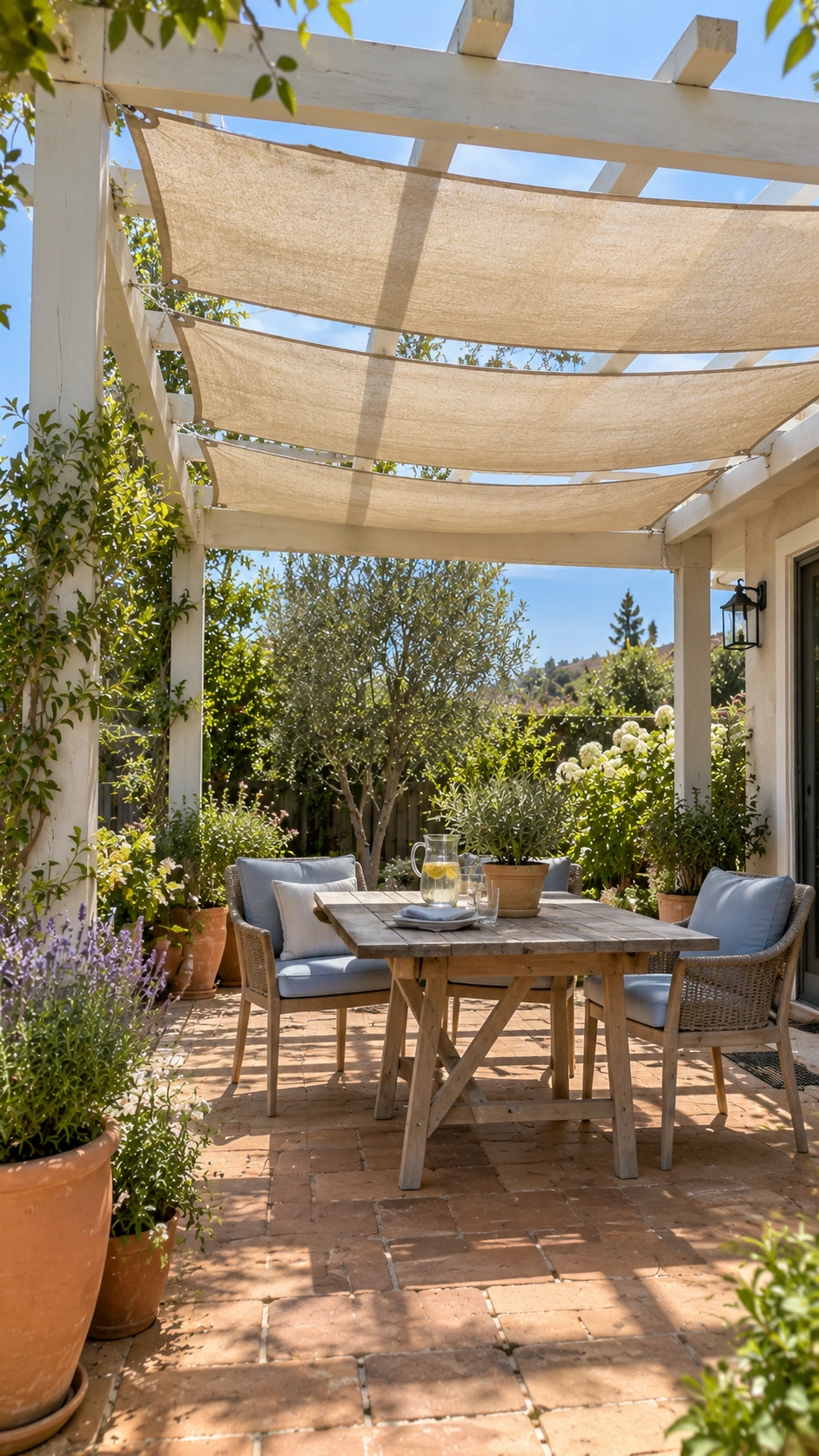
Pergolas are one of those Patio Shade Ideas that look finished, but bare rafters can still let in plenty of sun.
Adding shade cloth across the top gives the structure an actual job beyond looking nice in listing photos.
A cloth with a high UV rating is better for hot patios, and darker mesh can cut glare without feeling blinding.
The cloth can be clipped, laced, or attached in panels so it can come down for storms or winter.
This is a good middle ground when people want something sturdy but not a full roof.
7- Pergola With a Retractable Canopy
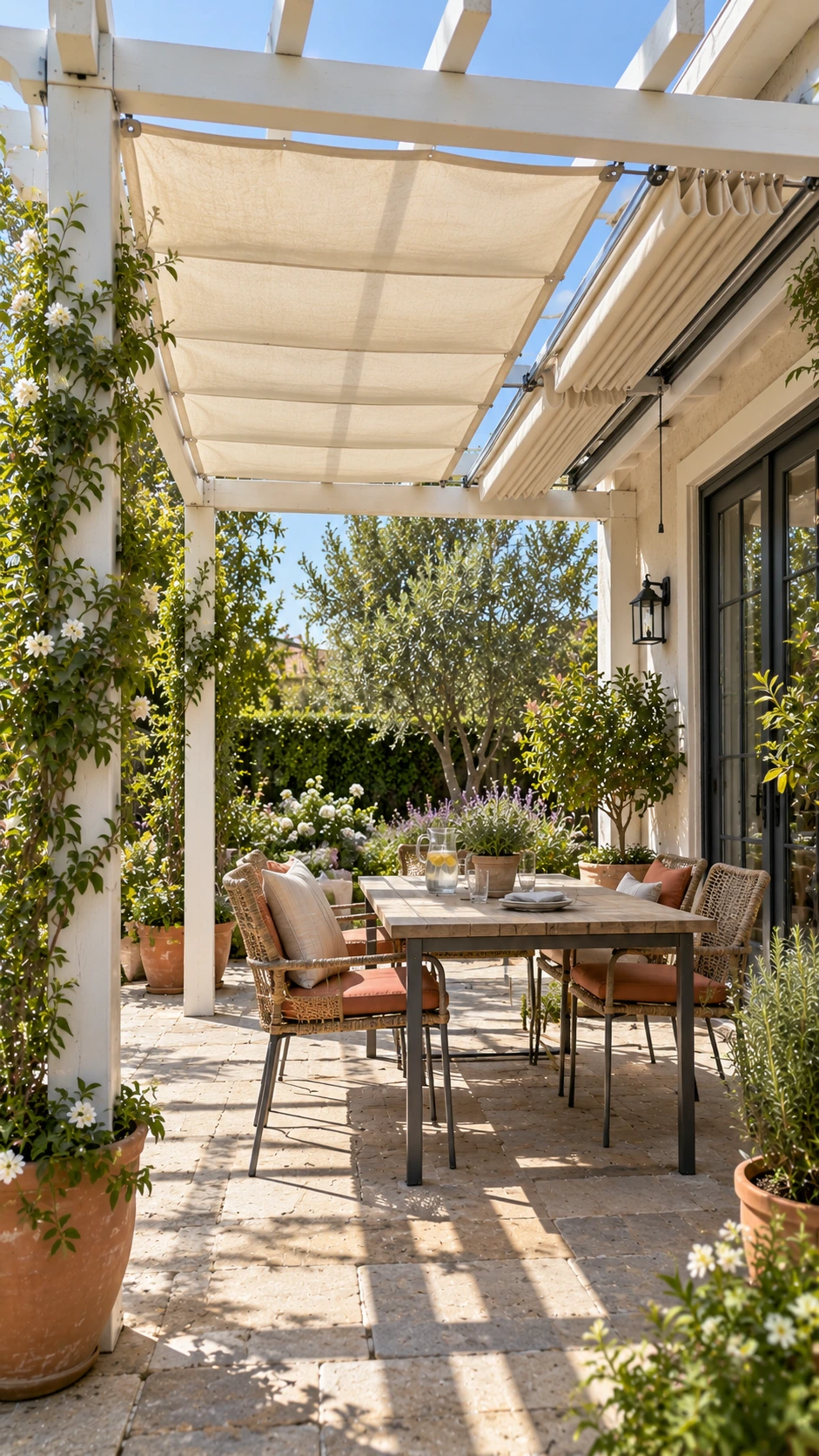
A retractable canopy makes a pergola more useful because the shade can move with the weather.
People can pull it closed for lunch and open it again when the sun calms down later.
Outdoor canvas or solution dyed acrylic fabric holds up better than indoor fabric, which gets sad fast outside.
The tracks and hardware need occasional tightening, because patio fabric has a way of flapping when everyone is trying to eat peacefully.
This setup works best when people want shade control without committing to a solid roof.
8- Outdoor Curtains for Side Sun
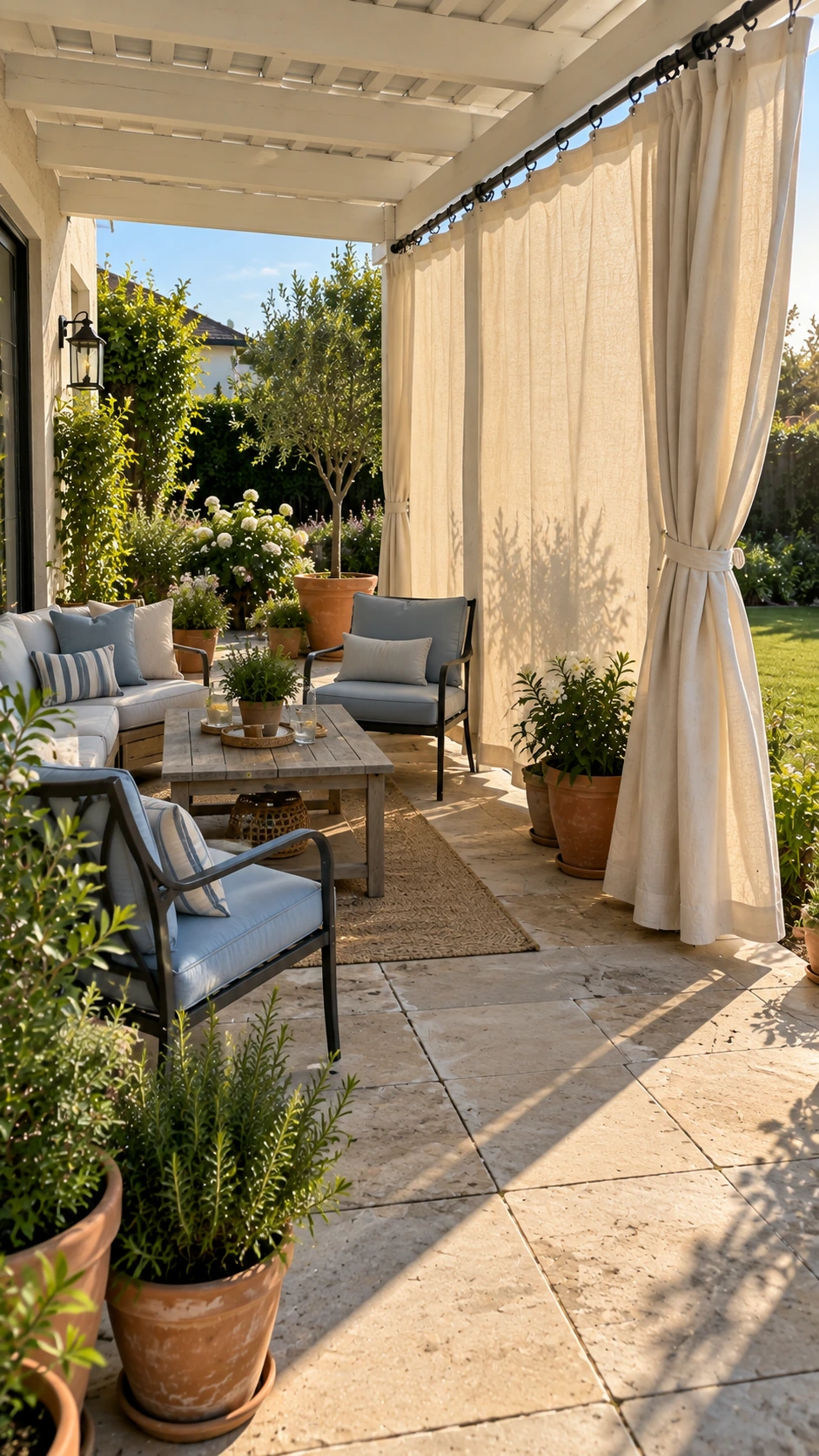
Outdoor curtains do not do much for noon sun overhead, but they are great for that rude low sun near dinner.
They also add privacy from neighbors, which is sometimes half the reason people start looking at shade anyway.
Use outdoor fabric, rust proof rods, and grommets that can handle weather without staining everything below.
Curtains work especially well on pergolas, gazebos, covered patios, and side openings that catch west sun.
They are soft, practical, and easy to pull back when the patio finally gets a breeze.
9- Hardtop Gazebo With Curtains
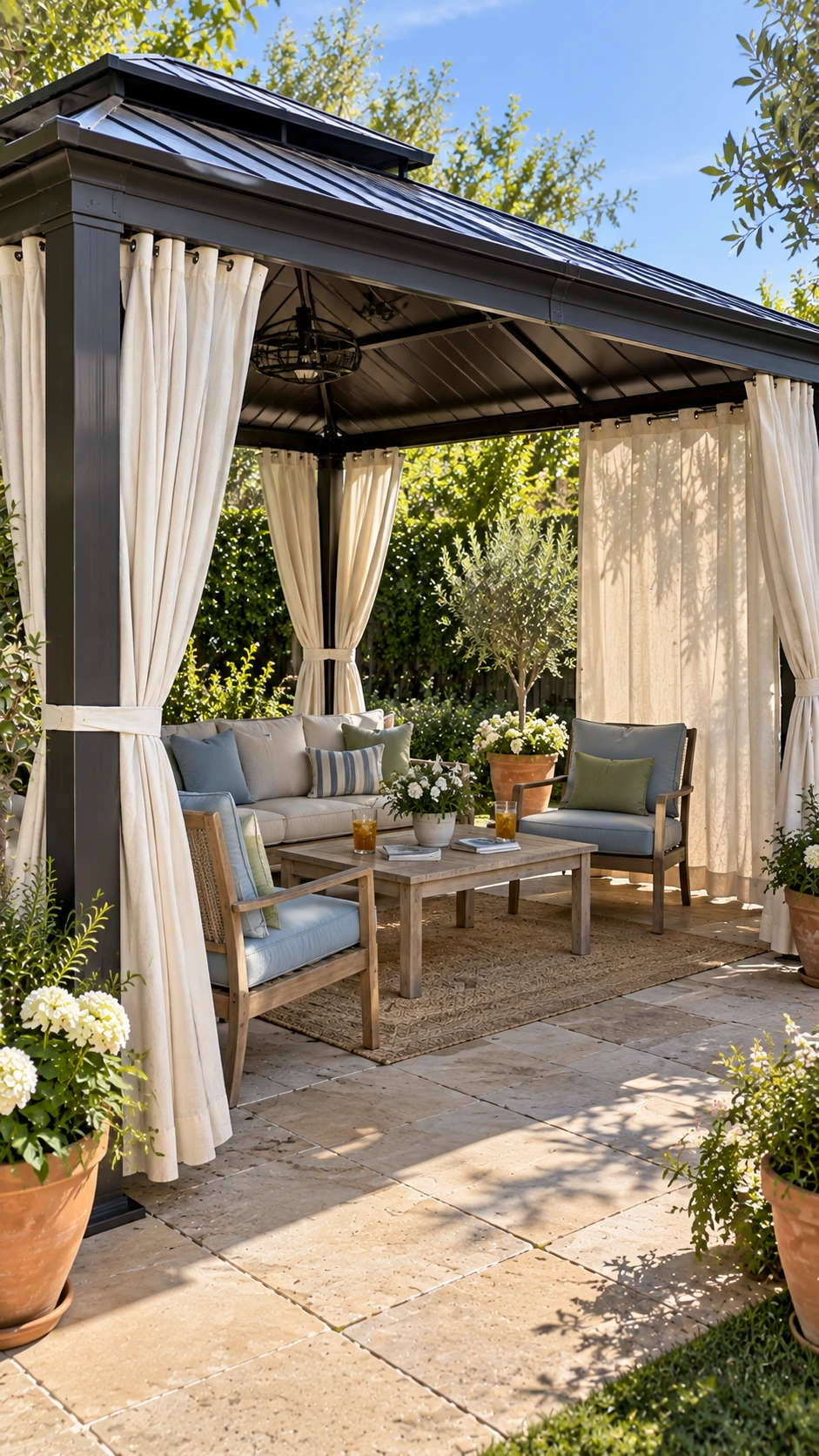
A hardtop gazebo feels like a bigger commitment, but it solves more problems than a tiny umbrella.
It gives steady overhead shade, can handle curtains, and often works with bug netting if mosquitoes treat the yard like a buffet.
People still need to check wind ratings, snow load, anchoring, and local rules before buying the big box kit.
It also needs enough room around furniture so nobody is scraping chairs into the posts every meal.
This is a solid choice when the patio is used often enough to earn the space.
10- Pop Up Canopy for Fast Shade
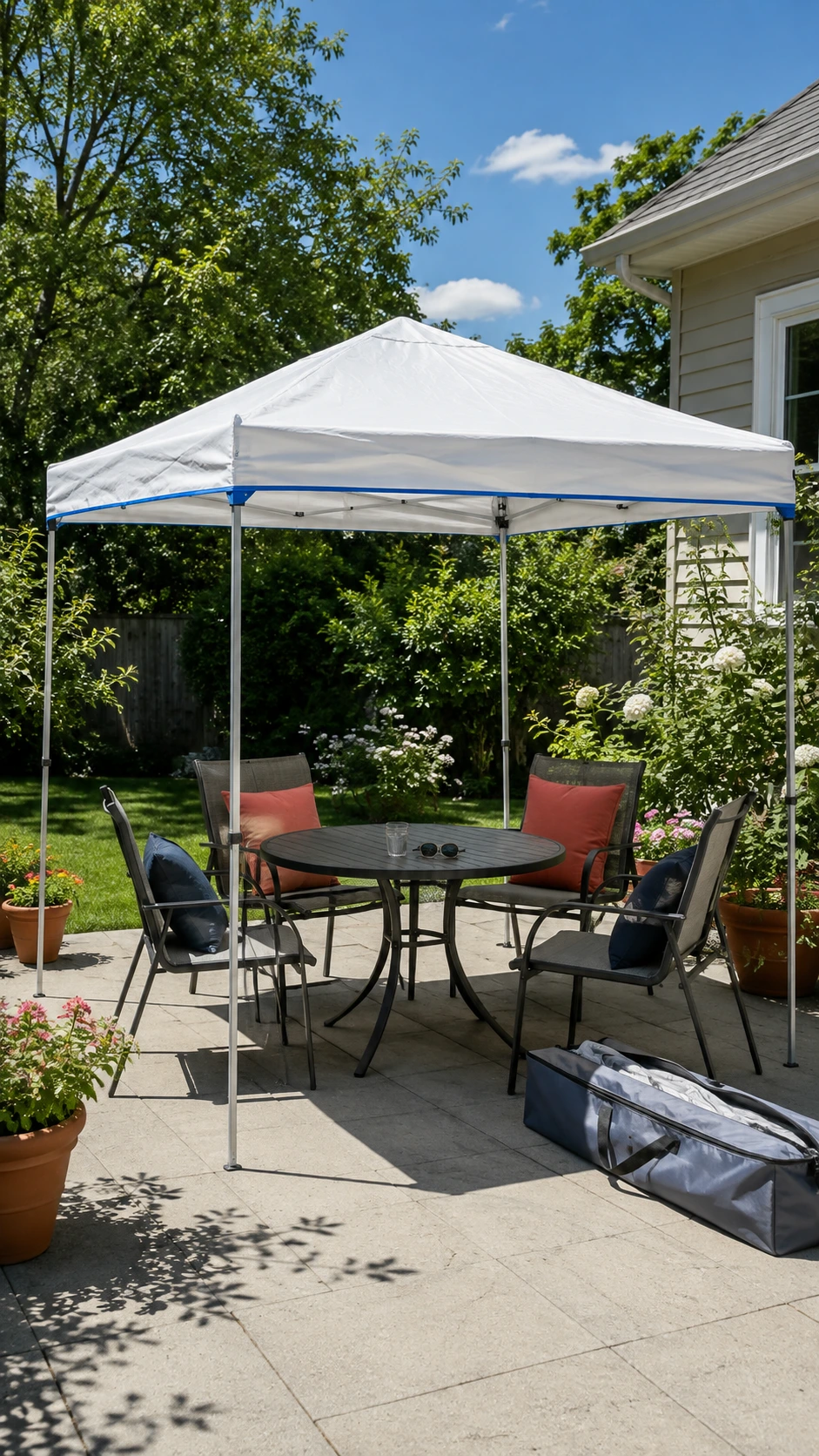
A pop up canopy is not fancy, but it gets shade on the patio fast.
It is useful for kids playing outside, weekend lunches, or testing where permanent shade should go later.
All legs need weights, and the top should stay tight so it does not sag or flap like a tired laundry basket.
It should come down before rough weather, because temporary really does mean temporary here.
This is the one I would use when people need relief now and a bigger plan later.
11- Shade Trees for Long Term Cooling
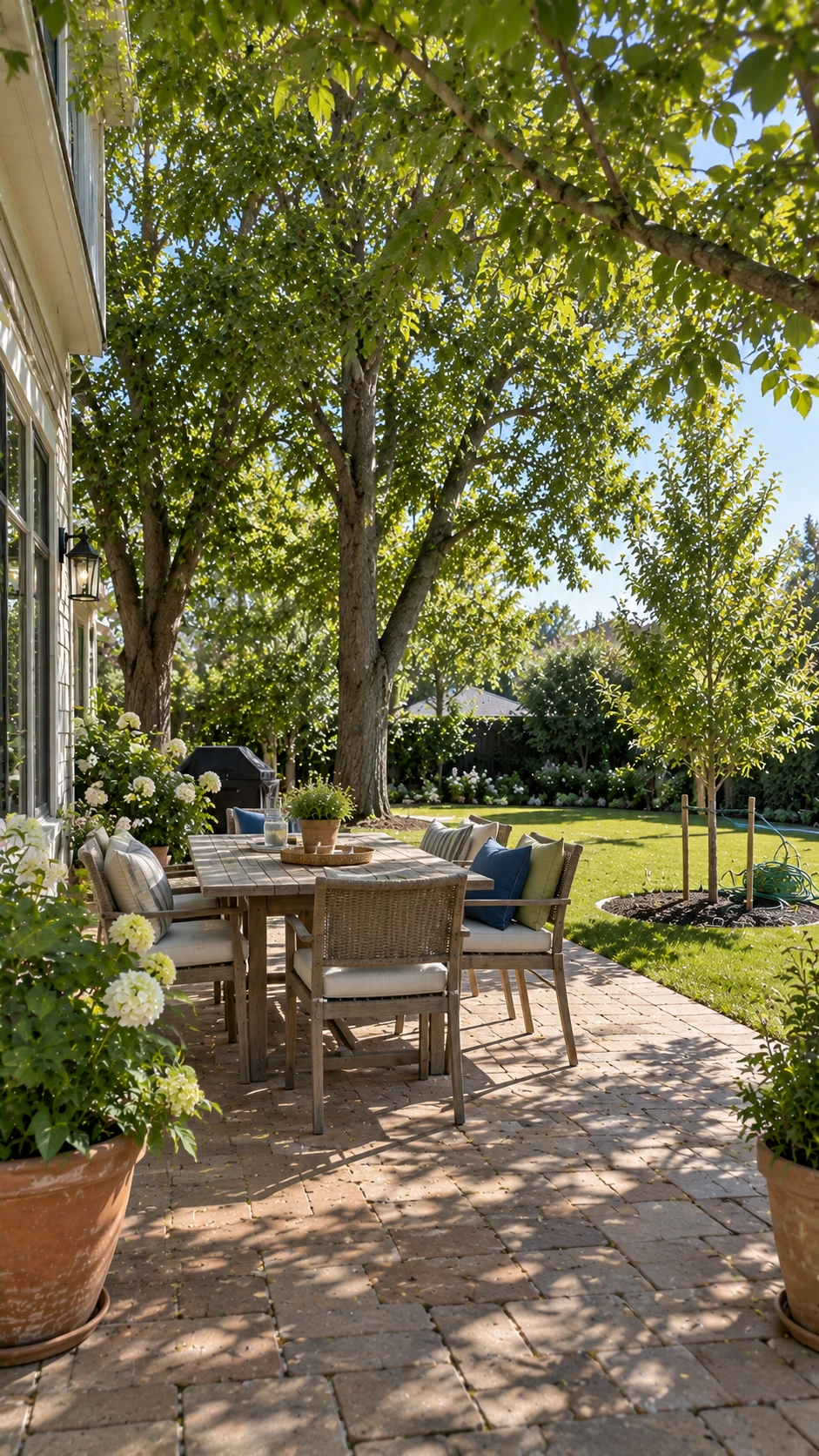
Trees are the slow answer, which is annoying when the patio is hot today.
Still, they are hard to beat for natural shade, cooler air, and making the yard feel less like a slab of concrete.
The trick is planting where the future shade will land, often west or southwest of the patio for afternoon relief.
People should look at mature size, roots, leaf drop, overhead wires, and storm risk before falling for the cutest tree at the nursery.
A larger nursery tree can help bridge the waiting period without pretending it will shade everything by next Tuesday.
12- Potted Trees for Renters
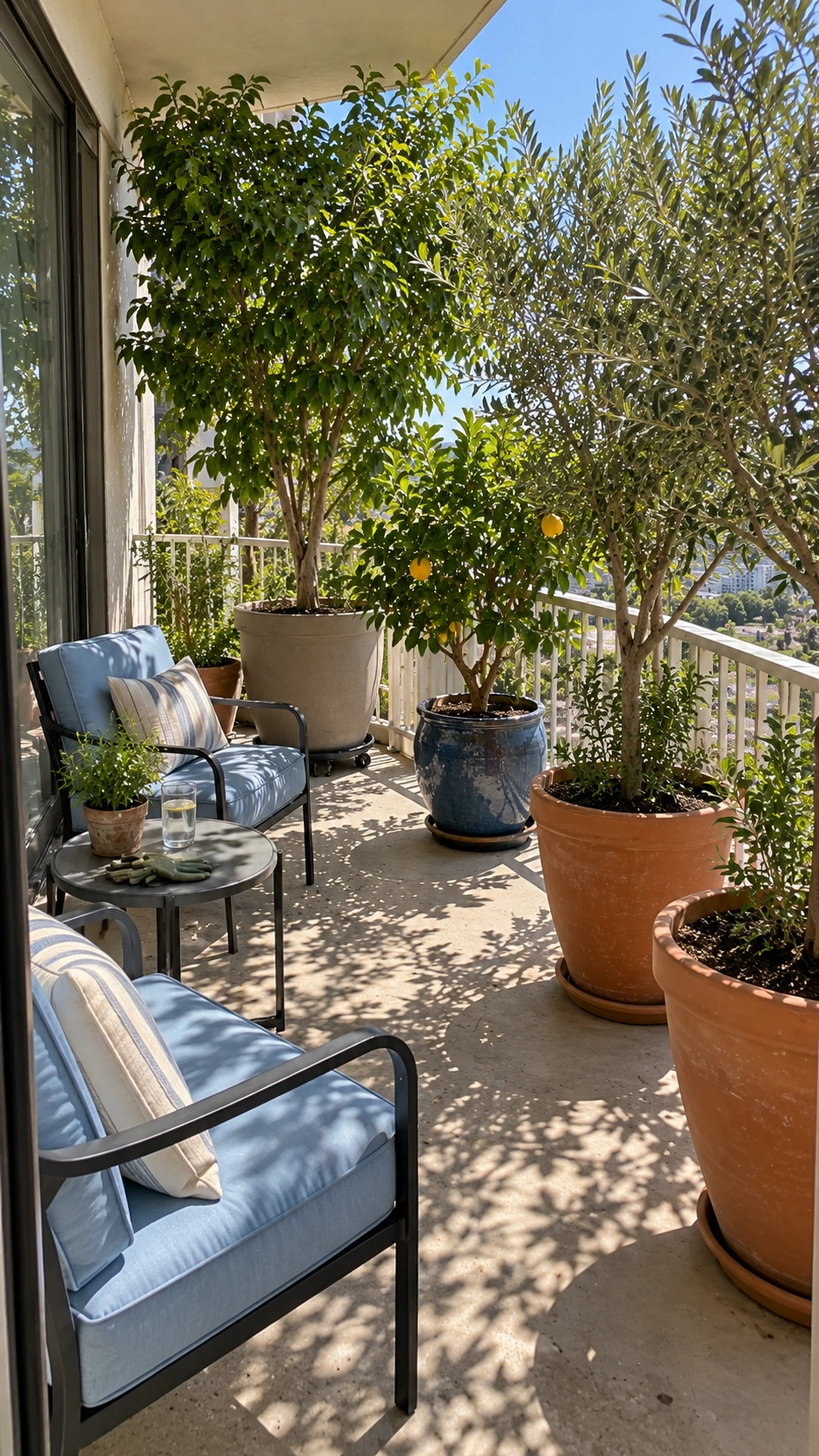
Potted trees are helpful when people cannot dig, build, or argue with an HOA about posts.
They can soften a bright corner, block a bit of glare, and move around as the sun changes.
Containers dry out faster than garden soil, so watering becomes part of the deal in hot weather.
Olive, citrus, ficus, and dwarf ornamental trees can work depending on the climate and light.
This is not full patio coverage, but it adds shade and makes the space feel less exposed.
13- Reed Mats Over a Simple Frame
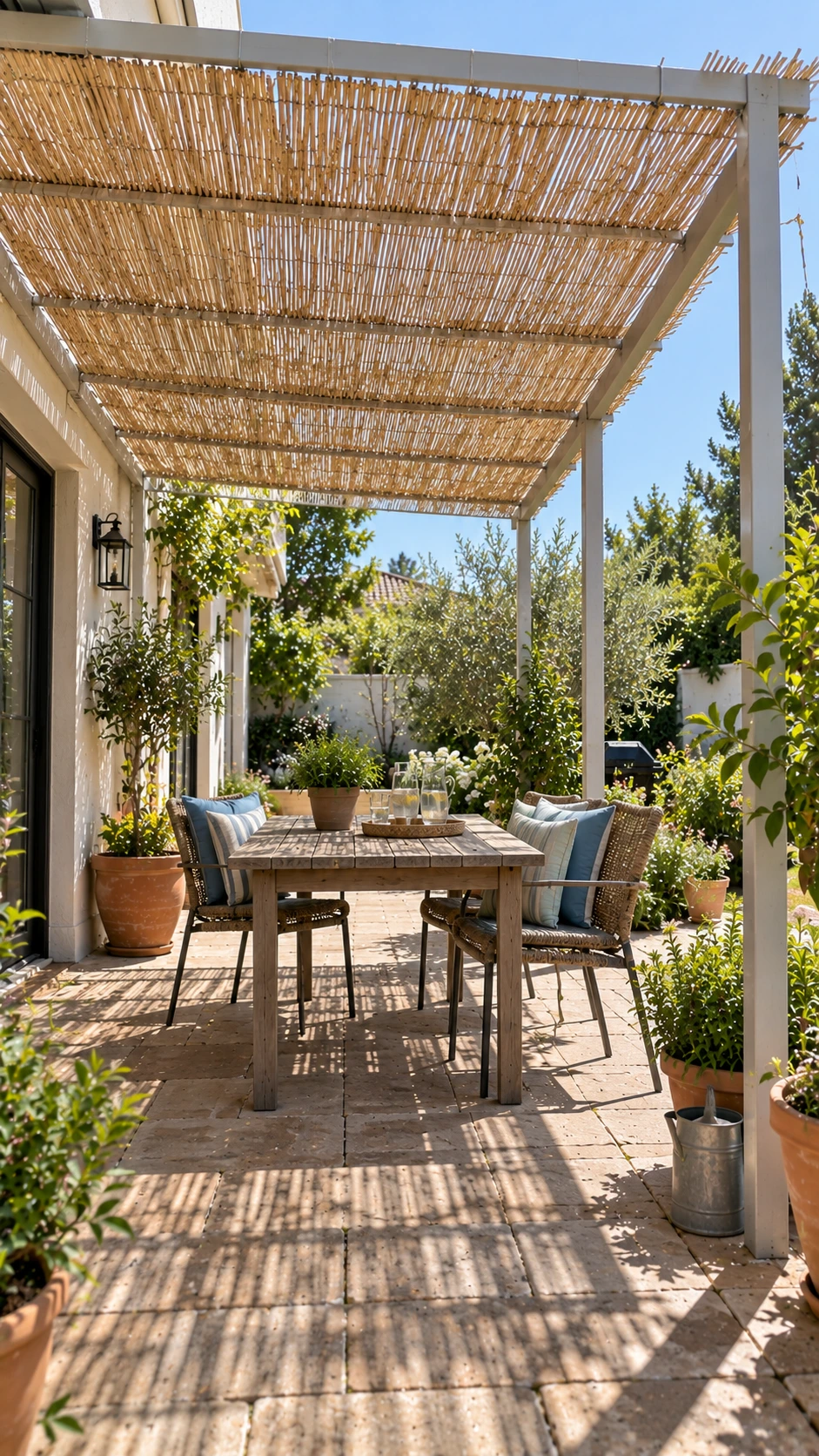
Reed mats have a casual, earthy look that works well when people want shade without a bulky roof.
They can be tied over a pergola, arbor, or simple frame with sturdy twine or zip ties.
The shade is dappled, not dark, so it is better for softening sun than blocking every ray.
They may need replacing after weather beats them up, especially in wet or windy areas.
It is a low cost layer that feels relaxed and does not make the patio feel boxed in.
14- Corrugated Metal Roof Panels

Corrugated metal gives real shade quickly, which matters when summer has already made the patio unusable.
It needs a strong frame and a slight pitch so rain runs off instead of sitting there causing trouble.
In very hot climates, metal can trap heat unless there is enough height and airflow underneath.
Lighter colors can help, and so can leaving open sides instead of turning the area into a little oven.
This is a practical choice for people who care more about durable coverage than a soft fabric look.
15- Polycarbonate Patio Cover
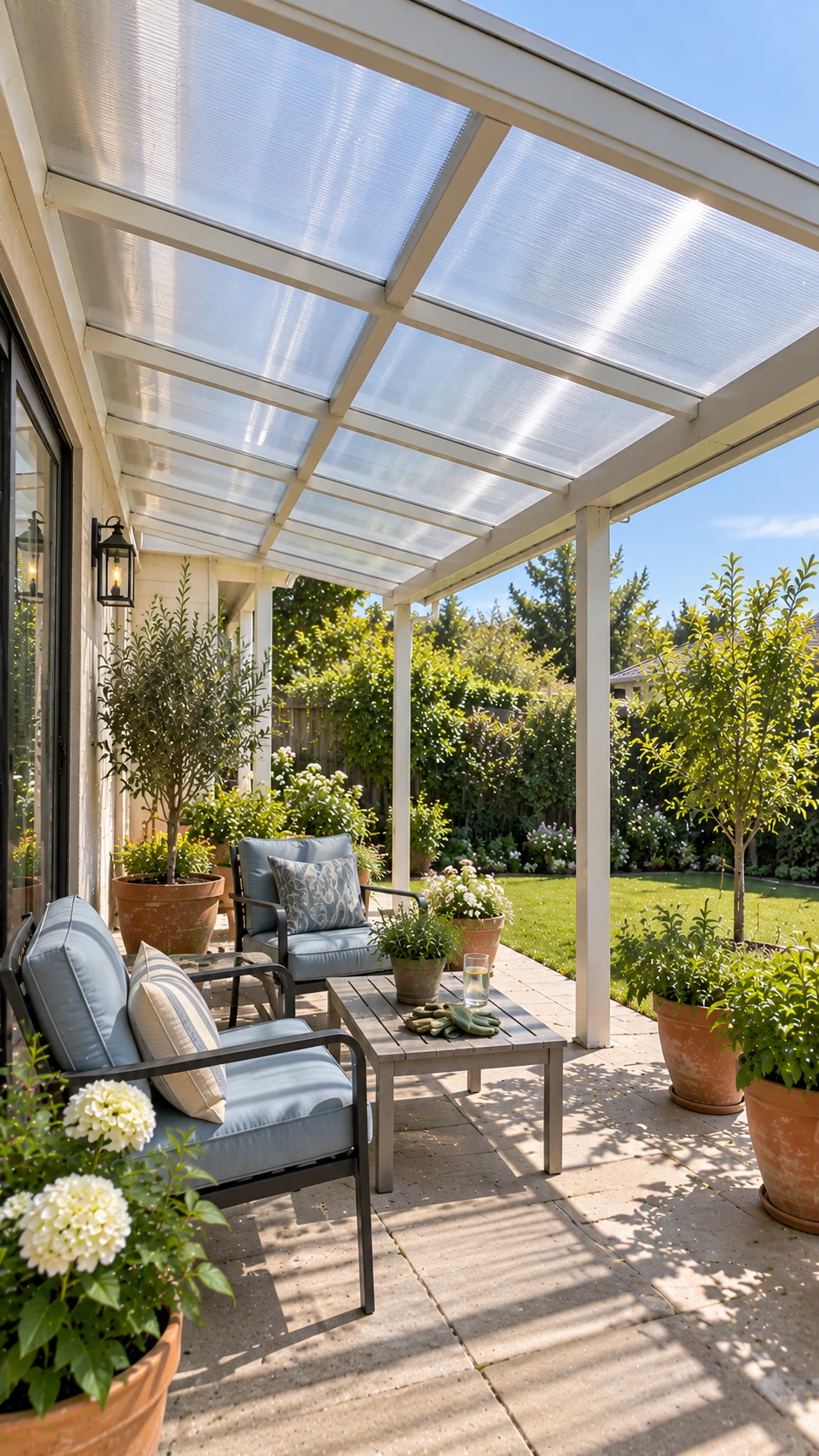
Polycarbonate covers are good when people want light to come through but not the full blast of sun.
Opal or frosted panels diffuse glare better than clear ones, and they hide dirt a little more kindly too.
The frame should look slim enough for the house, because bulky patio covers can feel heavy fast.
Drainage still matters, especially near doors, windows, and spots where water already pools.
This works nicely for patios that need brightness, rain protection, and softer shade in one place.
16- Vines Over a Pergola
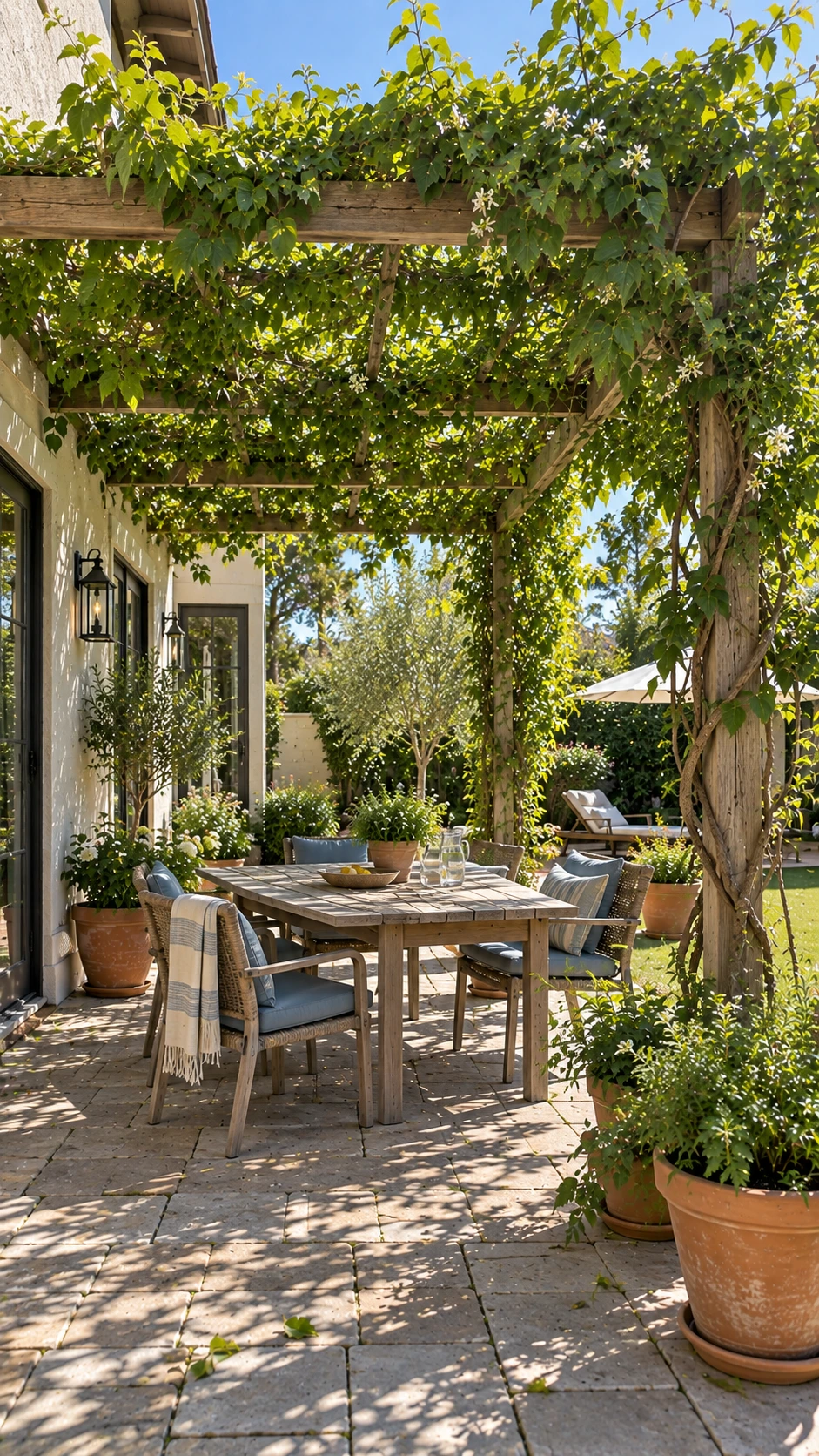
Vines are charming shade makers, but they are not instant unless someone has magical garden powers.
Annual vines can give seasonal coverage faster, while grapevines or wisteria need training and patience.
The support has to be ready before the plants get heavy, because full vines can pull harder than people expect.
Pruning matters too, especially near gutters, siding, roofs, and anything that should not become part of the plant family.
This is one of the loveliest Patio Shade Ideas when people are willing to let it grow in slowly.
Simple Shade That Matches Real Patio Life
The best shade choice usually comes from watching the patio at breakfast, lunch, and late afternoon before buying anything.
Most people need one main shade source and one smaller side fix for glare, privacy, or that one chair everyone avoids.
It is not a huge deal if the first setup is temporary while trees grow or a bigger plan comes together.
A cooler patio starts with one honest look at where the sun actually ruins the day.

I am Eleanor Foy, the mom of two behind DaisyHacks. I am a lover of clean, calm homes and a person who will happily spend 45 minutes researching a 5 minute cleaning hack. No regrets.