
10 Narrow Garden Designs That Work in Tight Spaces
Narrow gardens are one of those situations people either ignore completely or overthink until it stops being fun.
You Might Also Like
There is something specific about a long, thin strip of outdoor space that makes it feel impossible, like no matter what goes in there, it is just going to look awkward and sad.
Most people assume narrow means boring, so they throw down some gravel, maybe a pot or two near the door, and call it done.
The thing is, narrow garden designs can actually work really well once the space stops being treated like a problem and starts being treated like a feature.
These ten ideas are things that genuinely make a difference in tight spaces, no big overhauls, just smart choices that suit the shape.
1- Vertical Climbing Plants

Narrow garden designs almost always have more vertical space than horizontal, and climbing plants are the most natural way to use it.
Things like clematis, jasmine, or climbing roses can go up a fence, wall, or simple trellis without taking up any ground footprint at all.
The visual effect pulls the eye upward, which makes the whole space feel taller and less pinched from side to side.
A single established climber can cover a lot of ground on a fence line and soften the whole look of the space pretty quickly.
This works best when the support structure goes in before the plant, so there is something to grab onto right from the start.
2- A Single Central Path

One of the most common mistakes in narrow garden designs is trying to fit paths on both sides of a planting bed, which just eats up the usable width.
A single central path running the length of the space actually makes it feel more intentional and less squeezed.
Materials like stepping stones, brick, or even compacted gravel keep it casual and easy to lay without a big project attached to it.
The path gives the eye something to follow, which makes the garden feel longer rather than narrow, which is always a nice surprise.
Keeping the edges of the path softened with low ground cover or creeping herbs makes the whole thing feel less rigid and more like an actual garden.
3- Tall Skinny Planters

Tall, narrow planters are made for this kind of space and most people overlook them in favor of wide squat pots that just block the walkway.
A row of tall planters along one edge creates a layered look without pushing into the usable center of the garden.
They work especially well near a door or entry point where something with height makes an impression without crowding anyone out.
Planting something with a bit of drama in them, like ornamental grasses or topiary, keeps the scale feeling right for a narrow space.
4- Espalier Fruit Trees

Espalier is one of those techniques that sounds fancy but is really just training a fruit tree to grow flat against a wall or fence.
It is a classic narrow garden design solution because the tree takes up almost no depth but still gives fruit, structure, and genuine visual interest.
Apple and pear trees are the most common choices because they respond well to being trained and shaped along a flat surface.
It takes a bit of patience in the early years, but once it is established, an espalier tree makes a narrow fence line look like it was always supposed to be that way.
I think this is one of those things that looks harder than it is, and most people are surprised by how manageable it actually turns out to be.
5- Raised Beds Along One Edge

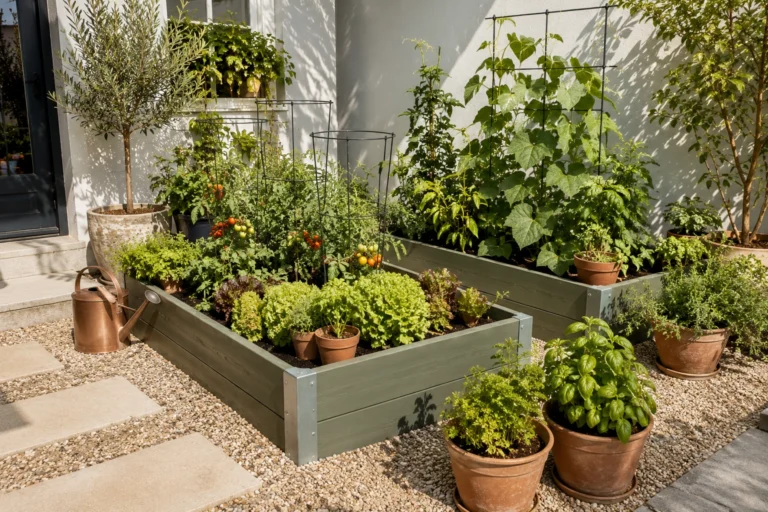
Raised beds are a really practical choice for narrow garden designs because they define the planting zone clearly and keep everything contained and tidy.
Running one raised bed along the longest edge leaves a clear open path on the other side, which makes the space feel organized instead of cluttered.
Keeping the bed height around 30 to 45 cm means it is easy to reach across for planting and weeding without having to step inside it.
Herbs, salad greens, and compact vegetables all do well in a long narrow raised bed and give the garden an actual purpose beyond just looking nice.
The thing is, once a raised bed is in and planted, the whole garden suddenly looks like someone who knows what they are doing lives there.
6- Mirrored or Reflective Elements
Outdoor mirrors are one of those additions that sounds strange at first but actually makes a narrow space feel noticeably wider.
A large mirror fixed to the end wall or fence reflects the plants and path back into the garden, which tricks the eye into reading the space as deeper than it is.
There are mirrors made specifically for outdoor use that handle weather and moisture, so it is not a case of dragging an old bathroom mirror outside and hoping for the best.
Even a simple reflective panel or a few mirrored tiles worked into a wall can do something similar on a smaller scale.
This works best when there is something worth reflecting, so pairing it with decent planting makes the whole effect more convincing.
7- Repetition of One Plant

One of the quieter tricks in narrow garden designs is using one plant repeated along the length of the space instead of mixing a lot of different things together.
Repetition creates a rhythm that makes a thin garden feel deliberate and designed rather than like a random collection of leftovers from the garden center.
Lavender, box balls, or ornamental grasses all work well for this because they hold their shape and stay tidy without a lot of fussing.
The spacing matters more than people realize, evenly spaced plants along a narrow border make the space feel calm, while random spacing makes it feel messy.
It is not a huge deal to get it exactly right, but even rough even spacing makes a noticeable difference once it is done.
8- Low Lighting Along the Path

Narrow garden designs often get forgotten at night, which is a missed opportunity because low lighting completely changes how the space feels after dark.
Small solar path lights or low-voltage ground lights placed along the central path add warmth and make the garden usable into the evening.
Up-lighting a climber or a feature plant from below creates a surprisingly dramatic effect without needing any wiring or complicated installation.
The scale of the lights matters in a narrow space, big lanterns or oversized fixtures tend to make everything feel more cramped, so smaller and lower is almost always the better call.
Most people are surprised by how much a bit of evening lighting adds to a space they had basically written off as just a side passage.
9- A Focal Point at the Far End

Narrow spaces naturally draw the eye straight down the length, which is actually a feature if there is something worth looking at at the end.
A simple focal point like a small sculpture, a painted wall, a pot with a single striking plant, or even a painted gate gives the eye somewhere to land.
It does not need to be expensive or complicated, just something that reads as intentional from the other end of the space.
I think this single detail does more for a narrow garden than almost anything else because it reframes the whole shape as an asset instead of a problem.
Once the focal point is in place, the length of the garden starts to feel like a feature rather than something to apologize for.
10- Layered Planting Heights

In narrow garden designs, having all the plants at the same height flattens the whole look and makes the space feel even thinner.
Layering tall plants at the back or against the wall, medium plants in the middle zone, and low ground cover at the edge adds depth that the width cannot provide.
This works with almost any planting style, whether it is a cottage garden feel, something more structured, or a mix of edibles and ornamentals.
The key is keeping the tallest things against the boundary so they do not block light or crowd the path through the middle of the space.
Once the layering is in place, even a very plain narrow strip of garden starts to look like something that was actually planned out and cared for.
Narrow Spaces That End Up Being the Best Part of the Garden
Narrow gardens have a reputation for being the difficult ones, but most of that is just because people try to force them into working like a wide open space.
Working with the shape instead of against it makes a real difference, and most of these ideas cost very little or take just an afternoon to put in place.
The space does not need to do everything, it just needs to look considered and feel pleasant to walk through.
A narrow garden that is planted and lit well ends up being one of those things guests notice and ask about, which nobody expects from what used to feel like a problem patch.

I am Eleanor Foy, the mom of two behind DaisyHacks. I am a lover of clean, calm homes and a person who will happily spend 45 minutes researching a 5 minute cleaning hack. No regrets.